
Photo by KOBU Agency on Unsplash
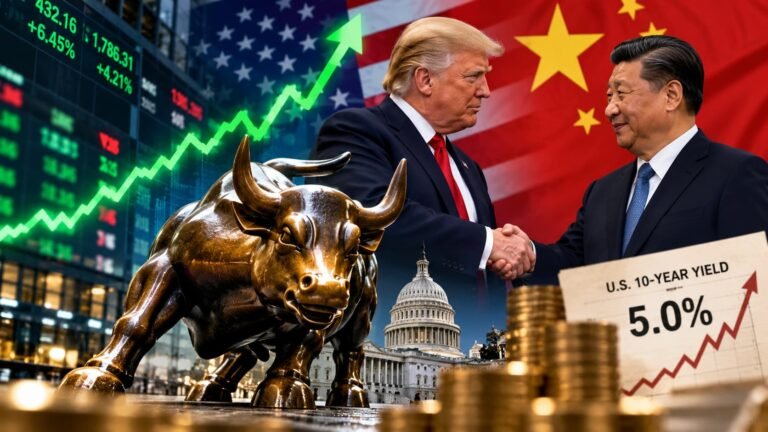
Chinese President Xi Jinping wrapped up his first state visit to the United States in 11 years, departing Washington after three straight days of face-to-face meetings with American leaders. The high-profile diplomatic push closed without producing a concrete trade deal, even as Wall Street staged a rally and diesel prices climbed to record levels in several major economies just weeks before the U.S. midterm elections.
Trade Talks Wrap Without Breakthrough
President Trump said tremendous progress was made during the summit, and the United States is scheduled to release the results of its trade negotiations with China next Monday. Despite that optimism, meetings between U.S. and Chinese leaders failed to forge any trade breakthroughs as of Friday’s market open, leaving investors and businesses waiting for clarity on tariffs and market access that have weighed on global commerce for months.
The lack of an immediate deal has not stopped markets from responding favorably to the tone of the talks. Traders appeared to interpret the extended, three-day engagement between the two leaders as a sign that further negotiation, rather than escalation, remains the likely path forward. Whether that reading survives contact with Monday’s official announcement remains to be seen.
Wall Street Steadies After a Volatile Week
Stocks pushed higher to close out a turbulent stretch. The Dow Jones Industrial Average rose 0.93% to 51,829, while other major indexes posted more modest but still positive gains.
- Dow Jones Industrial Average: up 0.93% to 51,829
- S&P 500: up 0.51% to 7,743
- Nasdaq Composite: up 0.48% to 27,069
The rally came even as the benchmark 10-year Treasury note yield gave back its steepest overnight gains, a retreat that helped lift equities even though the yield remains near 19-year highs. Elevated borrowing costs have been a persistent drag on markets throughout the year, making Friday’s partial reversal a welcome, if modest, relief for investors still digesting a week of sharp swings.
Diesel Crisis Deepens Amid Wars Abroad
While equities found their footing, the fuel market told a starkly different story. Diesel prices have hit record levels in major economies as the wars in the Middle East and Ukraine choke off supplies from the world’s two largest producing regions. The squeeze has rippled across continents, hitting consumers and shippers alike.
- European diesel futures have more than doubled since the start of 2026
- U.S. retail diesel rose above $6.50 a gallon this week for the first time on record
- The UK’s national average diesel price reached 197.31p per liter on September 23, just 1.78p short of the all-time high of 199.09p set in June 2022
The International Energy Agency has sharply revised downward its global oil supply and demand forecasts, now estimating world oil supply will average 100.7 million barrels per day in 2026 — a cut of 1.3 million barrels per day from its previous report. That downgrade underscores how deeply the twin conflicts have disrupted global energy flows, with diesel, the fuel that powers trucking, shipping and much of heavy industry, bearing the brunt of the shortfall.
The diesel price crisis has created a political stir in Washington ahead of the midterm elections in November. Rising fuel costs touch nearly every corner of the economy, from grocery delivery to construction, making them a potent and highly visible issue for voters heading to the polls.
Consumer Confidence Slips, Border Economies Feel the Strain
American households are already registering the strain. University of Michigan consumer sentiment reached its lowest reading in four months, down 15% from January 2026, according to survey director Joanne Hsu. The University of Michigan’s own release noted broad agreement across the political spectrum that the outlook for the economy has weakened since the start of the year — a rare instance of consensus in an otherwise polarized electorate.
North of the border, the economic pressure is also showing up in government ledgers. British Columbia’s first-quarter budget update put this year’s deficit at C$13.8 billion, or roughly US$9.8 billion, which is C$450 million worse than projected in the province’s February budget. The province’s exports to the United States fell 6.2 per cent, even as its worldwide exports rose 4.2 per cent, suggesting trade tensions and tariff uncertainty are reshaping where Canadian goods are headed. British Columbia’s growth forecast for the year was also trimmed, falling from 1.3 per cent to 0.9 per cent.
Taken together, the week’s developments paint a picture of an economy pulled in competing directions: a stock market cheered by diplomatic optics and the promise of a coming trade announcement, but a real economy squeezed by soaring fuel costs, softening consumer confidence and weakening cross-border trade. With the U.S. set to unveil its trade negotiation results next Monday and midterm elections looming in November, the coming weeks are likely to test whether Wall Street’s optimism can hold against the mounting pressures facing ordinary consumers and regional economies on both sides of the border.