
BEIJING, June 23, 2026 —
China has imposed hard export controls on 10 American companies — military drone manufacturers, aerospace contractors, and two rare earth mining firms — blocking them from receiving any goods of Chinese origin that carry potential military applications. The move is Beijing’s most direct counterpunch yet in an escalating technology-and-defense standoff, and it lands with a concrete threat to America’s push to rebuild a domestic rare earth supply chain.
China’s Commerce Ministry announced that Chinese companies would be blocked from exporting dual-use items to the 10 companies — goods that have both civilian and military applications. The controls prohibit the export of dual-use items to the American firms and apply to goods of Chinese origin held by entities and persons in other countries. The order was blunt: relevant export operations to the sanctioned firms must stop immediately.
The Ten Companies — and Why the Rare Earth Names Matter Most
The 10 companies are AVEOX in Simi Valley, California; Red Cat Holdings and Teal Drones, both in South Salt Lake, Utah; IMSAR in Springville, Utah; Jaia Robotics in Bristol, Rhode Island; Ball Aerospace & Technologies in Broomfield, Colorado; Oshkosh Defense in Oshkosh, Wisconsin; L3Harris Maritime Services in Norfolk, Virginia; MP Materials in Las Vegas; and USA Rare Earth in Stillwater, Oklahoma.
The first eight are embedded in America’s small drone ecosystem, aerospace payload chains, tactical vehicle production, and underwater surveillance systems. Their sanctions are pointed. But the last two names on that list carry a different kind of weight.
MP Materials operates the Mountain Pass in California, the U.S.’s only rare earth mining and processing facility, and USA Rare Earth is in the process of building a wholly domestic magnet supply chain between Colorado, Texas, and Oklahoma. Both companies sit at the heart of American efforts to end dependence on Chinese rare earth processing — an effort years in the making, funded through federal contracts and bipartisan legislation. The export controls do not stop them from mining ore. They prevent them from obtaining China’s processed rare earth materials, separation products, and magnet precursors. The domestic supply chain push just hit a compliance wall.
| Sanctioned U.S. Companies — China Dual-Use Export Controls, June 22, 2026 | |
|---|---|
| Company | State / Sector |
| AVEOX | California / Defense components |
| Red Cat Holdings / Teal Drones | Utah / Military drones |
| IMSAR | Utah / Defense radar |
| Jaia Robotics | Rhode Island / Autonomous systems |
| Ball Aerospace & Technologies | Colorado / Aerospace |
| Oshkosh Defense | Wisconsin / Military vehicles |
| L3Harris Maritime Services | Virginia / Naval defense |
| MP Materials | Nevada / Rare earth mining |
| USA Rare Earth | Oklahoma / Rare earth magnets |
A Two-Pronged Retaliation — and a Separate Procurement Ban on 46 More Firms
China hit back at Washington with a sweeping two-pronged retaliation, barring government departments from buying products from 46 U.S. defense contractors and blacklisting 10 American companies from receiving Chinese dual-use exports. The Finance Ministry list reportedly includes several subsidiaries of major American defense contractors such as Lockheed Martin, Raytheon, and General Dynamics.
The trigger was the Pentagon’s June 8 expansion of its Section 1260H watch list — a roster of Chinese firms the U.S. Defense Department says have links to military modernization. On June 8, the Pentagon announced the largest-ever expansion of its Chinese military company list, increasing the roster to 188 entities from 134 last year. The update swept in prominent civilian technology names including Alibaba, BYD, and Baidu, extending the blacklist well beyond the defense sector.
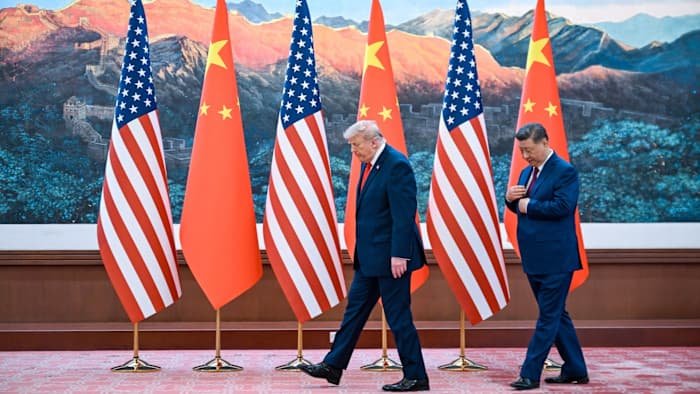
Beijing called this a wrongful expansion and a violation of the diplomatic understanding reached when President Trump visited China in May. China’s Commerce Ministry argued that the U.S. actions violate the diplomatic understanding reached between Chinese President Xi Jinping and U.S. President Donald Trump during Trump’s visit to China in May.
What Comes Before the September Summit
Analysts said more trade sanctions were likely from both the U.S. and China, as both countries attempt to increase leverage before President Xi Jinping’s visit to the U.S. in September. “So when they meet, they can use these measures as chips at the bargaining table,” said one trade analyst familiar with bilateral negotiations.
The next scheduled pressure point is June 30, when the Pentagon’s 1260H designation formally begins restricting direct defense contracts with the listed Chinese firms. Analysts will watch whether the rare earth export restrictions affect U.S. companies’ supply chains in practice, and whether the Finance Ministry’s procurement ban on American defense firms is implemented broadly.
Chinese commentators said the measures were calibrated to maximize pressure on U.S. defense contractors and rare earth suppliers while sparing foreign firms with active commercial operations in China. The carve-outs are deliberate. The targets are not.