
LONDON, June 22, 2026 —
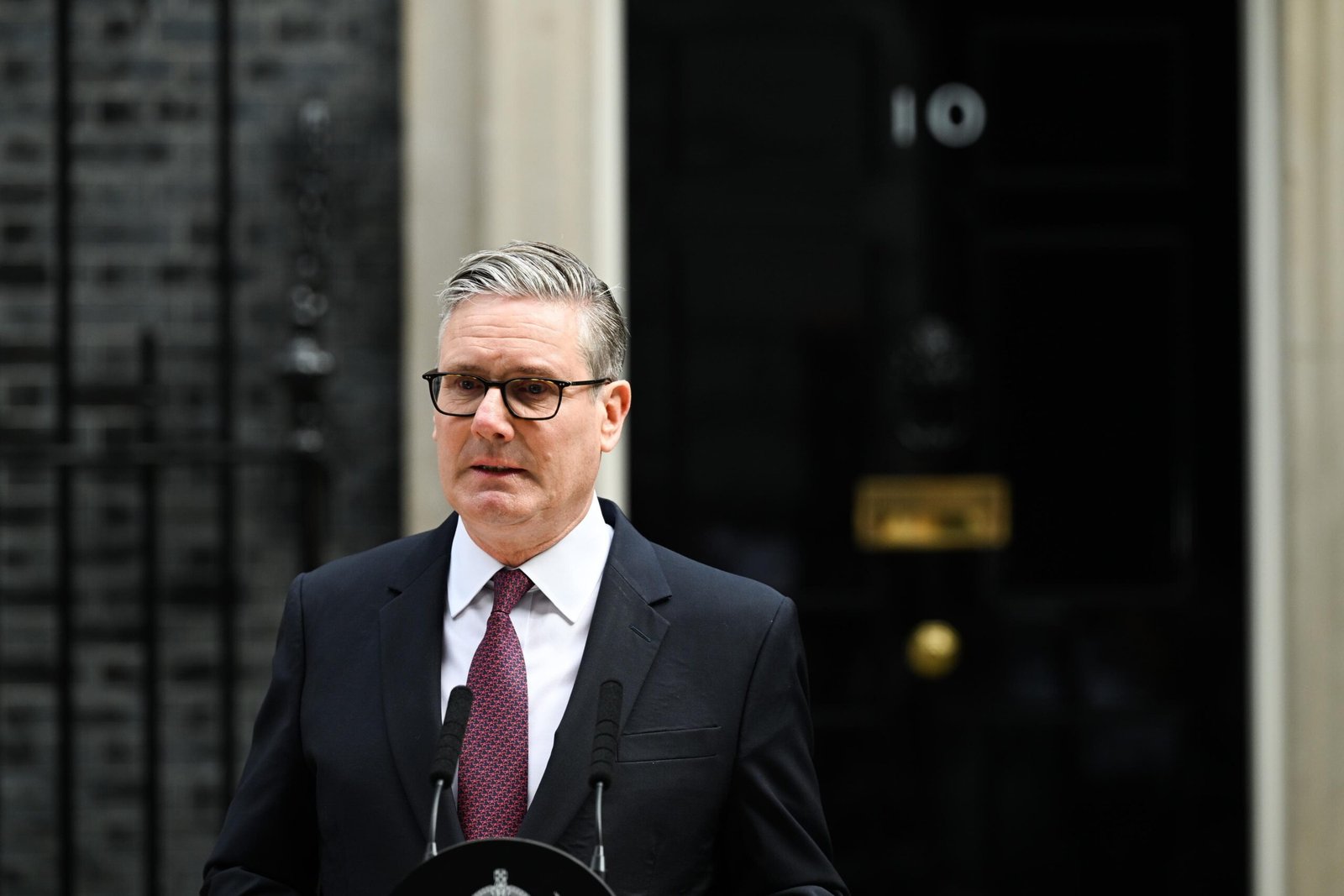
Keir Starmer announced his resignation as British Prime Minister on Monday morning outside 10 Downing Street, ending less than two years in power and making him the latest casualty of a decade of extraordinary political instability that has now cycled through seven leaders in ten years. He was visibly emotional. His wife stood beside him. He said entering Downing Street had been the proudest moment of his life — and then he said he was leaving.
“The question my party is asking now is whether I am best placed to lead us into the next election. I have heard the answer,” Starmer said. “I accept that answer with good grace.
What Brought Him Down
Starmer defeated his predecessor in the July 2024 general election, returning Labour to power after 14 years in a landslide win. Despite securing a 174-seat majority in Parliament, his government was weakened by dwindling poll ratings, Labour infighting, and growing public frustration over its failure to deliver quickly on growth and the cost of living.
The collapse accelerated in the spring. Following Labour’s poor performance in the local elections in May, dozens of lawmakers had called for Starmer to resign and set out a timeline for his departure. Several ministers from Starmer’s government stepped down in recent weeks, with some citing a lack of confidence in his ability to lead. The top two defense officials in the UK resigned on June 11, accusing Starmer of failing to invest enough money into the country’s Defense Investment Plan.
The final blow came from inside the party. Starmer had vowed to stay in his post, but his position became untenable as more and more Labour Party colleagues concluded his time was up. The timetable for his departure sped up after his main rival, former Manchester Mayor Andy Burnham, left his role as mayor and won a seat as a Member of Parliament for his local constituency last week — a necessary move as prime ministers have long been chosen from among sitting members of the House of Commons.
Who Andy Burnham Is — and Why He Is Already the Favorite
Starmer’s widely-tipped successor is former Manchester Mayor Andy Burnham, who won a local election last week to return to parliament. Burnham announced Monday that he would be putting himself forward for the party leadership, saying the process should be “conducted in an orderly and responsible way.
Burnham is the popular ex-mayor of Greater Manchester who secured a return to Parliament last week. He is now the runaway favorite. If the party decides to have a so-called coronation instead of a leadership contest, Burnham is expected to be the next leader of the country, though other Labour politicians have the opportunity to come forward.
Burnham built his reputation through a decade as mayor of Greater Manchester — a role he used to push for greater regional investment, housing reform, and homelessness reduction. He is seen as a more working-class voice than Starmer, whose lawyerly demeanor and cautious governing style alienated many Labour voters who had hoped for a bolder break from the Conservative years.
The American Dimension: What This Means for the US-UK Relationship
While struggling at home, Starmer earned praise for his response to global conflicts, sometimes appearing more at home at international summits than when wrestling with the details of domestic policy. His initially warm working relationship with Trump was soured by his decision to keep out of the Iran war — a stance that even Starmer’s detractors have since called brave and principled.
Trump, for his part, did not hide his satisfaction. Hours before Starmer’s formal announcement, Trump said: “Keir Starmer will resign as Prime Minister of the United Kingdom.” He claimed the British leader had “failed badly on two very important subjects — immigration and energy,” and added: “I wish him well.
Whether a Burnham government would warm or further cool relations with Washington remains unclear. Burnham has been careful in recent weeks to distance himself from positions he once held that might alarm financial markets and foreign capitals alike — an implicit acknowledgment that whoever walks through the door of 10 Downing Street next will do so with the US relationship front of mind.
The Seventh Leader in Ten Years
Starmer’s resignation comes almost ten years to the day since the UK voted to leave the European Union. His successor will be the country’s seventh leader in that period, underscoring how political and economic turmoil continue to unsettle British politics long after the Brexit process was concluded.
Starmer said he would remain in the job as caretaker until a new leader is formally chosen by the party, which could be within weeks if Burnham is unopposed. The pound slipped slightly on the news but markets remained broadly calm — investors have become accustomed to British political transitions arriving with more drama than economic consequence.
The US has deep defense, intelligence, and trade ties with the UK that survive changes in leadership. But the arrival of a new and untested prime minister — one whose domestic political standing depends on distinguishing himself from Starmer — adds one more variable to an already complicated transatlantic relationship at a moment when the Iran nuclear talks, the war in Ukraine, and the Middle East ceasefire are all in motion simultaneously.