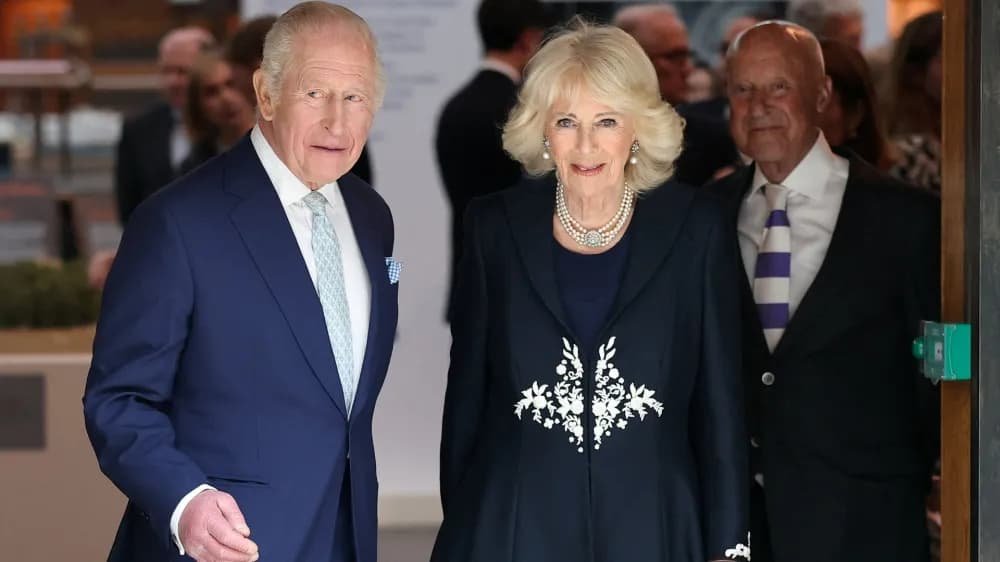

WASHINGTON, APRIL 27, 2026 —
Key Takeaways
- King Charles III and Queen Camilla arrived in Washington Monday for a four-day state visit — the first British royal state visit to the United States since 2007 — arriving less than 48 hours after a gunman breached security at the event Trump was attending, triggering heightened security across the capital.
- The visit comes at a moment of acute tension in the US-UK relationship: Britain has been publicly critical of the Iran war, privately furious about American tariffs on British steel and aluminum, and quietly alarmed by Trump’s trade posture toward its closest allies — while simultaneously negotiating a bilateral trade deal it desperately needs post-Brexit.
- Buckingham Palace announced the state visit will proceed as planned following the Correspondents’ Dinner shooting, with increased security measures in place, though the specific adjustments have not been publicly disclosed.
There is no diplomatic relationship in the world that carries more historical weight, more institutional memory, and more current-day complexity than the one between the United States and the United Kingdom. The arrival of King Charles III and Queen Camilla in Washington Monday — the first British royal state visit to America in nearly two decades — lands at a moment when that relationship is being tested in ways that go well beyond the normal diplomatic friction between allies.
The state visit runs through Thursday. It includes a White House dinner, a joint address before Congress, and meetings between Charles and Trump that both governments are carefully managing for optics that serve very different domestic audiences.
What Britain Wants — And What It’s Not Saying Publicly
The United Kingdom’s post-Brexit economic position makes this visit more than ceremonial. Britain needs a bilateral trade deal with the United States. Without one, British exporters — particularly in agriculture, pharmaceuticals, and financial services — face competitive disadvantages against EU counterparts who benefit from bloc-level trade arrangements. A US-UK trade deal has been discussed since Brexit in 2016 and has never materialized through three American administrations.
Trump has signaled openness to a deal but attached conditions that British negotiators find difficult: American access to the UK’s National Health Service pharmaceutical market, which would raise drug prices for British patients; relaxation of British food safety standards to allow US agricultural products like chlorinated chicken; and alignment on digital services taxes that affect American technology companies operating in Britain.
None of those conditions have been formally resolved. The state visit is not a trade negotiation — it is a diplomatic relationship-maintenance exercise. But the trade question hangs over every meeting.
British steel and aluminum exporters are currently subject to the same 25% American tariffs that apply to most of the world under Trump’s universal tariff framework. Britain requested an exemption it has not received. The economic cost to British manufacturers is estimated at roughly £500 million annually. That number has not been publicly discussed in either government’s pre-visit statements — a deliberate omission that reflects how much both sides want the optics of friendship to dominate coverage.
The Iran War Complication
Britain has been one of America’s closest military partners for decades. It has not been a partner in the Iran war. The UK government declined to participate in the February 28 strikes and has been publicly calling for a negotiated settlement since the first week of the conflict. Prime Minister Keir Starmer expressed concern about civilian casualties from American strikes on Iranian infrastructure — language that drew a sharp private response from the Trump White House.
The Iran war is the most significant divergence in US-UK foreign policy since the Iraq War in 2003, when then-Prime Minister Tony Blair’s decision to join the invasion of Iraq cost him politically at home and defined his legacy. Starmer has made the opposite calculation — staying out — and the question of how Charles navigates that divergence in his conversations with Trump will be watched closely by both governments.
Charles has no formal foreign policy role. He is a head of state, not a head of government. His conversations with Trump will be private. But the symbolic weight of a British state visit conducted while the two countries disagree publicly on the most significant American military action in years is not lost on anyone in either capital.
The Security Dimension
The timing of the visit — less than 48 hours after the Correspondents’ Dinner shooting — has added a layer of operational complexity to an already elaborate security operation. Buckingham Palace confirmed that the state visit will proceed, but adjustments to the schedule have not been publicly announced.
Washington’s security posture is already at its highest level since the January 6 anniversary events. The Correspondents’ Dinner shooting exposed specific vulnerabilities in hotel-based presidential event security that the Secret Service is now urgently reviewing. Adding a foreign head of state with his own security detail, a joint congressional address, and multiple public-facing events creates a security management challenge that has required significant interagency coordination in the 36 hours since the shooting.
The visit proceeds. The relationship endures. The complications — trade, Iran, tariffs, security — are exactly what state visits are designed to navigate beneath the surface of ceremony and goodwill. Whether this one produces anything more concrete than goodwill is the question both governments are trying not to answer publicly before Thursday.