
WASHINGTON, June 16, 2026 —
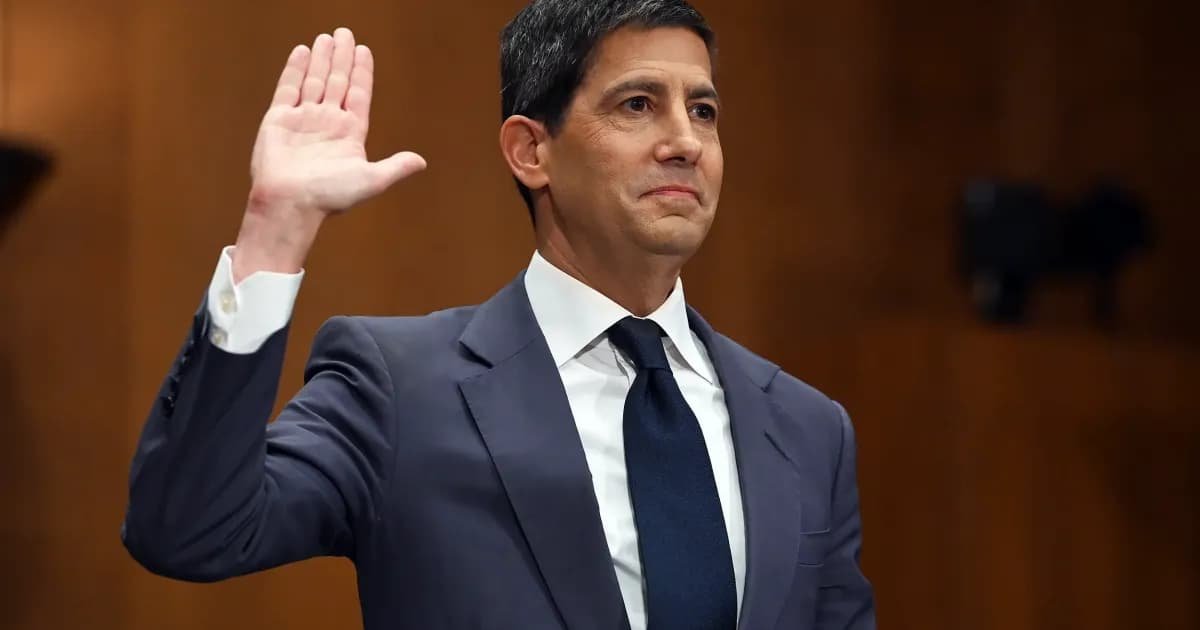
Kevin Warsh was sworn in as Federal Reserve Chair on May 22, 2026, and today he presides over his first Federal Open Market Committee meeting — the most closely watched monetary policy event of the year. It combines new Fed leadership with an uncertain rate outlook shaped by elevated inflation and energy prices. The two-day session that opened this morning concludes tomorrow at 2 p.m. Eastern, when the rate decision, updated economic projections, and Warsh’s first press conference will land simultaneously.
Nearly 97.4% of traders in the CME FedWatch market expect rates to stay unchanged. A poll of 102 economists found 72 of them expecting no rate change through the rest of 2026. The rate decision is not the story. What happens around it is.
The Inflation Numbers Warsh Cannot Ignore
Wall Street widely expects the central bank to maintain the benchmark rate within its current range of 3.5% to 3.75% during the June 16–17 gathering. Officials are assessing how energy-price disruptions stemming from the Iran war are affecting the broader economy.
Inflation remains above target and energy prices are elevated. Both factors reduce the case for near-term rate cuts. The May Consumer Price Index showed inflation running at 4.2% year over year — its highest reading in three years — against the Fed’s stated 2% target. At the same time, the economy added 172,000 jobs in May and the unemployment rate holds at 4.3%. That combination — hot inflation plus a resilient labor market — is precisely what central bank orthodoxy says calls for tighter, not looser, policy.
The Dot Plot, the Bias Shift, and What Could Rattle Markets
This June meeting is a quarterly projection meeting. It will produce an updated Summary of Economic Projections, a fresh dot plot, and a press conference at 2:30 p.m. Eastern on June 17. The median dot — the middle forecast — provides a consensus view of where the committee expects rates to be at year-end. A median dot showing one hike in 2026 would signal a modest tightening bias; two hikes would be meaningfully hawkish relative to current market pricing.
Beyond the dot plot, markets are watching for a subtler but potentially more significant shift. The Fed has kept an “easing bias” baked into its statement language for several consecutive meetings — signaling that the next move, when it comes, is likely a cut. Economists anticipate a shift from an easing bias to a neutral policy stance. That language change alone — with no rate move — would tell bond markets to stop pricing in relief. Mortgage rates, corporate borrowing costs, and credit card rates would all respond.
The Trump Factor: Warsh Between the Data and the President
Trump picked Kevin Warsh because he wanted lower interest rates, having repeatedly criticized Jerome Powell for not cutting fast enough. In February 2026, Trump even said he would not have chosen Warsh if Warsh wanted rate hikes. But the data has moved against that expectation. Inflation rose to a three-year high. After May’s jobs numbers, Goldman Sachs dropped its forecast for a December 2026 rate cut and pushed its expected cuts to 2027. Trump still went public before Warsh’s first meeting, saying there was “no reason” to raise rates and that the Fed should lower them.
That creates a direct tension that tomorrow’s press conference will test in real time. At his swearing-in ceremony, Warsh pledged a “reform-oriented Federal Reserve” focused on integrity and policy discipline, and said he favored “messier meetings” where policymakers could have “a good family fight.” That language sounds like independence. Whether it survives contact with a president who views rate policy as a personal priority is the question that Wall Street, every mortgage holder in America, and foreign central banks are all waiting to have answered.
The Iran Peace Deal Wildcard
One variable entered the room Sunday morning that no FOMC member had modeled: the U.S.-Iran ceasefire announcement. The Strait of Hormuz — largely closed since December — is set to reopen. Oil prices fell on the news. If energy prices ease materially over the next two months, one of the primary drivers of the 4.2% inflation reading could soften before the September FOMC meeting.
But the Fed works on data, not announcements. The Iran deal is a memorandum of understanding with a 60-day nuclear negotiation window still ahead. Warsh cannot cut rates based on a peace agreement that is not yet fully implemented. He can acknowledge the development — and almost certainly will — without letting it change the policy calculus for tomorrow’s decision. The June 17 statement was largely written before Sunday. What it says about energy uncertainty will be the most closely parsed sentence in tomorrow’s release.