
WASHINGTON, June 4, 2026 —
Key Takeaways:
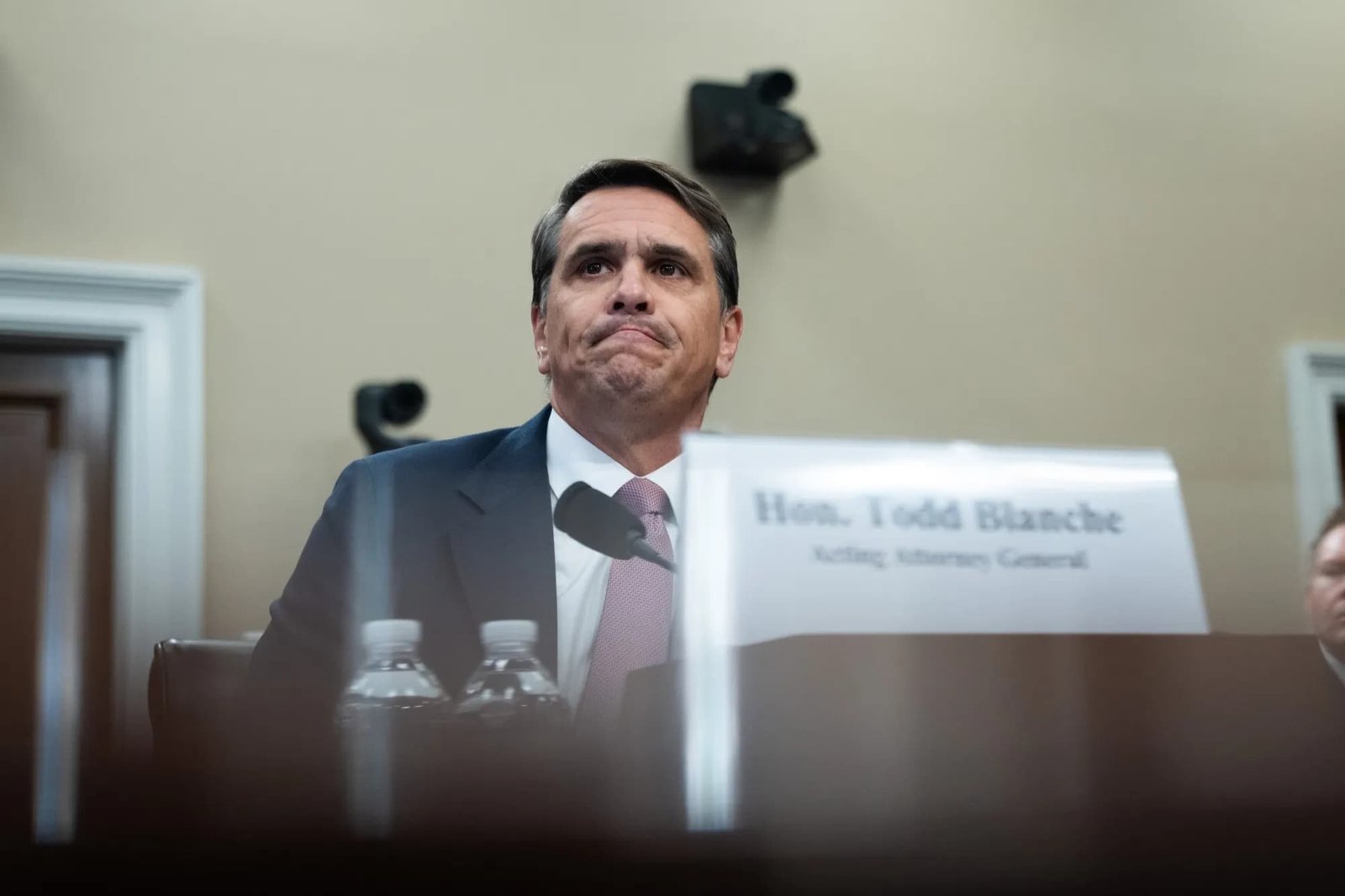
- Acting Attorney General Todd Blanche told Congress Tuesday that the Justice Department is “not moving forward with the fund, period” — killing the $1.776 billion Anti-Weaponization Fund that critics feared would compensate January 6 rioters, ending a bipartisan revolt that had paralyzed the Senate’s legislative agenda for weeks
- The fund’s collapse came from three simultaneous directions: a federal judge in Virginia temporarily blocked it after a lawsuit from Democracy Forward and Capitol police officers Daniel Hodges and Harry Dunn; Republican senators revolted and made clear they lacked votes to advance any legislation while the fund existed; and Mike Pence publicly called it “deeply offensive”, giving the intra-party rebellion high-profile cover
- The IRS settlement that funded the fund remains partially in place — Trump and his family are still shielded from IRS audits of prior tax returns under the original settlement terms, even though the fund itself has been scrapped
The fund that split the Republican Senate caucus, delayed a $70 billion immigration enforcement bill, sparked a bipartisan revolt, and produced a federal lawsuit from two Capitol police officers who said it would pay the people who attacked them is dead. Todd Blanche killed it with six words on Tuesday: we are not moving forward with the fund.
The Anti-Weaponization Fund’s collapse is the clearest legislative defeat the Trump administration has absorbed at the hands of its own party since the second term began — and it carries implications for every piece of legislation that Republican leaders now need to move through a Senate caucus that has demonstrated it will withhold cooperation when it judges a presidential priority to be politically untenable.
Three Forces That Brought the Fund Down Simultaneously
The fund did not die from a single blow. It died from three converging pressures that left the administration with no viable path forward.
The first was legal. A federal judge in the Eastern District of Virginia issued a temporary restraining order blocking the fund’s creation after Democracy Forward filed suit on behalf of Capitol police officers Hodges and Dunn — the same officers whose story of surviving January 6 had been widely covered in the weeks prior. The DOJ announced on Monday it would comply with that ruling while the legal challenge played out. The legal foundation under the fund was crumbling before Blanche spoke to Congress.
The second was Senate. Republican senators — who had been forced to walk out of Washington without voting on the $70 billion immigration enforcement bill specifically because of the fund — made clear in a closed-door meeting with Blanche that they would not advance any legislation while the fund existed. That meeting, which senators described as intense, told the administration that the fund’s cost had become higher than its value. Killing the fund became the price of restoring Senate cooperation on the immigration bill, the Homeland Security funding package, and every other piece of legislation on the Republican agenda.
The third was political. Mike Pence — the former vice president who was inside the Capitol on January 6 and was personally threatened by the crowd that stormed it — publicly called the fund deeply offensive and urged that it be scrapped. That intervention expanded what had been a congressional revolt into a broader intra-party statement. Pence opposing a Trump priority on January 6 grounds is not a common occurrence in the 2026 Republican Party. His public statement made it impossible for the administration to characterize opposition as merely Democratic or establishment resistance.
What the IRS Settlement Still Does — the Part That Survived
The fund is dead. The settlement that created it is not entirely dead. That distinction matters.
The Anti-Weaponization Fund was established as part of Trump’s settlement of his $10 billion lawsuit against the IRS over the leak of his tax returns by a former government contractor. The settlement had two components: the fund itself, and a separate provision shielding Trump and members of his family from IRS audits of their prior tax returns. Blanche confirmed Tuesday that the tax audit shield remains in place even though the fund has been scrapped.
That asymmetry — the provision that protects the president personally surviving while the provision that was politically toxic dies — has drawn immediate scrutiny from Democrats. Senator Ron Wyden of Oregon, the ranking member of the Senate Finance Committee, said publicly that the administration cannot pick and choose which parts of a legal settlement survive based on which parts are politically convenient. The legal status of the audit shield in the absence of the fund it was paired with is a question that will now move to courts.
The Capitol Officers Who Sued Are Going Home With a Win
Officers Harry Dunn and Daniel Hodges filed their federal lawsuit on May 20, asking a court to declare the fund unlawful and block all distributions. The fund never distributed a single dollar. A federal judge agreed with their legal theory sufficiently to issue a temporary restraining order. And now the fund is dead entirely.
Dunn, who is currently running for Congress in Maryland’s 6th Congressional District, said in a statement that he and Hodges sued because they believed the fund was illegal and that it would have rewarded the people who attacked them and their colleagues. He said the result proves that the rule of law is stronger than any attempt to use taxpayer money as a political reward fund.
The Immigration and Customs Enforcement funding bill that was derailed by the fund’s existence will now be reintroduced. Senate Majority Leader John Thune said leadership will move quickly to schedule a vote. Democrats have not indicated whether they will deploy the amendment and read-aloud delay tactics they threatened when the bill first came up, now that the fund that triggered their specific objections has been eliminated.
| Anti-Weaponization Fund — Timeline and End State | Detail |
|---|---|
| Fund announced | As part of Trump v. IRS settlement — spring 2026 |
| Fund amount | $1.776 billion |
| Fund purpose (stated) | Compensate alleged victims of DOJ “weaponization” |
| Officers’ lawsuit filed | May 20, 2026 — Hodges and Dunn |
| Federal judge’s TRO | Eastern District of Virginia — blocked fund creation |
| Republican Senate revolt | Caucus meeting with Blanche — described as intense |
| Senate bill delayed because of fund | $70B immigration enforcement package |
| Mike Pence statement | Called fund “deeply offensive” — urged it be scrapped |
| Blanche’s statement to Congress | “We are not moving forward with the fund, period” |
| Date confirmed killed | June 3, 2026 |
| Money distributed from fund | $0 |
| IRS audit shield status | Remains in place — Trump family protected |
| Democratic objection to audit shield | Wyden: cannot selectively preserve settlement provisions |
| Harry Dunn response | Called result proof rule of law is stronger |
The Senate Calendar That Opens Up Now
The fund’s death removes the primary obstacle that had frozen the Senate Republican caucus for three weeks. The $70 billion immigration enforcement and Homeland Security funding bill — which Trump had set a June 1 deadline for, a deadline that passed without a vote — can now be rescheduled. Thune’s office indicated leadership would move quickly.
What quickly means in a Senate that has Iran war oversight hearings, a Supreme Court term winding down, and the first genuinely competitive primary season in years — with six states having just voted and more to come — is an open question. The Senate is not short of demands on its floor time. The immigration bill, when it returns, will still face the Democratic amendment and read-aloud tactics that leadership had been preparing to manage before the fund derailed everything. Those tactics are slower when the political motivation behind them — the fund’s existence — has been removed, but they do not disappear.
The fund is gone. The caucus is functional again, at least on this specific issue. The immigration bill is next in line. And somewhere in the Eastern District of Virginia, a federal case filed by two Capitol police officers who were told they couldn’t stop this is now moot — which, in this context, means they won.