
WASHINGTON, May 27, 2026 —
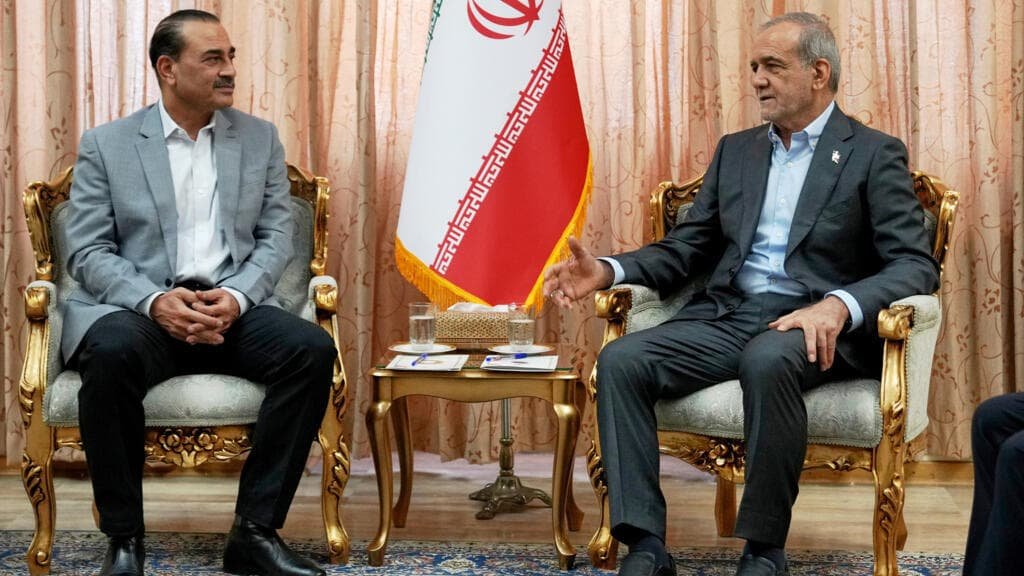
After three months of war, five rounds of failed negotiations, and a weekend in which the gap between what Trump declared and what Iran confirmed threatened to collapse the talks entirely, both sides have acknowledged the outlines of a framework agreement — a 60-day Memorandum of Understanding that would reopen the Strait of Hormuz, pause the war, and begin formal nuclear negotiations under a defined timeline.
The deal has not been formally signed. Both governments describe it as agreed in principle. The details are specific enough that the framework is real. The signing ceremony is not yet scheduled.
What the 60-Day Framework Contains
The structure of the agreement, confirmed by a U.S. official and acknowledged in outline by Iran’s foreign ministry, covers four primary elements.
During the 60-day ceasefire extension, the Strait of Hormuz would reopen to commercial shipping with no tolls — Iran’s demand for transit fees, which had been one of the most contentious points in prior negotiating rounds, has been dropped. Iran would agree to clear the mines it deployed in the Strait during the conflict to allow vessels to pass freely. Commercial shipping, which carries approximately 20% of the world’s liquid petroleum, would resume within days of the agreement’s formal execution.
In exchange, the United States would lift its blockade on Iranian ports and issue sanctions waivers allowing Iran to sell its oil freely on international markets. Iran’s oil export revenue — effectively eliminated since late February — would resume. That economic relief is the primary inducement Tehran required to accept the framework’s terms.
Nuclear talks would be held during the 60-day window. Iran has agreed to negotiate over curbing its nuclear program, including the possibility of surrendering its stockpile of highly enriched uranium. However, a Reuters-quoted senior Iranian source confirmed that Iran has not agreed in advance to hand over the uranium stockpile. The nuclear issue was deliberately deferred to the negotiating period rather than resolved as a precondition — a structure that the Trump administration accepted as a framework for progress rather than a final resolution.
The Gap That Nearly Collapsed the Talks Sunday
The framework’s survival through the weekend was not guaranteed. When Trump declared the deal largely negotiated on Saturday morning, Iran’s state media responded within hours with a statement from spokesman Esmaeil Baghaei who said any mechanism concerning the Strait of Hormuz should be agreed between Iran, Oman, and the countries bordering the waterway — explicitly excluding the United States from the Strait’s governance framework.
Iran’s Fars news agency reported that the Strait would remain under Iran’s management and dismissed Trump’s announcement as incomplete and inconsistent with reality. The hardline General Ahmad Vahidi — a figure wanted by Interpol for the 1994 Buenos Aires Jewish center bombing, who has emerged as a key player in Iran’s war strategy — publicly warned that Iran would not back down from its rights.
Secretary of State Marco Rubio, speaking to reporters in Sweden at a NATO summit Sunday, acknowledged the gap. He said the U.S. was still waiting for Iran to respond to the latest terms and described the progress as slight. He repeated Trump’s criteria: no nuclear weapon, Strait reopened without tolls, enriched uranium surrendered. He added: this problem will be solved, one way or the other.
By Monday morning, the framework’s broad outlines had been acknowledged by both sides, suggesting that the public contradictions were either negotiating posture or communications asymmetry rather than fundamental disagreement about the terms. The Strait’s governance language — who controls it, under whose authority, with what management structure — remains the last major unresolved point and is expected to be addressed in the formal text.
What a Strait Reopening Does to American Gas Prices
The economic consequence of this framework activating is the fastest deflationary impulse available to the American economy. The Strait closure has removed approximately 20% of global liquid petroleum supply from the market since late February. U.S. regular gasoline averaged $4.55 per gallon as of Memorial Day weekend, up $1.37 from a year ago. Brent crude has already fallen on the framework’s momentum — dropping over 4% in weekend trading.
The Energy Information Administration’s most recent short-term energy outlook estimated that a full Strait reopening would reduce U.S. retail gasoline prices by 35 to 55 cents per gallon within four to six weeks as global crude markets rebalanced. At the midpoint of that estimate, regular gasoline would decline from $4.55 toward $4.05 by early July — still above the pre-war baseline of $2.98, but a measurable reduction that would feed directly into the consumer confidence reading that hit a record low of 44.2 in May.
The 60-day structure of the agreement means the full deflationary effect requires the framework to hold through its completion and formal extension. If the nuclear talks during the 60-day window fail — as every prior Iran nuclear negotiating round has at some point — the ceasefire framework would require renewal or risk collapse.
| Iran Deal Framework — Current Status | Detail |
|---|---|
| Structure | 60-day Memorandum of Understanding |
| Status | Agreed in principle — formal signing pending |
| Strait of Hormuz | Reopens with no tolls; Iran clears mines |
| Iranian oil sanctions | US lifts port blockade; sanctions waivers issued |
| Nuclear program | Deferred to 60-day negotiating window |
| Uranium stockpile surrender | Iran has not agreed in advance — to be negotiated |
| Brent crude reaction | Down 4%+ on framework momentum |
| EIA gas price relief estimate | -35 to -55 cents/gallon within 4-6 weeks |
| Current U.S. gas price | $4.55/gallon (Memorial Day) |
| Consumer sentiment (May) | 44.2 — all-time record low |
| Remaining unresolved issue | Strait governance language |
| Signing ceremony | Not yet scheduled |
The Republican Senators Who Went Public With Concerns
The framework is not universally embraced on the American side. Multiple Republican senators expressed concern Sunday that accepting a deal without a guaranteed nuclear resolution could be perceived as weakness. Their specific objection — that deferring the uranium surrender to a negotiating window rather than making it a precondition validates Iran’s negotiating leverage — is the same criticism that the Obama-era nuclear framework faced in 2015.
The Trump administration’s position, carried by Rubio and repeated by Trump himself, is that ending the economic damage of the Strait closure and creating a formal diplomatic track for nuclear talks is more achievable, and ultimately more durable, than demanding complete nuclear capitulation as a condition for even beginning talks.
Trump has said repeatedly that the Iran problem will be solved one way or the other. The framework that appears to be closing suggests the administration has concluded that this particular arrangement is a workable definition of that or another. Whether the 60 days of nuclear talks it creates produces something the administration can call a victory on the uranium question will determine whether this framework becomes the foundation of a lasting settlement or the prelude to the next military phase.