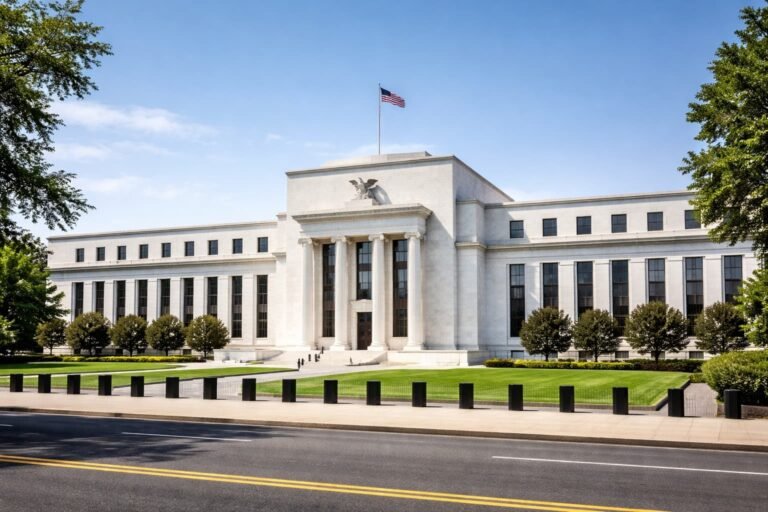

WASHINGTON, May 18, 2026 —
Key Takeaways:
- Moody’s downgraded the United States from Aaa to Aa1 on Friday — ending a 108-year streak of perfect credit held since 1917 through the Great Depression, World War II, the 2008 financial crisis, and every debt ceiling standoff in between
- All three major credit rating agencies have now downgraded the U.S. from their top rating — S&P cut in 2011, Fitch in 2023, and now Moody’s — meaning no major rating agency on earth currently views U.S. government debt as risk-free
- The timing was deliberate: Moody’s dropped the rating as Congress debated the One Big Beautiful Bill and cited projections that extending the 2017 tax cuts would add $4 trillion to the federal primary deficit over the next decade, on top of a current $36 trillion national debt
The United States government has not had a perfect credit rating from all three major agencies since August 2011. It still had one from Moody’s — the oldest and, in some ways, the most symbolically significant of the three. That holdout ended Friday afternoon, minutes after U.S. markets closed for the weekend.
Moody’s Ratings cut the U.S. sovereign credit rating one notch from Aaa to Aa1. The agency had assigned the United States its highest rating since 1917 — through the worst economic catastrophe in American history, a world war, two separate financial crises, and every political standoff over the debt ceiling that has shaken global confidence in U.S. fiscal management. That 108-year streak is over. Wall Street opens Monday morning with the full weight of that fact.
What Moody’s Said — and the One Line That Indicts Everyone
Moody’s did not blame any single administration. The agency’s statement placed the cause of the downgrade across decades of political failure, using language that functions as a bipartisan indictment of the American political class.
“Successive U.S. administrations and Congress have failed to agree on measures to reverse the trend of large annual fiscal deficits and growing interest costs,” Moody’s wrote. “We do not believe that material multi-year reductions in mandatory spending and deficits will result from current fiscal proposals under consideration.”
That last sentence is the one that matters most. Moody’s is not just describing the past. It is assessing the future — specifically, the One Big Beautiful Bill working through Congress right now — and concluding that it will make things worse, not better. The agency projected that extending the 2017 tax cuts, which the bill does, would add approximately $4 trillion to the federal primary deficit over the next decade. The U.S. is already running a fiscal deficit of $1.05 trillion for the current budget year — 13% higher than a year ago — against a total national debt of $36 trillion.
Moody’s simultaneously changed the U.S. rating outlook from negative to stable, acknowledging that the country “retains exceptional credit strengths such as the size, resilience and dynamism of its economy and the role of the U.S. dollar as global reserve currency.” This is not a prediction of imminent collapse. It is a formal, institutional statement that the United States government can no longer be treated as a risk-free borrower.
How the White House Responded — and Why That Response Matters
The White House did not accept the downgrade quietly. Communications Director Steven Cheung attacked Moody’s chief economist Mark Zandi on social media — despite the fact that Moody’s Ratings and Moody’s Analytics operate as entirely separate entities, and Zandi had no role in the rating decision. Press Secretary Karoline Leavitt told reporters that the president “disagrees with that assessment” and cited global confidence in the U.S. economy. Treasury Secretary Scott Bessent told a television interviewer that he did not “put much credence” in Moody’s rating.
The dismissal is politically understandable and economically consequential at the same time. When S&P downgraded the U.S. in 2011, Treasury yields actually fell in the short term as investors fled to the safety of U.S. bonds during market turmoil. The 2023 Fitch downgrade produced a similar muted initial reaction. Each time, the White House of the day called the downgrade political. Each time, markets processed the downgrade and moved on — while the underlying debt continued to grow.
The question for Monday’s open is whether this downgrade, arriving simultaneously with inflation at 3.8%, the Iran war’s energy shock, a Federal Reserve that cannot cut rates, and the One Big Beautiful Bill’s $3.4 trillion deficit projection, produces a different market reaction than its predecessors.
What a Credit Downgrade Actually Does to American Borrowers
The U.S. government credit rating is not an abstraction. It is the foundation on which every interest rate in America is built. U.S. Treasury bonds are the baseline risk-free asset in the global financial system. When the perceived risk of that baseline increases — even marginally — the yields that investors demand to hold Treasuries rise. And when Treasury yields rise, everything tied to them rises as well.
The 30-year fixed mortgage rate, which already stands at 6.30%, is directly influenced by the 10-year Treasury yield. A sustained rise in Treasury yields — even 25 to 50 basis points above where they would otherwise settle — translates directly into higher monthly payments for every American taking out a mortgage, a car loan, a student loan, or carrying a credit card balance. Analysts at weekend markets noted gold trading up 0.27% and Nasdaq futures down 0.38% in the immediate aftermath of the Friday announcement — a muted initial response that investors cautioned may not reflect Monday’s full open.
For American households already absorbing $1,500 in annual tariff costs, $4.50 gasoline, and credit card APRs of 21.52%, the prospect of a further rise in borrowing costs is not a Wall Street abstraction. It is the difference between qualifying for a mortgage or not, between manageable debt service and delinquency.
| U.S. Credit Rating — The Complete Picture | Detail |
|---|---|
| Moody’s rating before Friday | Aaa (perfect — held since 1917) |
| Moody’s rating after Friday | Aa1 (one notch below perfect) |
| Moody’s outlook | Changed from negative to stable |
| S&P rating (downgraded Aug. 2011) | AA+ (below perfect) |
| Fitch rating (downgraded Aug. 2023) | AA+ (below perfect) |
| Current national debt | $36 trillion |
| Fiscal year 2026 deficit (through May) | $1.05 trillion (13% above prior year) |
| Projected OBBBA deficit addition (10-year) | $4 trillion (per Moody’s) |
| Immediate market reaction | Gold +0.27%, Nasdaq futures -0.38% |
| 10-year Treasury yield (pre-downgrade) | ~4.48% |
| 30-year mortgage rate (current) | 6.30% |
| White House response | Disputed downgrade; dismissed Moody’s credibility |
The One Big Beautiful Bill Sits at the Center of Every Number
The timing of Friday’s downgrade is not coincidental. Moody’s dropped the rating as the House Budget Committee was debating the One Big Beautiful Bill — and specifically as fiscal hawks within the Republican caucus were blocking its passage over deficit concerns. The bill’s current form adds $3.4 trillion to the deficit over ten years according to the CBO, while cutting Medicaid by $863 billion and SNAP by $295 billion. Moody’s projection of $4 trillion in additional primary deficit from the tax cut extensions alone suggests the agency views the bill’s spending cuts as insufficient to offset its revenue losses.
The irony is precise and painful. The One Big Beautiful Bill was marketed as fiscal discipline alongside tax relief. Moody’s looked at the same bill and concluded it would make the country’s debt trajectory worse — badly enough to finally pull the trigger on a downgrade it had been signaling for three years.
The bill is not yet law. The Senate has not passed it. But the downgrade arrived anyway, because Moody’s concluded that the political will to address the structural deficit does not exist regardless of which version of the legislation eventually clears. That conclusion — rendered by the last agency still giving America a perfect score — is the most significant development in U.S. fiscal policy in a generation.
Monday’s market open will be the first referendum on whether Wall Street agrees.