
WASHINGTON, May 14, 2026 —
Key Takeaways:
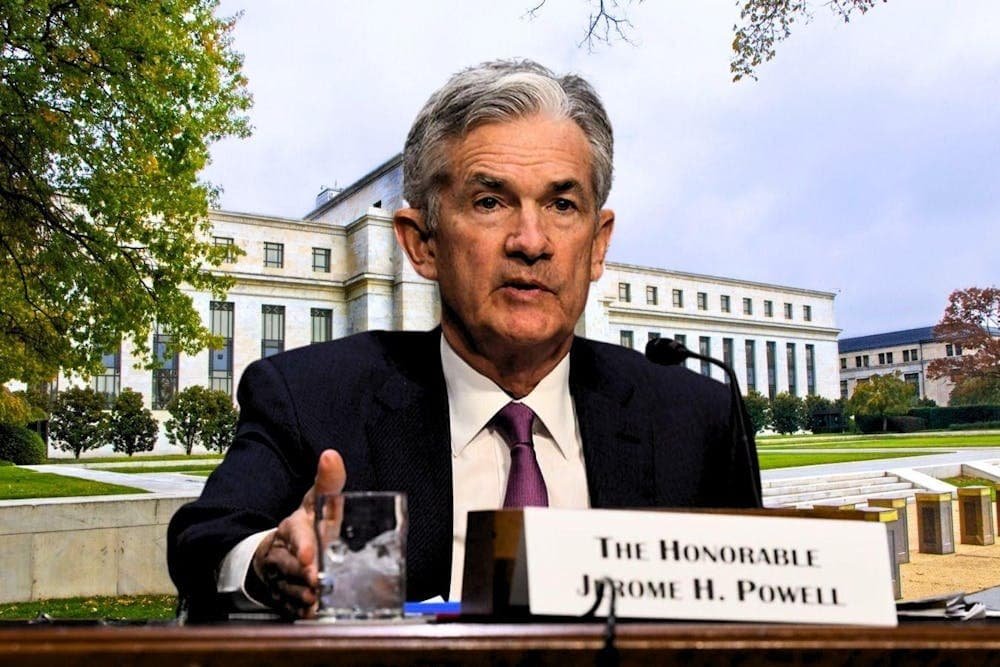
- Friday, May 15 is Jerome Powell’s final day as Federal Reserve chair, ending a tenure that navigated a pandemic, historic rate hikes, and two Trump terms
- Inflation has surged from 2.4% in February to an estimated 3.89% by May, driven by the Iran war’s shutdown of the Strait of Hormuz
- Incoming chair Kevin Warsh has a hawkish voting record — and markets are already pricing in uncertainty over what that means for rate cuts
Friday is Jerome Powell’s last day running the Federal Reserve. He’s handing the keys to Kevin Warsh — a former Fed governor with a hawkish track record — at arguably the worst possible moment for a transition: inflation climbing, gas prices elevated, and a U.S. war in Iran with no clear end date.
The Inflation Path Powell Leaves Behind
Before the Iran war began to show up in economic data, U.S. trailing 12-month inflation stood at 2.4% in February. One month later, it jumped 90 basis points to 3.3%.
It hasn’t stopped there. Based on estimates from the Federal Reserve Bank of Cleveland’s Inflation Nowcasting tool, the projection for April stands at 3.56%, and the first-look forecast for May calls for another 33-basis-point jump to 3.89%, as of the May 6 update. The Fed’s target is 2%. The gap between reality and that target is now nearly two full percentage points.
The driver is energy. On February 28, U.S. military forces began attacks against Iran. Shortly after, Iran effectively shut down the Strait of Hormuz to commercial vessels, halting roughly 20 million barrels of liquid petroleum per day — about 20% of the world’s crude oil demand, the largest energy supply disruption in the modern era.
What Warsh Walks Into
Powell will remain on the Fed’s Board of Governors until early 2028, but with Warsh at the helm, the central bank could be poised for sweeping changes. The question is which direction.
Analysts at TD Securities noted that Warsh’s ideology on interest rates is “hard to pin down,” adding that although he will likely propose rate cuts in 2026, “the main question is whether his former hawkish persona makes a comeback down the road.
His Senate confirmation is expected this week. The markets are watching.
Powell’s final Federal Open Market Committee meeting on April 29 was highlighted by the highest number of dissents in 34 years — three of the FOMC’s 12 voting members opposed a statement that included an easing bias. In other words, a quarter of the rate-setters were already opposed to any path toward cuts. Warsh inherits that divide.
Gas, Wages, and the Consumer Squeeze
Average U.S. gas prices per gallon as of late April: regular at $4.30, up $1.32 since the Iran war began on February 28; premium at $5.16; and diesel at $5.50, up $1.74 since the conflict started.
The labor market, notably, hasn’t collapsed. Average hourly earnings for all employees were up 3.5% over the year ending in March 2026, and real wages remain 0.3% higher after adjusting for inflation. Business investment rose more than 10% in the first quarter, and private payroll growth surged to over 2.5 times the monthly average seen throughout 2025.
That disconnect — a resilient labor market against rising prices — is precisely the bind that makes Warsh’s first months so consequential.
| Economic Indicator | February 2026 | Latest Reading |
|---|---|---|
| Trailing 12-month CPI | 2.4% | 3.56% (April est.) |
| Cleveland Fed May forecast | — | 3.89% |
| Regular gas price (national avg.) | ~$2.98 | $4.30 |
| Diesel price (national avg.) | ~$3.76 | $5.50 |
| Core CPI (ex-food & energy) | — | 2.6% (March) |
| Real wage growth (YoY) | — | +0.3% |
| Recession probability (WSJ survey) | — | 33% |
Rate Cuts Are Off the Table — For Now
The prospect of rate cuts fueling the AI data center build-out was one of the core reasons investors had tolerated historically elevated valuations. With rate cuts off the table in 2026, inflation forecasts moving in the wrong direction, and a presumed hawkish new Fed chair, a worst-case scenario may be shaping up for Wall Street.
Economists view the risk of recession as relatively low — the Wall Street Journal’s April survey of economists put the 12-month recession probability at just 33%. But that number has been creeping upward. And with the Iran conflict showing no sign of ending, the delayed inflationary pass-through from energy costs into consumer goods and services hasn’t fully arrived yet.
Powell’s Exit, Warsh’s Opening Bet
The transition itself carries symbolic weight. Powell spent years defending the Fed’s independence from political pressure — specifically from Trump. Warsh, by contrast, is Trump’s pick, arriving with an ideological mandate the president has made no secret of: lower rates.
Whether Warsh acts on that mandate or surprises the market is the central question hanging over every trading desk in America heading into next week. The first FOMC meeting under his chairmanship will tell investors more in a single afternoon than months of Senate testimony.
The economy Powell built didn’t break. What Warsh does with it is now the story.