
WASHINGTON, APRIL 30, 2026 —
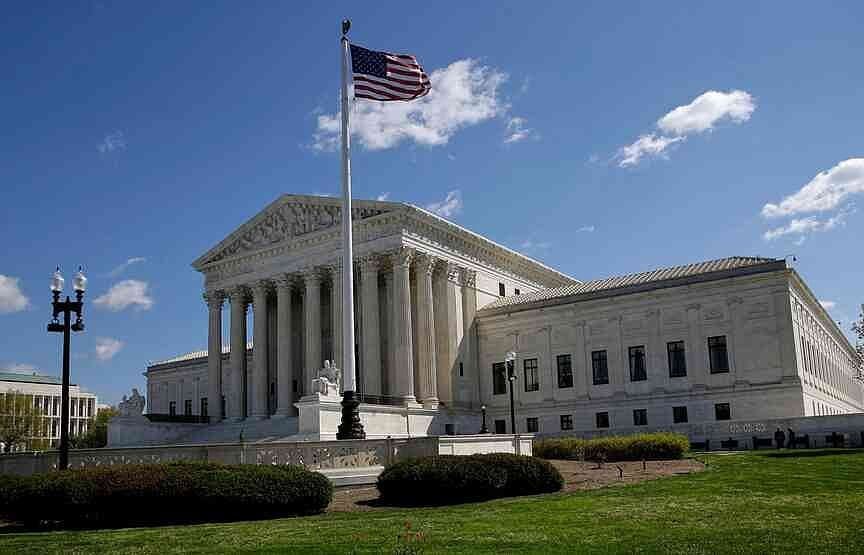
The Supreme Court delivered one of the most consequential voting rights decisions in a generation Wednesday, striking a new blow to the Voting Rights Act in a 6-3 ruling along partisan lines that legal scholars say renders a core provision of the 61-year-old civil rights law effectively unenforceable — and Florida’s Republican legislature moved to capitalize on it within hours of the decision landing.
By a vote of 6 to 3, the justices left in place a lower court ruling that barred Louisiana from using a congressional map which had created a second majority-Black district, holding that the map constituted an unconstitutional racial gerrymander. The decision, written by Justice Samuel Alito, did not strike down Section 2 of the Voting Rights Act outright — but Justice Elena Kagan wrote in her dissent, joined by Justices Sonia Sotomayor and Ketanji Brown Jackson, that the majority’s ruling had rendered the provision “all but a dead letter.
Hours after the ruling, lawmakers in Florida approved a new congressional map aimed at creating four more GOP-leaning districts, with the office of Governor Ron DeSantis citing the Louisiana ruling in making its case for the new map.
What the Court Actually Decided
The Louisiana case had an unusual history. After years of litigation under the Voting Rights Act, Louisiana — whose population is 30% Black — agreed to draw a second majority-Black congressional district. A separate group of self-described non-African-American voters then challenged that new map as an unconstitutional racial gerrymander under the Equal Protection Clause.
Alito wrote in the majority opinion: “Correctly understood, Section 2 does not impose liability at odds with the Constitution, and it should not have imposed liability on Louisiana for its 2022 map. Compliance with Section 2 thus could not justify the State’s use of race-based redistricting here.
The ruling stops short of formally overturning Section 2 of the Voting Rights Act. But it reshapes what plaintiffs must prove to win a redistricting challenge in ways that legal experts say will make successful cases nearly impossible. The decision will make it far harder for plaintiffs to challenge future maps for racial discrimination, undermining a key understanding of the Voting Rights Act.
Intentional discrimination cases are “much rarer than they used to be,” elections lawyer Jason Torchinsky told reporters. “You need some sort of smoking gun evidence. You need an email where someone says ‘Yeah, I carved up the Hispanic neighborhood’ and people don’t do that.
What makes the ruling particularly striking is who joined the majority. Chief Justice John Roberts — who wrote the 2023 opinion in Allen v. Milligan upholding a longstanding interpretation of the Voting Rights Act — did not write a concurrence to explain why he changed his position, or how he squared the new ruling with the previous one. Neither did Justice Brett Kavanaugh, who had also sided with liberals in the 2023 Alabama case.
What It Means for Black Representation in Congress
The practical stakes of the ruling extend well beyond Louisiana. An analysis found that a ruling affecting Section 2 provisions could put at risk at least 15 House districts currently represented by Black members of Congress.
Senator Raphael Warnock of Georgia warned that the Congressional Black Caucus’ ranks could be decimated, particularly in the South. “The Congressional Black Caucus is something that emerged as a direct result of the Voting Rights Act of 1965 and that caucus has had such an important voice in American politics. I’m afraid that with this ruling, we can see that caucus shrink in a hugely significant way,” Warnock said.
Damon Hewitt, president of the Lawyers’ Committee for Civil Rights Under Law, said: “Black Americans have never been fully represented in the electoral process.
Many redistricting experts now expect Republican-controlled state legislatures in the South to eliminate at least some Democratic-represented House districts that were likely protected under the Voting Rights Act, though the timing is unclear.
Florida Moves Within Hours
The speed of Florida’s response to the ruling illustrated how immediately states were ready to act. Hours after the ruling, lawmakers in Florida approved a new congressional map aimed at creating four more GOP-leaning districts. While DeSantis’s office cited the Louisiana ruling in making its case, the districts passed by state lawmakers do not target districts that were likely protected by Section 2.
Louisiana itself now faces a new map-drawing process ahead of its May 16 primary. The voters who challenged the map filed papers arguing the legislature is considering pushing back election deadlines to allow congressional races to occur under a new remedial map.
Long considered the jewel in the crown of the Civil Rights Movement, the Voting Rights Act has been largely dismembered since 2013 by the increasingly conservative Supreme Court led by Chief Justice Roberts. Wednesday’s ruling is its latest chapter — and by most legal assessments, its most damaging.