
NEW YORK, April 27, 2026 —
Key Takeaways
- Five of the six largest companies in the S&P 500 — Microsoft, Alphabet, Meta, Amazon, and Apple — report earnings Wednesday through Thursday, representing approximately $12 trillion in combined market capitalization and more than 15% of the entire index’s weight.
- The Federal Reserve announces its interest rate decision on Wednesday — with traders pricing in a 100% probability of no change, making Fed Chair nominee Kevin Warsh’s likely confirmation this week the more consequential central bank story.
- Goldman Sachs raised its Brent crude forecast to $90/barrel through Q4 2026, Domino’s Pizza collapsed 10.5% Monday on a Q1 miss, and the S&P 500 hit a fresh all-time intraday high — before pulling back — as Iran’s new Hormuz proposal kept markets in a state of cautious optimism.
Why This Week Is the Most Important of 2026
In a normal earnings week, five major companies reporting in three days would be significant. This is not a normal earnings week. Microsoft, Alphabet, Meta, Amazon, and Apple are not just large companies — they are the companies whose AI spending commitments have been driving the entire bull market narrative for the past 18 months. Their guidance calls, their capital expenditure numbers, and their commentary on AI demand will either validate or challenge the investment thesis that has carried the S&P 500 to record highs.
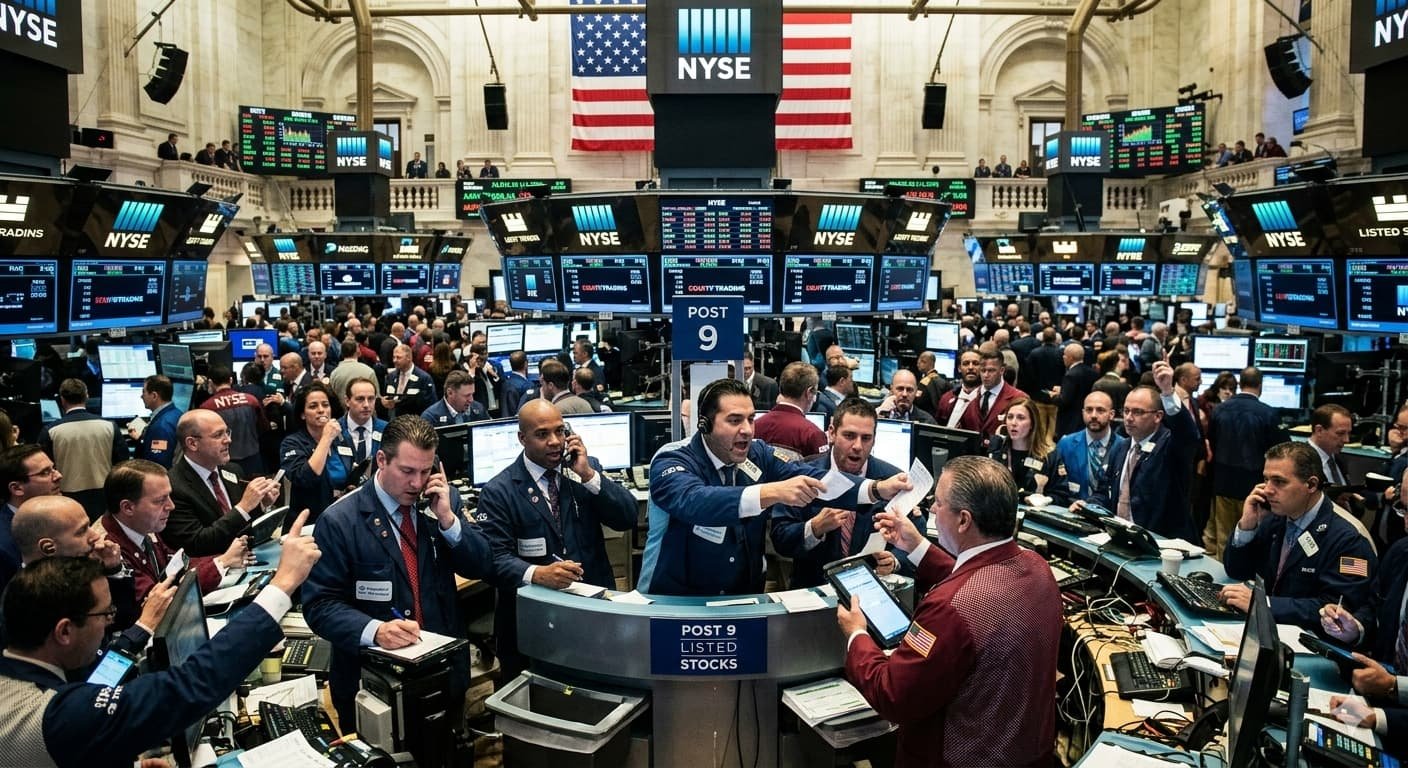
The market entered Monday at a record. The Nasdaq Composite hit a fresh all-time intraday high in Monday’s session before pulling back slightly. The S&P 500 traded up fractionally, closing near 7,162. Both indices have climbed more than 12% in the past month alone — a recovery from the sharp sell-off that followed the onset of the Iran war in late February. That recovery has been built on three pillars: easing diplomatic signals on Iran, strong Q1 earnings from financial and industrial companies, and AI spending expectations. All three pillars will be tested this week.
What Wall Street Is Watching in Each Report
| Company | Reports | Key Question | Consensus EPS |
|---|---|---|---|
| Microsoft | Wednesday after close | Is Azure AI revenue accelerating or plateauing? | $3.22 |
| Alphabet | Wednesday after close | Did Search hold up against AI competition? | $2.01 |
| Meta | Wednesday after close | Did ad revenue absorb the layoff year cleanly? | $5.27 |
| Amazon | Thursday after close | Is AWS AI the dominant cloud platform yet? | $1.37 |
| Apple | Thursday after close | Did services growth offset hardware softness? | $1.62 |
The universal question across all five reports is AI capital expenditure. Every one of these companies has made massive public commitments to AI infrastructure spending in 2026. Investors want to see those commitments translated into revenue. If Microsoft’s Azure AI growth is decelerating, if Alphabet’s AI Overviews are cannibalizing Search ad revenue, or if Meta’s $135 billion infrastructure spend is not yet generating measurable returns, the market’s AI premium across the entire index faces a repricing.
The risk is asymmetric. Strong results that meet elevated expectations will produce modest gains. Results that miss — or guidance that disappoints — will produce outsized declines. Domino’s Pizza’s 10.5% drop Monday on a Q1 earnings miss is a reminder of how quickly the market punishes companies that fall short in the current environment.
The Kevin Warsh Factor
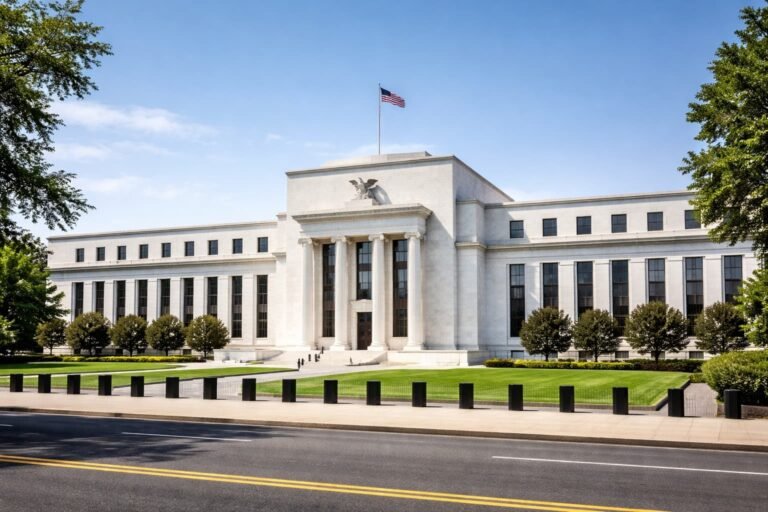
The Federal Reserve’s two-day policy meeting runs Tuesday and Wednesday, concluding with a rate decision at 2 PM Eastern Wednesday. That decision is the most predictable in years — traders are pricing a 100% probability of no change, leaving the benchmark rate at 3.50% to 3.75% where it has sat since December 2025.
What matters more this week is the Senate confirmation of Kevin Warsh as the next Federal Reserve Chairman. Warsh, a former Fed governor nominated by Trump in March, is expected to be confirmed this week following his April 21 Senate Banking Committee hearing. He would replace Jerome Powell, whose term expires in May.
Warsh’s economic philosophy differs meaningfully from Powell’s on one key dimension: he has historically been more inclined to respond to market signals quickly rather than waiting for lagging economic data to confirm a trend. In a period of slowing GDP growth, elevated energy inflation from the Iran war, and a stock market at all-time highs, that distinction matters. Markets will be watching his first public communications as Chair closely for any signal that the Fed’s rate posture is about to shift.
The Oil Price That Will Not Cooperate
Goldman Sachs raised its Brent crude forecast to $90 a barrel through Q4 2026 Sunday — a $10 upward revision driven by the expectation that Gulf exports will not normalize until end-June and that global inventories are drawing down at a record pace.
That forecast sits uncomfortably alongside every other economic variable the Federal Reserve, Congress, and American households need to move in a favorable direction. Lower oil prices would reduce inflation, justify a rate cut, improve consumer spending, lower airline and freight costs, and ease the pressure on fixed-income households. At $90 Brent sustained through the autumn, none of those things happen.
The S&P 500 can keep hitting record highs in that environment — and it has. But the divergence between a stock market at all-time highs and an economy where 40 to 45% recession probability estimates persist is one of the defining paradoxes of 2026. This week’s earnings reports and the GDP advance estimate due Thursday will either begin closing that gap or widen it further.
What This Week Means For Your Money
| Event | Date | Market Impact |
|---|---|---|
| Fed rate decision | Wednesday 2 PM ET | No change expected — watch statement language |
| Kevin Warsh confirmation vote | This week | New Fed Chair signals rate philosophy |
| Microsoft + Alphabet + Meta earnings | Wednesday after close | AI spending validation or repricing |
| Amazon + Apple earnings | Thursday after close | Cloud and consumer demand signals |
| Q1 2026 GDP advance estimate | Thursday 8:30 AM ET | Recession probability moves sharply either way |
| Goldman Sachs oil forecast | Now through Q4 | $90 Brent = inflation floor stays elevated |
For investors, the week presents a rare concentration of market-moving events. For anyone tracking mortgage rates — which have fallen below 6% partly on expectations of Fed easing — the combination of GDP data, Fed commentary, and big tech earnings will determine whether that favorable rate environment holds through May or reverses. For households watching gas prices, the Goldman oil forecast is the number to track. At $90 Brent, pump prices stay elevated regardless of what happens at the Fed or on Wall Street.
The market is at a record. The economy is slowing. The Iran war is unresolved. Every one of those three facts matters this week — and by Thursday evening, the picture will look materially different than it does today.