
WASHINGTON / MOSCOW, April 27, 2026 —
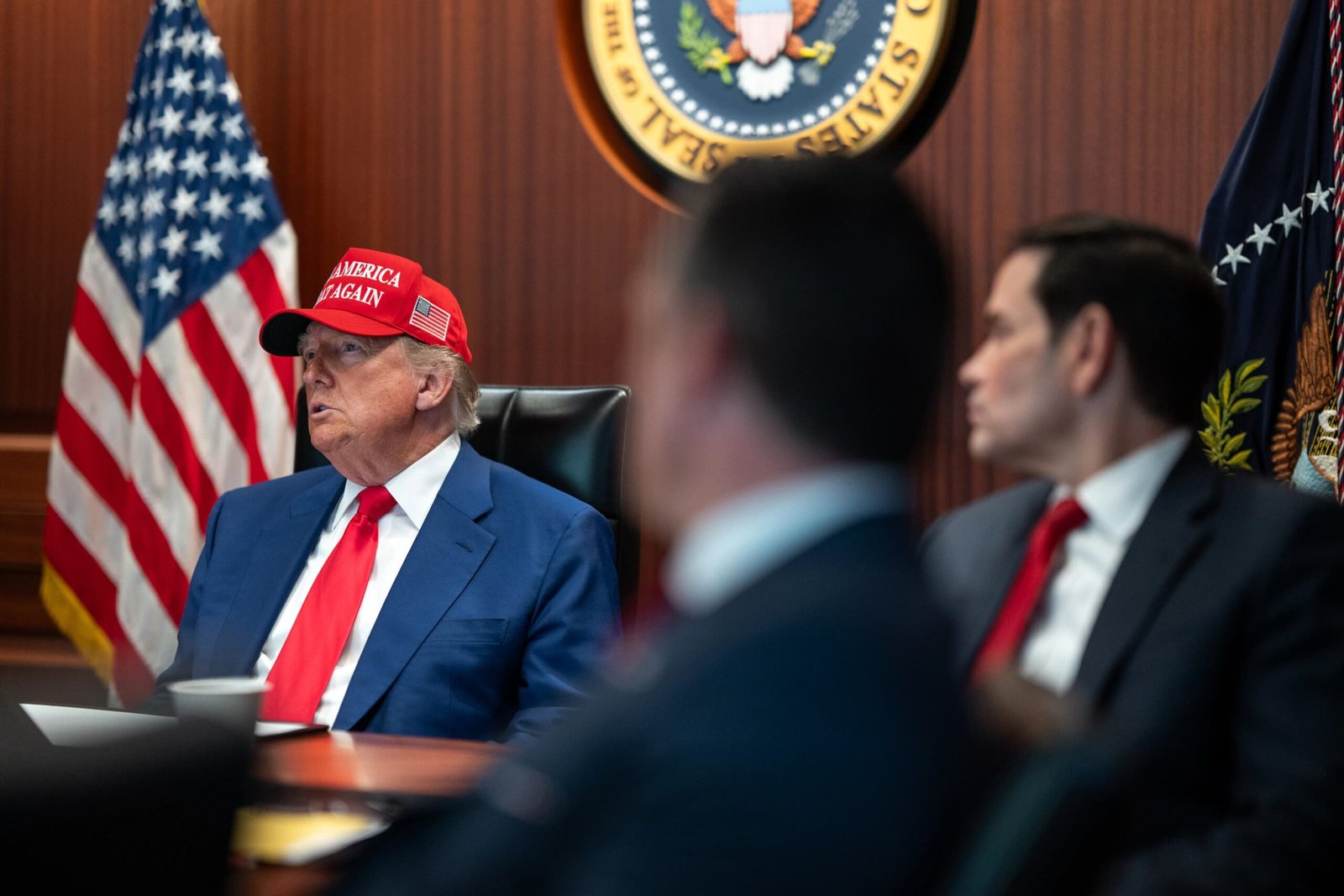
Iran has submitted a new peace proposal through Pakistani mediators that would reopen the Strait of Hormuz and end the war with the United States — but explicitly sets aside all discussion of Iran’s nuclear program for a later stage, according to a U.S. official and two sources familiar with the matter. President Trump is holding a Situation Room meeting Monday with his full national security team to evaluate the proposal. Iranian Foreign Minister Abbas Araghchi flew to Moscow on Monday to meet with Russian President Vladimir Putin, adding a new and consequential player to a negotiation that Washington has tried to keep bilateral.
The proposal lands at the most diplomatically complex moment of the conflict so far — and it splits the core question of the Iran war in two.
What Iran Is Actually Proposing
The new proposal, conveyed to Washington via Pakistani intermediaries, has three components. First, Iran would end its effective closure of the Strait of Hormuz and allow commercial vessel traffic to resume. Second, the United States would lift its naval blockade of Iranian ports. Third, the two sides would extend the existing ceasefire and work toward a permanent end to the fighting — with nuclear negotiations explicitly deferred to a separate, later-stage agreement.
That third element is the one the White House cannot easily accept. Trump entered the war with two stated primary objectives: reopen the Strait of Hormuz and end Iran’s nuclear weapons program. Iran’s proposal delivers the first objective while deliberately bypassing the second. The Iranian leadership, which has shown no internal consensus on nuclear concessions, is offering Washington the commercial win it needs for American consumers and the energy markets — without giving Trump the strategic trophy his administration has most prominently demanded.
The proposal also reflects Iran’s internal politics. Araghchi made clear to Pakistani, Egyptian, Turkish, and Qatari mediators over the weekend that there is no consensus inside Tehran’s leadership on how to address U.S. nuclear demands. The White House wants Iran to suspend uranium enrichment for at least a decade and remove its enriched uranium stockpile from the country. Iran’s hardline elements have flatly rejected those terms. The new proposal sidesteps the impasse rather than resolving it.
Where Every Key Player Stood on Monday
| Actor | Position / Action Monday |
|---|---|
| Iran (official proposal) | Reopen Hormuz + end war; nuclear talks deferred |
| Trump | Situation Room meeting Monday; “we hold all the cards” |
| Secretary of State Marco Rubio | Poured cold water on proposal — signaled skepticism |
| Araghchi | In Moscow meeting Putin; sought Russian backing |
| Putin | Met Araghchi; pledged support for Iran in ongoing talks |
| Pakistani mediators | Conveyed proposal to Washington; still active |
| Goldman Sachs | Raised Brent crude forecast to $90/barrel by Q4 2026 |
| U.S. Navy | Blockade active — 37+ ships redirected |
| Shadow fleet tankers | 26 breaches of blockade line confirmed since April 13 |
Why Araghchi Flew to Moscow
The decision to bring Russia into the process is a significant escalation of Iran’s diplomatic strategy. Putin and Araghchi met at the Boris Yeltsin Presidential Library in St. Petersburg, where Putin pledged Russian support for Iran in its ongoing negotiations with the United States. Moscow has been largely absent from the public diplomacy of this conflict — but Russia has deep financial, energy, and strategic interests in the outcome of any deal that reshapes Persian Gulf access and Iran’s nuclear posture.
Iran’s calculation in involving Moscow is straightforward: Russian backing adds a counterweight to U.S. pressure and signals to Washington that any deal must be acceptable not just to Tehran but to Moscow as well. It also gives Iran additional diplomatic cover if talks collapse — allowing it to frame any breakdown as American inflexibility in the face of a multilateral peace effort rather than Iranian obstruction.
Trump’s response on Sunday — “we have all the cards; they have none” — was made before Araghchi landed in St. Petersburg. Whether the Moscow dimension changes the administration’s calculus heading into Monday’s Situation Room meeting remains to be seen.
What Goldman Sachs Said About Oil
Goldman Sachs on Sunday raised its Brent crude oil forecast to $90 a barrel by the fourth quarter of 2026, up from its prior forecast of $80. The bank cited three factors: Gulf exports are now not expected to normalize until end-June at the earliest, production recovery from Gulf facilities will be slower than previously assumed, and global inventories are drawing down at what Goldman described as a record pace of 11 to 12 million barrels per day in April.
“I’d argue the fat tail is still ahead of us, not behind,” said one ETF strategist quoted in the bank’s note — meaning the risk of an extreme upside oil price shock has not passed. At $90 a barrel sustained through year-end, U.S. gasoline prices — which had begun to fall in recent days as ceasefire hopes briefly lifted market sentiment — will likely climb again. The household energy cost that has been driving inflation, keeping the Federal Reserve frozen, and eating into American purchasing power will remain elevated well into autumn unless a deal is reached soon.
The Iran war’s economic bill is still being written. Monday’s Situation Room meeting will help determine how large that bill ultimately becomes.