
WASHINGTON, April 25, 2026 —
Key Takeaways
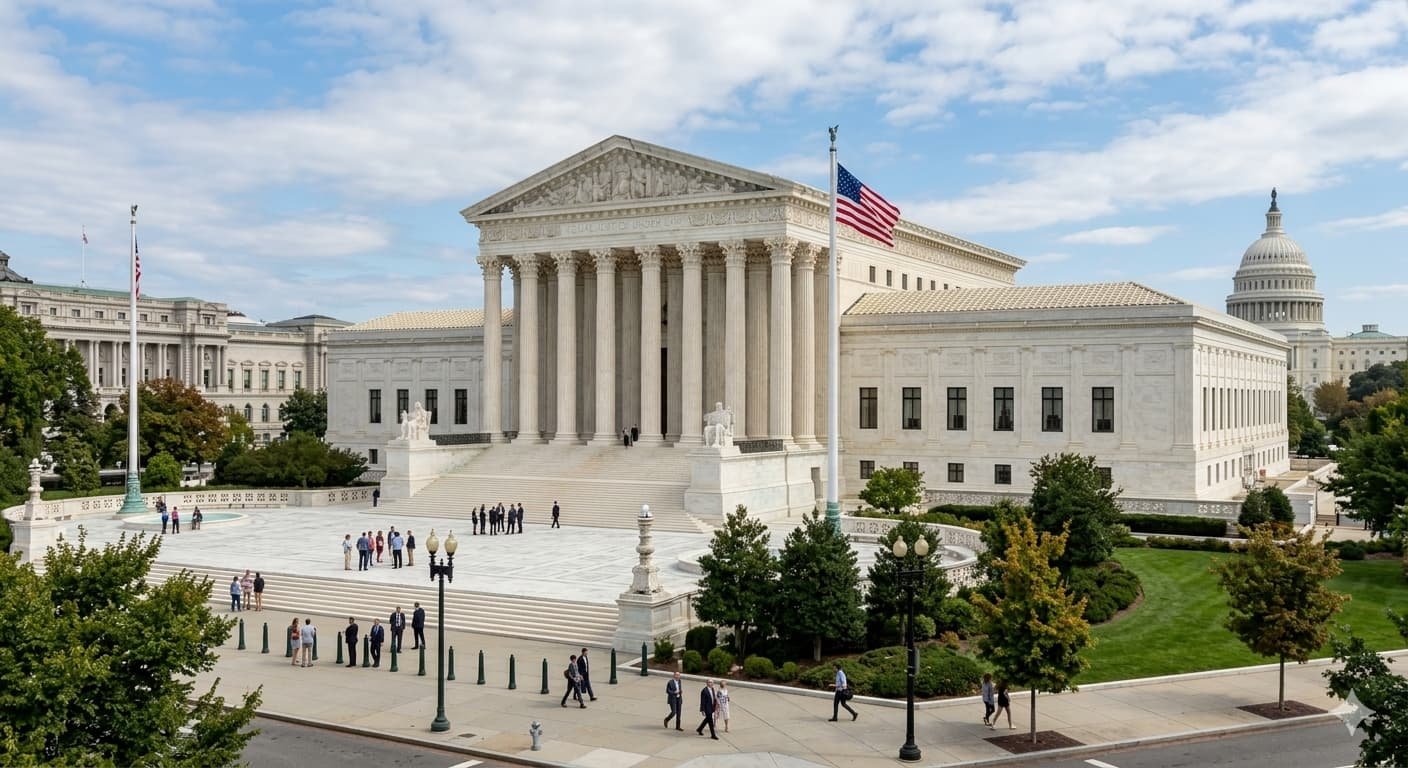
- The U.S. Supreme Court is currently evaluating whether President Trump’s use of the International Emergency Economic Powers Act to impose sweeping tariffs is constitutional — a ruling against the administration could require refunding more than $135 billion in tariff revenue already collected from over 300,000 importers.
- The current U.S. average effective tariff rate stands at 11.8% — the highest since the early 1940s — costing the average American household between $760 and $940 in lost purchasing power, according to the Yale Budget Lab.
- Legal experts widely expect the Supreme Court to rule against the administration’s use of emergency powers for tariffs — but every week the Court delays increases the probability the administration prevails, as legal deadlines and implementation timelines harden.
What Is IEEPA and Why Does It Matter
The International Emergency Economic Powers Act was passed by Congress in 1977. It gives the president broad authority to regulate international commerce during a national emergency. No president before Trump used it to impose tariffs. The legal question now before the Supreme Court is whether “regulating international commerce” includes imposing taxes — which is what tariffs functionally are — or whether that power belongs exclusively to Congress under the Constitution’s taxing clause.
The administration’s position is that the national emergency declared at the start of Trump’s second term — covering trade deficits, supply chain vulnerabilities, and what the White House characterizes as unfair foreign trade practices — provides the legal foundation for the tariffs. Critics argue that IEEPA was never designed as a tariff mechanism, that Congress never intended to delegate that authority, and that allowing it would effectively transfer one of Congress’s core constitutional powers permanently to the executive branch.
What a Ruling Against the Administration Would Mean
| Scenario | Tariff Revenue Impact | Household Impact | GDP Impact |
|---|---|---|---|
| IEEPA tariffs upheld | $1.3 trillion over 10 years | $760–$940 loss per household | Economy 0.1% smaller long-run |
| IEEPA tariffs struck down | $135B+ in refunds required | Prices fall modestly | Near-term uncertainty spike |
| Section 122 tariffs expire July 2026 | Revenue drops significantly | Household loss falls to $450–$570 | Economy recovers slightly |
| All tariffs made permanent | $1.9 trillion over 10 years | $1,200–$1,500 loss per household | Economy 0.18% smaller long-run |
If the Court invalidates the IEEPA tariffs, the administration would face an unprecedented logistical challenge: identifying, processing, and refunding tariff payments made by more than 300,000 importers since the tariffs took effect. More than 1,000 companies have already filed for refunds in anticipation of a ruling, a number that has escalated sharply since November. How a mass refund process would actually operate has not been publicly addressed by the administration.
What the IMF Said About the U.S. Economy This Month
The International Monetary Fund completed its annual consultation with the United States on April 1, 2026 and delivered a blunt assessment. U.S. GDP growth is expected to reach 2.4 percent in 2026 — a modest acceleration from the 2 percent recorded in 2025 despite the tariff shock. But the IMF warned that the general government deficit is expected to remain in the 7 to 7.5 percent of GDP range, with national debt on track to exceed 140 percent of GDP by 2031.
The IMF’s board expressed explicit concern about the tariff regime, noting that higher import taxes and trade policy uncertainty are expected to reduce U.S. growth potential. Directors stressed that achieving fiscal stability will require both higher federal revenues and a rebalancing of entitlement programs — a combination that no current legislative proposal addresses simultaneously.
The Federal Reserve Is Watching — and Staying Still
Federal Reserve Vice Chair Philip Jefferson addressed the economic outlook earlier this month, noting that core inflation — excluding food and energy — is estimated to have risen 3.0 percent for the 12 months ending in February 2026. That is well above the Fed’s 2 percent target. Jefferson explicitly cited tariff pass-through and elevated energy prices as the primary obstacles to the disinflation the Fed needs to justify rate cuts.
The Fed cut its benchmark rate three times in late 2025, bringing the federal funds rate to a range of 3.50 to 3.75 percent. It has held there since. Jefferson’s remarks made clear that another cut would require a material worsening in the labor market alongside declining inflationary pressures — conditions that do not currently exist.
For the 15 million Americans carrying variable-rate debt — home equity lines, adjustable-rate mortgages, certain auto loans — the Fed’s holding pattern means borrowing costs remain elevated for longer. The tariff-driven inflation keeping the Fed frozen is the same inflation showing up in their monthly payments.
The July Deadline Nobody Is Talking About
Section 122 tariffs — a separate category of import taxes applied under a different legal authority — are scheduled to expire in 150 days from their imposition. If they expire as scheduled in July 2026, the average effective tariff rate drops from 11.8 percent to approximately 9.7 percent, and the household purchasing power loss falls from $760–$940 to $450–$570.
If the administration extends them — which it has the legal authority to do regardless of the IEEPA ruling — the household loss climbs to $1,200–$1,500 and the long-run GDP hit roughly doubles. The decision on Section 122 extension is entirely within the executive branch’s control and will be made with no congressional vote required.
The Supreme Court ruling, when it comes, will settle the constitutional question about IEEPA. The Section 122 decision in July will determine how much of the tariff regime survives regardless of what the Court says. Both decisions are coming in the same narrow window. Together they represent the most consequential economic policy moment of 2026 — and almost nobody outside Washington is tracking both simultaneously.