
WASHINGTON, APRIL 16, 2026 —
Key Takeaways
- The S&P 500 hit an all-time record high Wednesday — fully erasing the market correction caused by the Iran war — while gasoline prices remain above $4 a gallon nationwide and grocery costs are still running well above the Federal Reserve’s 2% inflation target.
- America’s largest banks just posted their most profitable quarter in history, with record equities trading, record investment banking fees, and record wealth management revenues — none of which translates into lower prices at the pump or the supermarket.
- The growing gap between Wall Street’s recovery and Main Street’s reality reflects the most structurally divided American economy since the post-2008 recovery — and raises urgent questions about who actually benefits when financial markets hit records.
Something unusual happened Wednesday. The S&P 500 crossed its all-time record high for the first time since January, completing a remarkable 10% recovery in just 11 trading sessions. Investment banks reported their most profitable quarter on record. The Nasdaq had its longest winning streak in history. By every market measure, the financial crisis caused by the U.S.-Iran war is over.
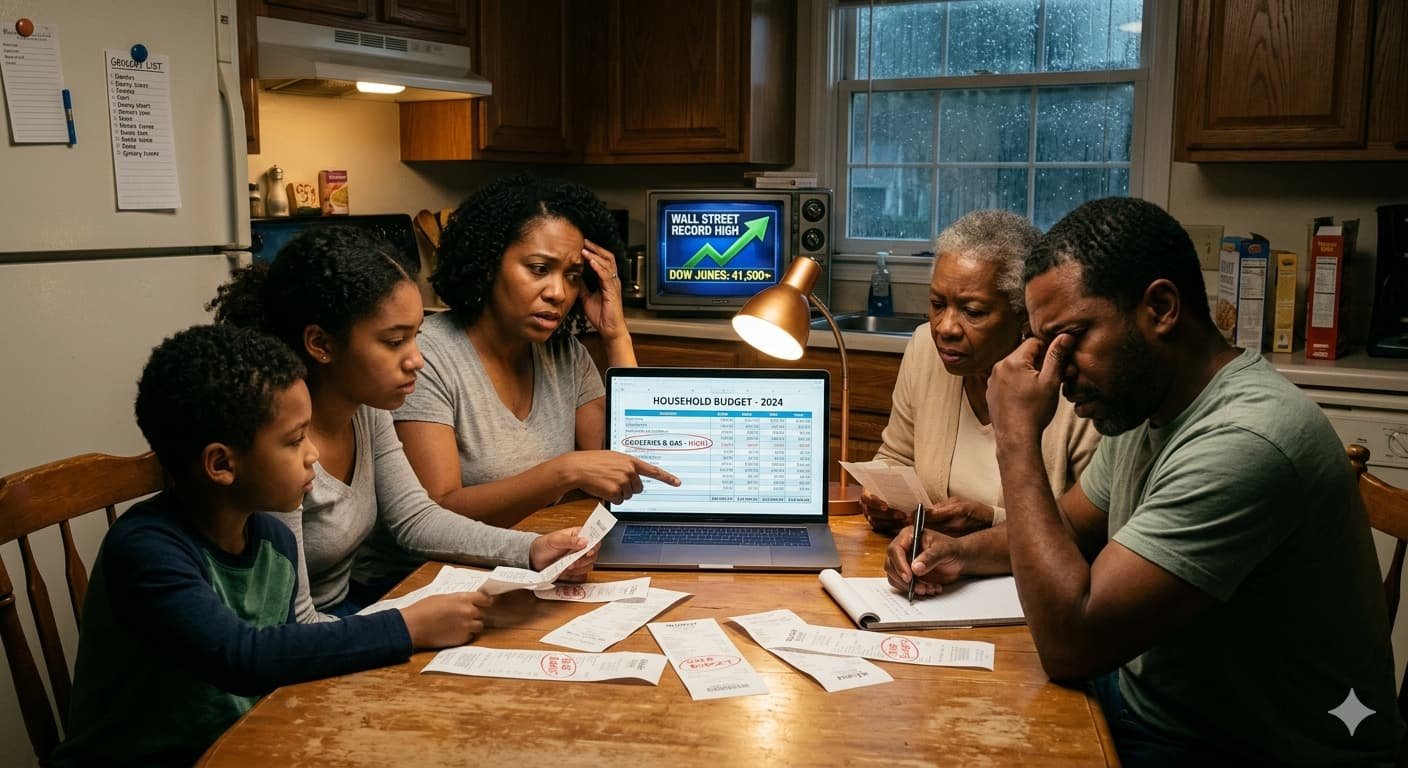
At the same time, the average gallon of gas in America costs $4.12. Grocery inflation is running at its highest sustained level in two years. The Federal Reserve cannot cut interest rates because inflation is still too hot. The housing market is frozen by 6%-plus mortgage rates. Credit card debt is at a record $1.28 trillion. And 22% of Americans carrying credit card balances believe they will never get out of debt.
These two realities — record Wall Street and struggling Main Street — are not contradictions. They are features of the same economic structure. And understanding why they coexist matters enormously for anyone trying to make financial decisions in the months ahead.
Why Markets Recovered Before Prices Did
Stock markets are forward-looking by design. When investors buy stocks today, they are pricing in expectations about profits, interest rates, and economic conditions six to twelve months from now — not what things cost at the pump this week.
When diplomats in Islamabad came within inches of a U.S.-Iran deal last weekend, and when Trump began signaling that the war was “very close to over,” investors concluded that Brent crude would eventually fall back toward pre-war levels and that the energy shock squeezing corporate profit margins would be temporary rather than permanent. That conclusion drove buying. The buying drove prices higher. And prices higher pushed the index to a record.
None of that timeline moves gasoline prices. Energy experts are nearly unanimous that even a full ceasefire, a complete reopening of the Strait of Hormuz, and a permanent peace deal between the U.S. and Iran would take two to four months before pump prices in America meaningfully decline. Supply chains, refinery schedules, shipping insurance, and vessel operator confidence all take time to normalize after a disruption of this magnitude.
| The Wall Street vs. Main Street Divide — April 2026 | |
|---|---|
| S&P 500 from January record | +0.8% (new all-time high) |
| S&P 500 from February 28 (war start) | +2% |
| National gas price average | $4.12/gallon |
| Gas price before war (Feb 28) | ~$3.00/gallon |
| Brent crude Wednesday | $94.93/barrel |
| Brent crude before war | ~$75/barrel |
| March 2026 CPI inflation | 3.3% |
| Fed’s inflation target | 2.0% |
| US credit card debt | $1.28 trillion (record) |
| Americans who can’t pay full monthly balance | ~111 million |
The K-Shaped Economy in Its Sharpest Form
Economists have used the term “K-shaped recovery” since 2020 to describe an economy where upper-income Americans see their financial position improve while lower and middle-income Americans stagnate or fall behind. Wednesday’s market record illustrated the concept with unusual clarity.
Americans who hold substantial stock portfolios — primarily those with significant 401(k) balances, brokerage accounts, or pension funds weighted toward equities — are measurably better off Wednesday than they were a month ago. Their paper wealth has recovered. Their retirement accounts are at or above where they started the year.
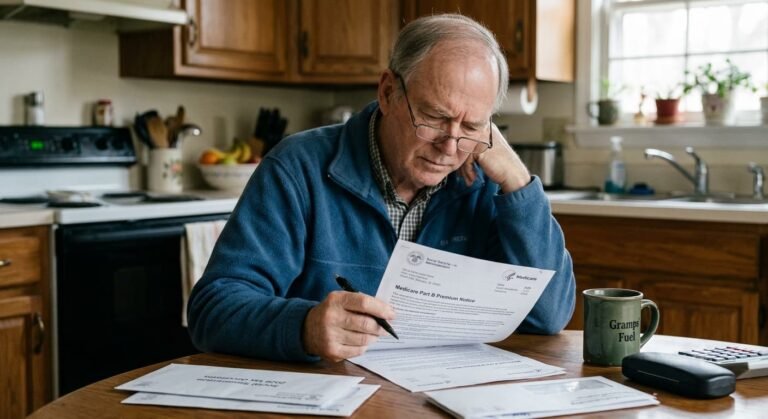
Americans who own little or no stock — which describes the majority of households with incomes below $75,000 — experienced the Iran war primarily as higher gas prices, higher grocery costs, higher airline ticket prices, higher delivery fees, and higher utility bills. For them, Wednesday’s S&P 500 record is simply not part of their financial experience. It exists in a separate economy that touches their lives mainly through headlines.
This divergence is not new. The top 10% of American households own approximately 89% of all U.S. stocks. The bottom 50% own roughly 1%. A record-setting stock market is, by definition, an event concentrated in the financial position of the wealthiest Americans.
What Bank Profits Actually Signal About the Broader Economy
The extraordinary bank earnings reported this week do carry genuine information about the health of the broader economy — just not the information headline readers often assume.
Bank of America’s profit surge was driven significantly by investment banking fees rising 21%, which reflects a reopening of corporate M&A and IPO activity. That is genuinely good news for job creation in certain sectors and for the businesses that complete those deals. The bank’s strong consumer spending data — cited by CEO Brian Moynihan as evidence of a resilient economy — reflects the spending patterns of its customer base, which skews toward middle and upper-middle income households with stable employment and meaningful savings.
Morgan Stanley’s equities trading record — $5.15 billion in a single quarter — reflects the surge in market volatility caused by the Iran war. War creates volatility. Volatility creates trading revenue. A firm that profits when markets swing dramatically does so in part because other investors are losing money navigating those same swings.
The fixed income trading gains, similarly, came substantially from energy market volatility. Commodity swings that squeezed American consumers at the pump generated fees for trading desks positioned to profit from exactly that kind of price movement.
What This Means For Your Money
If your retirement savings are invested in index funds, the S&P 500 record matters — your account balance has recovered from March’s correction. Review your allocation and make sure you are not overexposed to energy or industrial sectors that remain vulnerable if diplomacy fails and oil spikes again.
If you are a working American primarily concerned with household costs, the market record does not change your current reality. Gas remains expensive. Groceries remain expensive. The Federal Reserve will not cut rates before inflation cools — and inflation will not cool meaningfully until energy prices fall. That timeline depends entirely on whether the ceasefire survives past April 21 and whether the Strait of Hormuz reopens to full traffic flow.
The most important economic number in your life right now is not the S&P 500. It is the date of the next U.S.-Iran negotiating session and what it produces.