
WASHINGTON, APRIL 12, 2026 —
Key Takeaways
- The U.S.-Iran war has removed 10 to 11 million barrels of oil per day from global markets — the largest energy supply disruption in recorded history, according to the International Energy Agency.
- Gas prices have surged past $4 a gallon nationwide — a full dollar higher than before hostilities began on February 28 — and analysts say meaningful relief is months away even if a deal is reached today.
- The Iran war “tax” is now rippling far beyond the gas pump, hitting airline tickets, package delivery, groceries, and manufacturing costs across the entire American economy.
Six weeks into the U.S.-Israel war against Iran, the economic bill is arriving for every American household — not just at the gas station, but on every delivery package, airline ticket, and grocery receipt. And Sunday’s collapse of peace talks in Islamabad, followed by President Trump’s announcement of a naval blockade of the Strait of Hormuz, makes that bill significantly harder to close.
The International Energy Agency has characterized the situation as the “largest supply disruption in the history of the global oil market,” drawing comparisons to the 1970s energy crisis through acute supply shortages, currency volatility, and heightened stagflation risk.
What the War Has Cost American Wallets So Far
U.S. gasoline prices have risen above $4 a gallon — the highest since the Russia-Ukraine war began in 2022 — and a full dollar more expensive than in February, before the hostilities.The damage, however, extends well beyond the pump.
Higher diesel and jet fuel prices led Amazon and JetBlue to add surcharges, while the U.S. Postal Service implemented its first-ever fuel surcharge of 8% on packages. Delta Air Lines raised checked baggage fees. United Airlines followed. FedEx activated a 26.5% fuel surcharge on deliveries — and these costs filter through to every business that ships goods, orders supplies, or moves freight.
| Iran War Economic Impact on American Households | Before War (Feb 2026) | Current (April 2026) |
|---|---|---|
| Average gasoline price | ~$3.00/gallon | $4.00+/gallon |
| Brent crude oil price | ~$75/barrel | ~$100/barrel |
| March 2026 headline CPI | — | 3.3% year-over-year |
| Energy component of CPI | — | +10.9% monthly |
| USPS package surcharge | None | 8% on all packages |
| FedEx fuel surcharge | ~15% | 26.5% |
Why Prices Won’t Drop Quickly Even If the Strait Reopens
Even in a best-case scenario where the Strait of Hormuz fully reopens, analysts project that crude oil prices will hover around $100 a barrel until at least the end of summer, as the inventory drawn down to manage the shortage will need months to be replenished.
The supply chain lag compounds the problem. Fuel prices go up like “rockets” and come down like “feathers” — and even if oil prices ease immediately, consumers typically see partial relief at the pump only after one to two months. Shipping confidence, insurance costs, and logistical rerouting tend to persist long after active hostilities ease.
The OECD predicts U.S. inflation will rise to 4.2% in 2026, far above the 2.68% average rate throughout 2025 — driven significantly by the energy shock from the Iran conflict. That forecast assumes no further escalation. Sunday’s naval blockade announcement introduces the possibility of a far more severe scenario.
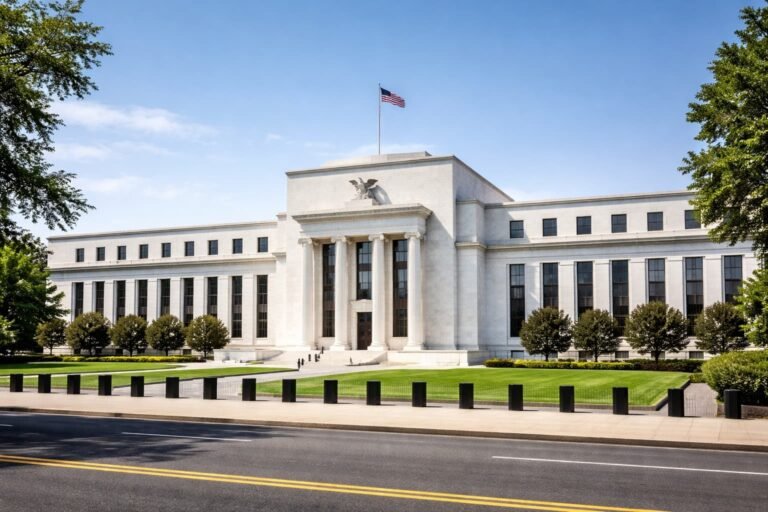
The Federal Reserve Is Caught
The energy shock has placed the Federal Reserve in an increasingly difficult position. The Fed has not indicated any greater likelihood of cutting rates to stimulate the economy, given the risk that doing so could push inflation higher. Fed Chair Jerome Powell has indicated he sees short-term oil shocks as something central banks typically look past when analyzing long-term inflation trends.
That calculus may change if the blockade extends the crisis. In a more severe and prolonged escalation, where oil prices remain above $100 per barrel and financial conditions tighten, inflation could approach 5% while growth could weaken by more than 1 percentage point — significantly increasing recession risk.
What This Means For You
| If You Are… | What to Watch |
|---|---|
| A driver | Gas prices likely to stay above $4 through summer even with a deal; budget accordingly now. |
| An online shopper | Fuel surcharges from FedEx, UPS, USPS, and Amazon are raising the real cost of every delivery. |
| A traveler | Airline fares and checked baggage fees are rising directly because of jet fuel costs; book fixed-price fares now if possible. |
| A small business owner | Rising diesel and shipping costs are compressing margins — passing costs to customers risks losing them; holding costs risks insolvency. |
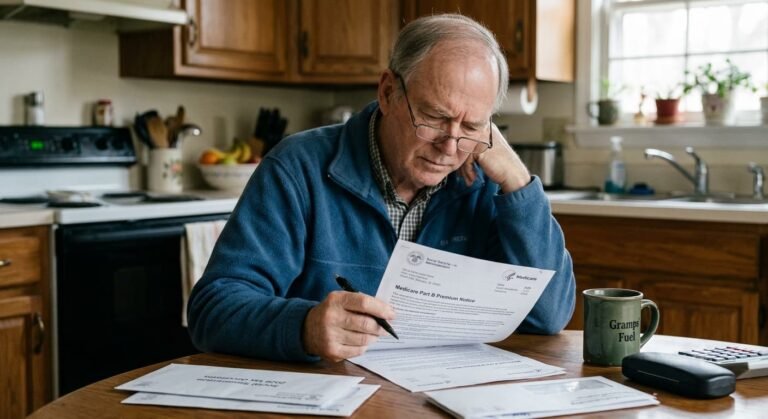
| A retiree or fixed-income earner | Inflation running at 3.3% is eroding purchasing power faster than Social Security’s 2.8% COLA adjustment covered. |
The bottom line for American households is this: the Iran war is a broad-based cost-of-living shock, not merely an energy story. Every good that moves on a truck, every package that ships overnight, every flight that takes off — all carry a surcharge now. The longer the Strait of Hormuz remains choked, the deeper that shock becomes.