
WASHINGTON, MARCH 19, 2026 — More than a year after 67 people died when an Army helicopter and an American Airlines jet collided in the skies above the Potomac River, the Federal Aviation Administration has fundamentally changed how air traffic controllers manage aircraft near the nation’s busiest airports — eliminating a decades-old procedure that federal investigators said contributed directly to the deadliest aviation disaster the United States had seen in years.
FAA Administrator Bryan Bedford and Transportation Secretary Sean Duffy announced Wednesday that the agency is permanently suspending the use of visual separation between helicopters and fixed-wing aircraft in congested airspace around major U.S. airports. Going forward, air traffic controllers must use radar to actively maintain specific distances between helicopters and commercial aircraft at all times — particularly wherever helicopter routes cross the arrival and departure paths of passenger planes.
The new rule applies immediately at more than 150 airports across the country operating in Class B airspace, Class C airspace, and Terminal Radar Service Areas — covering virtually every major hub in the United States from Los Angeles to New York to Chicago.
What Visual Separation Was — and Why It Killed 67 People
For decades, visual separation was a standard and widely accepted tool in American aviation. Under the procedure, air traffic controllers could point out nearby aircraft to pilots and then allow those pilots to maintain safe distances by simply looking out their windows and avoiding the other craft visually. It was a system built on the assumption that pilots could reliably see and avoid each other in busy airspace.
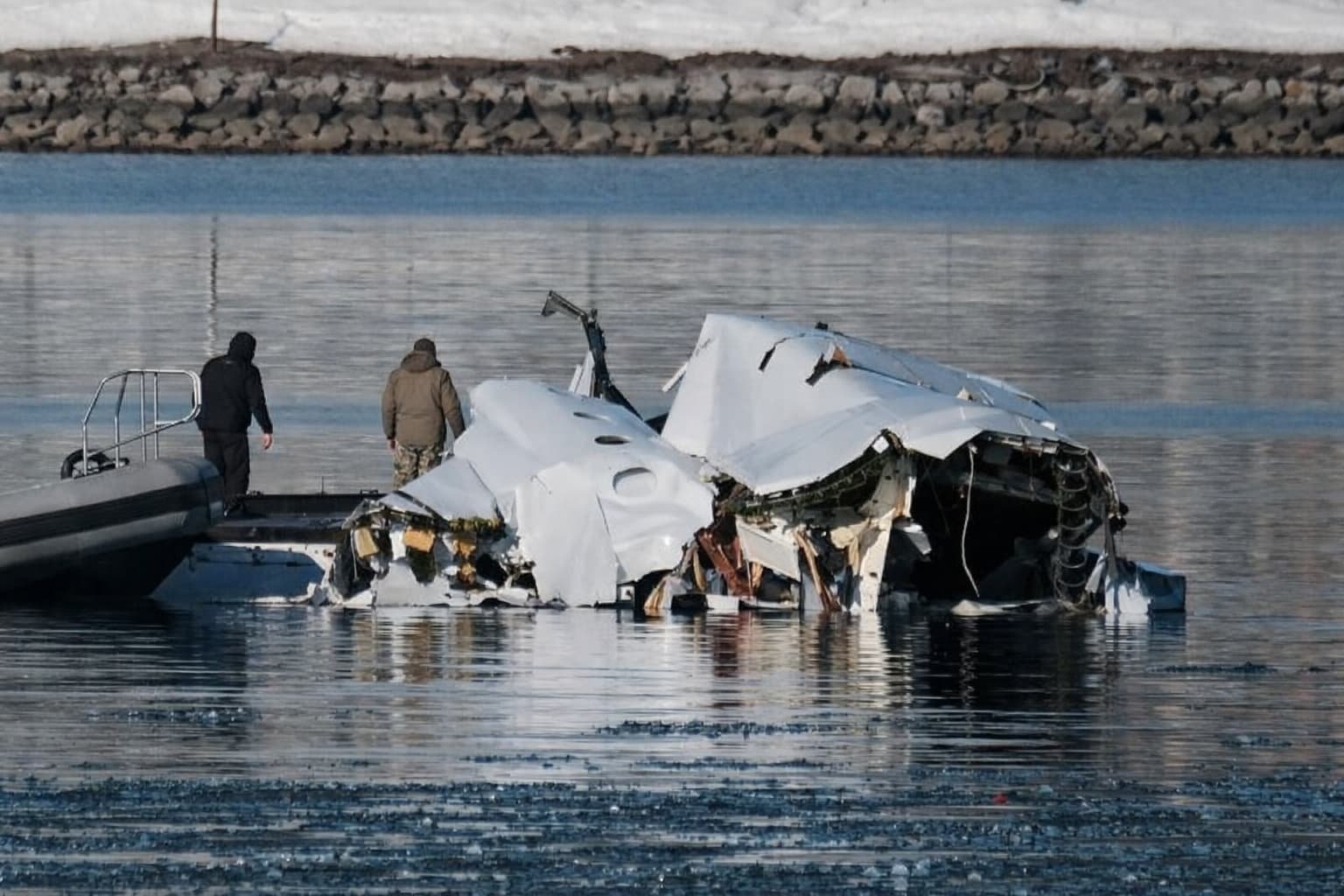
January 29, 2025 exposed the flaw in that assumption. An Army Black Hawk helicopter carrying three crew members collided with American Airlines Flight 5342 — a regional jet operated by PSA Airlines carrying 60 passengers and four crew members — as the American Airlines plane was approaching Ronald Reagan Washington National Airport. All 67 people aboard both aircraft were killed. It was the deadliest aviation accident in the United States in more than two decades.
The National Transportation Safety Board, after a year-long investigation, identified the air traffic system’s overreliance on visual separation as one of the primary contributing factors. Investigators determined the helicopter crew almost certainly never saw the passenger jet before impact. The NTSB also cited inadequate training on the proper use of visual separation and a culture within the system that prioritized traffic efficiency over rigorous safety margins.
Two Near-Misses in 2026 Forced the FAA’s Hand
The January 2025 crash triggered immediate restrictions on helicopter traffic around Reagan National Airport. But the FAA’s broader review of helicopter operations across the national airspace system revealed the problem was not confined to Washington. Two recent close calls made it impossible to delay a nationwide policy change.
On February 27, 2026, American Airlines Flight 1657 was on a converging course with a police helicopter as it approached San Antonio International Airport. The helicopter turned away at the last moment to avoid a collision. Five days later, on March 2, a Beechcraft 99 was cleared to land at Hollywood Burbank Airport near Los Angeles while a helicopter was crossing its final approach path. Again, the helicopter turned to avoid impact.
In both cases, a collision was avoided only because a pilot made an evasive maneuver at the final moment. Neither incident made national headlines. Both, the FAA said Wednesday, made the new rule inevitable.
FAA Safety Rule Changes — Then vs. Now
| Element | Old Rule | New Rule |
|---|---|---|
| Separation Method | Visual — pilots look and avoid | Radar — controllers actively manage |
| Applies To | Selected high-risk airports | 150+ airports nationwide |
| Controller Role | Advisory — point out traffic | Active — maintain specific distances |
| Helicopter Access | Unrestricted in most airspace | Radar-managed where crossing flight paths |
| Emergency Services | Standard visual rules | Retained access under controlled conditions |
What the New Rule Actually Requires
Under the new policy, air traffic controllers at major airports are now required to use radar-based separation to maintain specific lateral or vertical distances between helicopters and commercial aircraft at all times when helicopter routes intersect arrival or departure corridors. Controllers can no longer simply advise pilots of nearby traffic and leave avoidance to visual judgment.
The rule makes an explicit exception for essential services. Medical evacuation helicopters, law enforcement aircraft, and other emergency services retain access to controlled airspace — but under radar-managed conditions rather than informal visual procedures.
“Today, we are proactively mitigating risks before they affect the traveling public,” FAA Administrator Bedford said in the announcement. Bedford acknowledged the agency’s own review had found a systemic overreliance on pilot see-and-avoid operations — a practice the data showed was consistently contributing to dangerous situations in high-traffic areas.
Congress Has More Work to Do
The FAA’s procedural change is significant but it does not replace pending legislation. The Senate passed the ROTOR Act unanimously in December 2025, a bill requiring broader use of tracking technology and implementing key reforms tied directly to the NTSB’s findings from the Reagan National crash. The bill failed in the House on February 24, 2026, falling short of the two-thirds threshold needed after the Pentagon withdrew its support.
House lawmakers are now working on a broader package — the ALERT Act — introduced in February 2026 as a comprehensive response to all 50 safety recommendations the NTSB issued after the crash. That legislation remains pending. Wednesday’s FAA action moves policy in the direction Congress has been debating, but the legislative fixes that investigators specifically recommended have not yet become law.
For the 250 million Americans who board commercial flights every year, Wednesday’s announcement means the airspace around the airports they use is meaningfully safer than it was the day before. Whether it is safe enough — and whether Congress will finish what the NTSB started — is a question that remains unanswered.