
WASHINGTON, MARCH 19, 2026 — Iran struck the world’s largest liquefied natural gas facility for the second time in 17 days early Thursday morning, sending oil prices above $110 a barrel, triggering stock market drops across Asia, and pushing the Iran war into territory that now directly threatens energy supplies for Europe, Asia, and the United States.
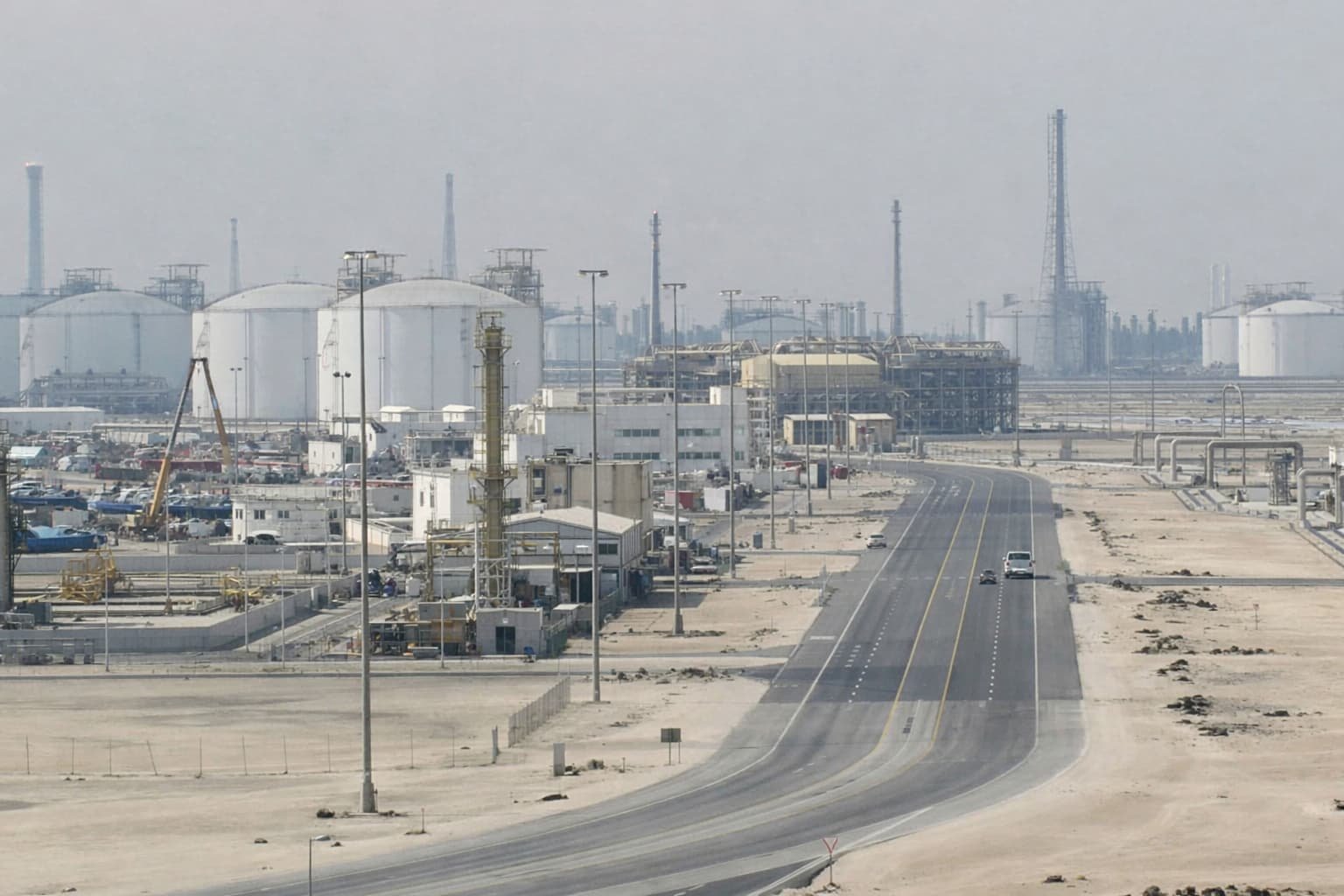
Iranian ballistic missiles hit Qatar’s Ras Laffan Industrial City — a sprawling complex 80 kilometers north of Doha that produces roughly 20% of the world’s LNG supply — causing what QatarEnergy described as “sizeable fires and extensive further damage” at multiple facilities. No casualties were reported. Qatar’s civil defense teams contained two of three fires at the site. The attack is the second direct strike on Ras Laffan since the war began, following an earlier Iranian drone attack on March 2 that forced Qatar to halt LNG production entirely.
President Trump responded within hours, threatening on Truth Social to “massively blow up” Iran’s entire South Pars gas field if Tehran continued targeting Qatar’s energy infrastructure.
How We Got Here — A Chain Reaction in 24 Hours
The strike on Ras Laffan was not unprovoked. It was the latest link in a chain of energy attacks that escalated dramatically on Wednesday.
Israeli fighter jets struck Iran’s South Pars gas field — the largest natural gas field in the world, located off Iran’s southern coast — in an overnight operation that Iran said caused significant damage to multiple processing facilities. South Pars is not just Iran’s energy crown jewel. It sits atop the same underwater reservoir as Qatar’s North Field — the source of Ras Laffan’s LNG production. Qatar condemned the Israeli strike immediately, calling it a “dangerous and irresponsible step” that threatened global energy security.
Iran’s Revolutionary Guard then issued a direct warning: Gulf energy facilities would pay. Within hours, Iranian ballistic missiles were in the air over Qatar.
Iran’s Energy War — Who Has Been Hit
| Target | Country | Attack Type | Status |
|---|---|---|---|
| Ras Laffan LNG Hub | Qatar | Ballistic missiles | Extensive damage — 2nd strike |
| South Pars Gas Field | Iran | Israeli airstrikes | Damaged, fire contained |
| Ras Tanura Oil Refinery | Saudi Arabia | Drone attack | Fire, partially offline |
| Jubail Petrochemical | Saudi Arabia | Missile threat | On alert |
| Al Hosn Gas Field | UAE | Missile threat | On alert |
| Strait of Hormuz | Regional | Naval blockade | Largely blocked |
Oil Above $110 — What It Means for American Wallets
The markets responded instantly. Brent crude jumped 4% to $111.80 a barrel as of Wednesday evening ET. U.S. West Texas Intermediate rose more than 3% to $99.47. Asian stock markets opened sharply lower Thursday morning — Japan’s Nikkei 225 fell 2.7%, South Korea’s Kospi dropped 2.6%, and Hong Kong’s Hang Seng declined 1.4%.
For American consumers, oil at $110 means one thing above all: gas prices are going higher. The national average was already at $3.54 per gallon in mid-March. Energy analysts now warn the average could approach $4.00 per gallon within weeks if the strikes on Gulf energy infrastructure continue.
Senior energy advisor Tom Kloza told reporters the market could enter an “all bets are off” scenario if attacks begin targeting energy infrastructure outside the Persian Gulf. He warned that a strike on a European refinery or a U.S. facility would send prices “absolutely apocalyptic.”
Trump: I Will Destroy South Pars If Qatar Is Hit Again
President Trump’s response to the Ras Laffan strike was direct and escalatory. Posting on Truth Social late Wednesday, Trump said Israel — not the United States — had struck South Pars, and that the U.S. knew nothing about the operation in advance. He described Iran’s retaliatory strike on Qatar as “unjustified and unfair” given that Qatar had nothing to do with the Israeli attack.
Trump then issued his threat: if Iran attacks Qatar’s LNG facilities again, American forces will destroy the entire South Pars gas field. It is the most explicit U.S. energy threat of the war — and one that places the most important gas reservoir on Earth directly in the crosshairs.
Qatar responded to the Iranian strike by declaring the Iranian Embassy’s military and security attachés persona non grata, ordering them to leave the country within 24 hours — a dramatic diplomatic rupture between two nations that share a border and a gas field.
Arab States Unite Against Iran. Saudi Arabia Warns of Military Action.
The strikes on Gulf energy infrastructure triggered an emergency meeting of foreign ministers in Riyadh on Thursday. The foreign ministers of 12 Arab and Islamic nations issued a joint statement calling on Iran to “immediately halt its attacks” and respect international law.
Saudi Arabia’s Foreign Minister Prince Faisal bin Farhan went further. Speaking to reporters after the Riyadh meeting — held as ballistic missiles were intercepted over the Saudi capital — he announced that Saudi Arabia had “reserved the right to take military actions” against Iran if deemed necessary.
“Iran’s message today was quite clear,” the foreign minister said. “The targeting of Riyadh, while a number of diplomats are meeting, I cannot see as coincidental.”
French President Emmanuel Macron called for an immediate moratorium on strikes targeting civilian energy and water infrastructure, warning that “civilian populations and their essential needs must be protected from military escalation.”
What Comes Next
Qatar has lost partial LNG production twice in 17 days. Saudi Arabia’s largest refinery has been struck. The UAE is on alert. The Strait of Hormuz — through which 20% of the world’s seaborne oil flows — remains largely blocked. And now Trump has threatened to destroy the world’s largest gas field.
The Iran war began as a military campaign against Tehran’s nuclear and missile infrastructure. It has become something broader — a war over the energy supply lines that power the global economy. Every American who drives a car, pays a heating bill, or buys groceries will feel what happens next.