
WASHINGTON, MARCH 18, 2026 — The Iran war entered its most dangerous single day yet on Wednesday. Israel assassinated Iran’s Minister of Intelligence, Iran fired cluster-warhead missiles at the heart of Tel Aviv killing two people, Israeli strikes leveled buildings in central Beirut killing at least ten, and the United States unleashed 5,000-pound bunker-buster bombs on hardened Iranian missile sites along the Strait of Hormuz — all before noon.
Day 19 of the conflict that began on February 28 is reshaping the war’s trajectory in real time. Three of Iran’s most senior officials have now been killed in the span of 48 hours. Iran has responded with its most sophisticated missile attacks yet. And American forces are now deploying their heaviest conventional weapons in the conflict for the first time.
Iran’s Intelligence Chief Killed — The Third Senior Official in 48 Hours
Israeli Defense Minister Israel Katz announced Wednesday morning that Esmail Khatib, Iran’s Minister of Intelligence, had been eliminated in an overnight Israeli strike on Tehran. Katz described Khatib as being responsible for Iran’s internal repression apparatus and for coordinating external terror operations against Israel and its allies.
Khatib’s killing came less than 24 hours after Israel confirmed it had eliminated two other senior Iranian figures: Ali Larijani, the secretary of Iran’s Supreme National Security Council and the second-highest-ranking Iranian official to be killed since Supreme Leader Ayatollah Ali Khamenei died on the war’s first day — and General Gholam Reza Soleimani, the commander of Iran’s Basij paramilitary force.
Three of Iran’s most powerful security and intelligence figures killed in 48 hours. Katz warned Wednesday morning that more “significant surprises” were coming, and said Israeli commanders had been authorized to target any senior Iranian figure identified by intelligence without seeking prior approval from political leadership.
Iran Fires Cluster Missiles at Tel Aviv. Two Dead.
Iran’s response came before dawn. Iran’s Revolutionary Guard confirmed it had launched Khorramshahr-4 and Qadr multiple-warhead missiles — cluster munitions designed to release multiple projectiles mid-flight and overwhelm missile defense systems — targeting the Tel Aviv metropolitan area.
Two people, an elderly couple, were killed in their apartment in Ramat Gan, a suburb of Tel Aviv, when a missile struck their building. Several others were wounded across central Israel. A train station in Tel Aviv sustained damage. Footage circulating online showed cluster munitions releasing over Israeli territory.
“If it wasn’t for Israel’s air-defense and early warning systems, the death toll would likely be much higher,” U.S. defense officials told reporters. Iran has now killed at least 16 people inside Israel since the war began, with more than 3,300 wounded.
War’s Human Cost — Day 19
| Country | Killed | Wounded |
|---|---|---|
| Iran | 1,444+ | 18,551+ |
| Lebanon | 922+ | 2,200+ |
| Israel | 16 | 3,300+ |
| U.S. Military | 13 | Multiple |
| Lebanon Displaced | 1,000,000+ | — |
Beirut Struck at Dawn — Heart of the City Targeted
As Iran fired at Tel Aviv, Israel struck central Beirut in two waves of airstrikes shortly after 5:30 AM local time. At least 10 people were killed and 27 wounded, Lebanon’s Health Ministry confirmed. One building in the Bachoura neighborhood — a residential and commercial district near the Lebanese prime minister’s office and several foreign embassies — was completely leveled.
The Israel Defense Forces said the strikes targeted Hezbollah infrastructure, financial assets, and a key militant commander. Israel said Hezbollah had fired “dozens” of rockets into northern Israel Wednesday, prompting the response. The IDF also issued evacuation warnings for bridges over the Litani River in southern Lebanon, signaling imminent strikes on crossings used to supply Hezbollah fighters.
More than one million Lebanese — roughly one in six people in the entire country — have now been displaced since Israel’s offensive in Lebanon intensified. The overall Lebanese death toll has surpassed 922 people.
U.S. Drops Bunker Busters on Iranian Missile Sites
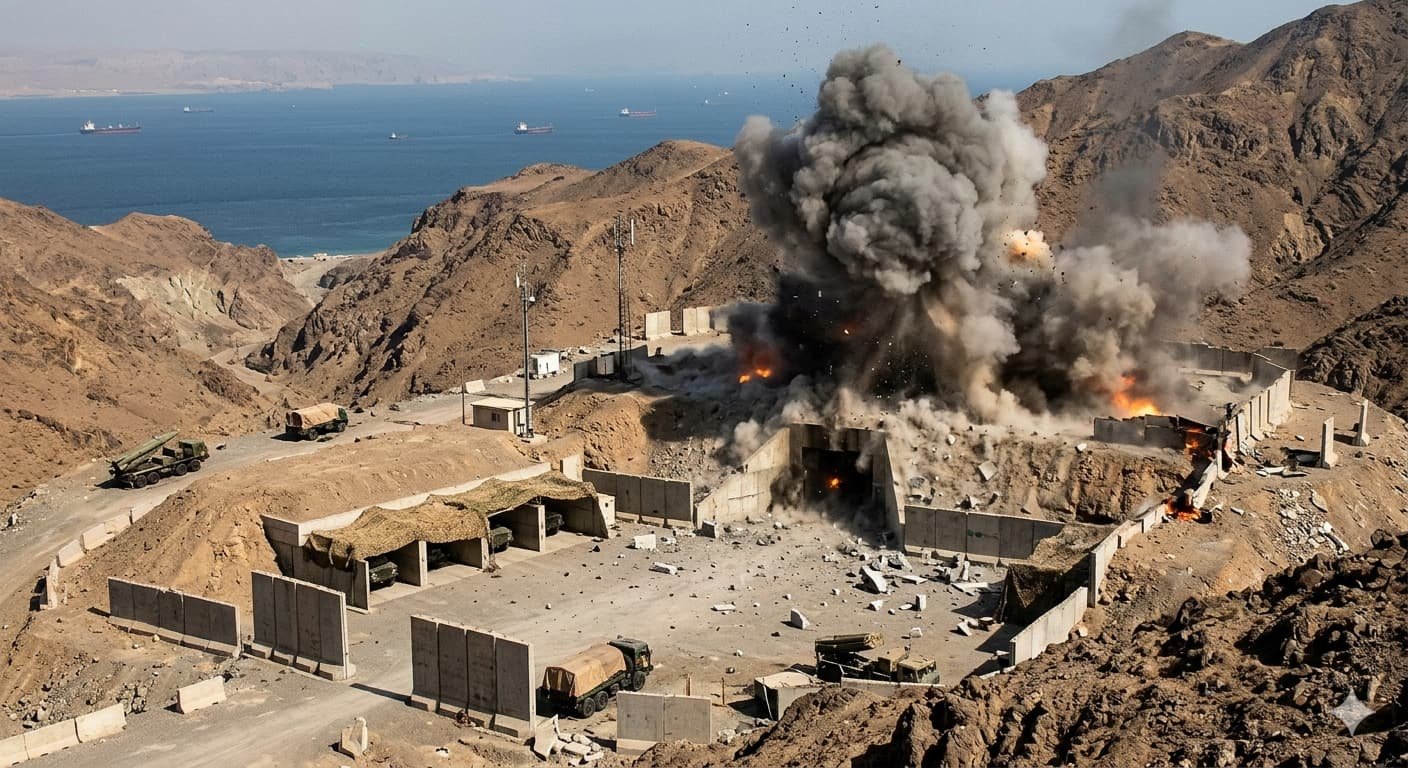
In a significant escalation of American firepower, U.S. Central Command announced Wednesday that American forces had deployed multiple 5,000-pound deep-penetrator munitions — the military’s most powerful conventional bombs — on hardened Iranian missile sites along the coastline near the Strait of Hormuz.
The bunker-busters are specifically designed to destroy deeply buried, reinforced facilities that conventional bombs cannot penetrate. Their deployment signals that the U.S. is targeting what remains of Iran’s underground missile storage and launch infrastructure along the strait — the waterway that Iran has vowed to keep closed to international shipping.
The State Department simultaneously ordered all U.S. embassies and consular posts worldwide to immediately undertake a comprehensive security review, citing potential spillover effects from the escalating conflict.
Gulf States Under Fire. Trump Demands Help.
Iran is not limiting its attacks to Israel and U.S. forces. On Wednesday morning, Saudi Arabia, Kuwait, Qatar, and the United Arab Emirates all reported intercepting Iranian missiles and drones targeting their territory. Saudi air defenses shot down a ballistic missile targeting the area around Prince Sultan Air Base, which hosts American aircraft. A projectile struck near an Australian military base in the UAE, sparking a fire but causing no injuries.
President Trump, speaking to reporters, again criticized U.S. allies for their reluctance to commit forces to reopening the Strait of Hormuz, telling reporters simply: “We’ve got a war going on.” Trump separately announced he was delaying his planned trip to China by a month, saying he needed to remain in Washington while the conflict was active.
The war that began nineteen days ago with the killing of Iran’s Supreme Leader shows no sign of slowing. Three more of Iran’s top officials are dead. Its most powerful missiles are now aimed at civilian neighborhoods. And American forces are dropping their heaviest bombs. Whatever comes next, Wednesday, March 18 will be remembered as the day this conflict crossed a new line.