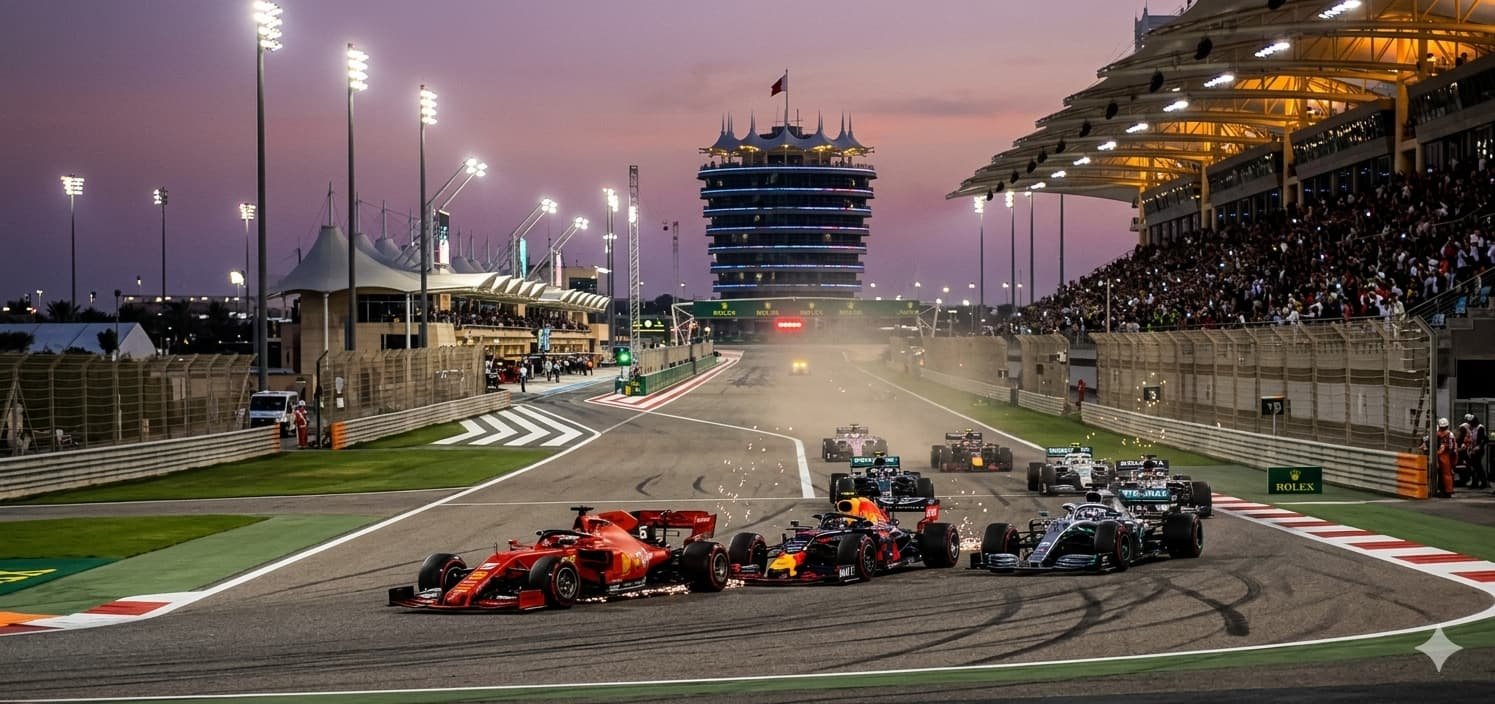

SHANGHAI, MARCH 16, 2026 — Formula 1 came to China this weekend to race. It left with something far heavier than a trophy — a confirmation that the Iran war has now reached deep into the heart of global sport.
Formula 1 and its governing body the FIA officially announced Saturday that the Bahrain Grand Prix, scheduled for April 12, and the Saudi Arabian Grand Prix, scheduled for April 19, will not take place. Neither race will be replaced. The 2026 season — originally planned for 24 races — will now run to just 22. A five-week void opens in the calendar between the Japanese Grand Prix on March 29 and the Miami Grand Prix on May 3.
It is the most significant disruption to the Formula 1 calendar since a deadly flood wiped out the 2023 Emilia Romagna Grand Prix.
Why the Races Were Cancelled
Both Bahrain and Saudi Arabia have been struck by Iranian drone and missile attacks in retaliation for the U.S.-Israel offensive that began on February 28. Bahrain hosts a major United States naval base in Manama — one of the primary targets of Iranian strikes throughout the conflict. The Bahrain International Circuit sits just 20 miles from that base. In Saudi Arabia, the memory of a Houthi missile striking an oil facility near the Jeddah circuit during a 2022 race weekend — while cars were still on track — loomed large over every discussion about proceeding.
Formula 1 CEO Stefano Domenicali put it plainly in the official statement: while the decision was difficult, it was unfortunately the right one given the current situation. FIA President Mohammed Ben Sulayem was equally direct, stating that the safety and wellbeing of the F1 community would always come first. Seven-time world champion Lewis Hamilton, who finished third in Sunday’s Chinese Grand Prix, backed the decision fully — saying he trusted F1’s leadership to do what was right for everyone involved.
The Commercial Hit
The financial consequences are significant. Bahrain and Saudi Arabia pay among the highest race hosting fees on the Formula 1 calendar — estimated together at more than $100 million annually. That revenue, shared between F1’s commercial operations and team prize money, is now gone for 2026.
Haas team principal Ayao Komatsu acknowledged the impact at the Australian Grand Prix earlier this month, saying the financial consequences had not been fully calculated but would not be something that could be ignored. The ripple effects extend beyond F1 itself. The FIA Formula 2, Formula 3, and F1 Academy support series — which were scheduled to race at both venues — will also not compete on their planned dates.
Alternative venues were explored. Portimao in Portugal, Imola in Italy, Istanbul in Turkey, and an additional race in Japan were all considered as potential replacement hosts. Every option was ultimately rejected — the combination of short notice logistics, the impossibility of selling tickets in time, and the simple fact that 22 guaranteed races already fulfill F1’s television contract obligations made replacement impractical.
The Five-Week Gap and What It Means
The absence of Bahrain and Saudi Arabia creates the longest mid-season gap in recent Formula 1 history — 35 days between Japan and Miami with no competitive action at all. For teams, that silence is not wasted. Multiple squads had been holding back on committing to aerodynamic upgrades and new components, unwilling to rush development work for races that might not happen. The confirmed void now gives every team a clear target: have your next major upgrade package ready for Miami on May 3.
F1 did not rule out rescheduling the cancelled races elsewhere later in the year — but with a calendar already running to 22 rounds from March through December, there is no obvious window. Qatar on November 29 and Abu Dhabi the following week remain on the schedule, and F1 officials said they hope those Gulf races will proceed as planned when the conflict has eased.
The Bigger Picture
Sunday’s Chinese Grand Prix — won by Mercedes rookie Kimi Antonelli in a result that sent the paddock buzzing — went ahead as scheduled in Shanghai. But the atmosphere in the press room and garages carried a weight that a season opener rarely brings. Two races wiped from the calendar. A war reshaping global energy markets, global politics, and now global sport simultaneously.
Formula 1 has raced through political crises and security threats before. It navigated COVID. It has raced in countries with complex human rights records and complicated geopolitical realities. But this is the first time since the 1970s oil crisis that a Middle East war has directly forced races off the calendar — and the first time ever that the reason was active missile and drone strikes on the host countries themselves.
The sport will return to Bahrain and Saudi Arabia. Both nations have invested billions in Formula 1 as part of broader economic diversification strategies, and neither is going anywhere as a venue. But for now, the grid lines up next in Japan — and after that, America.