
By Harshit
WASHINGTON, NOV. 25, 2025 —
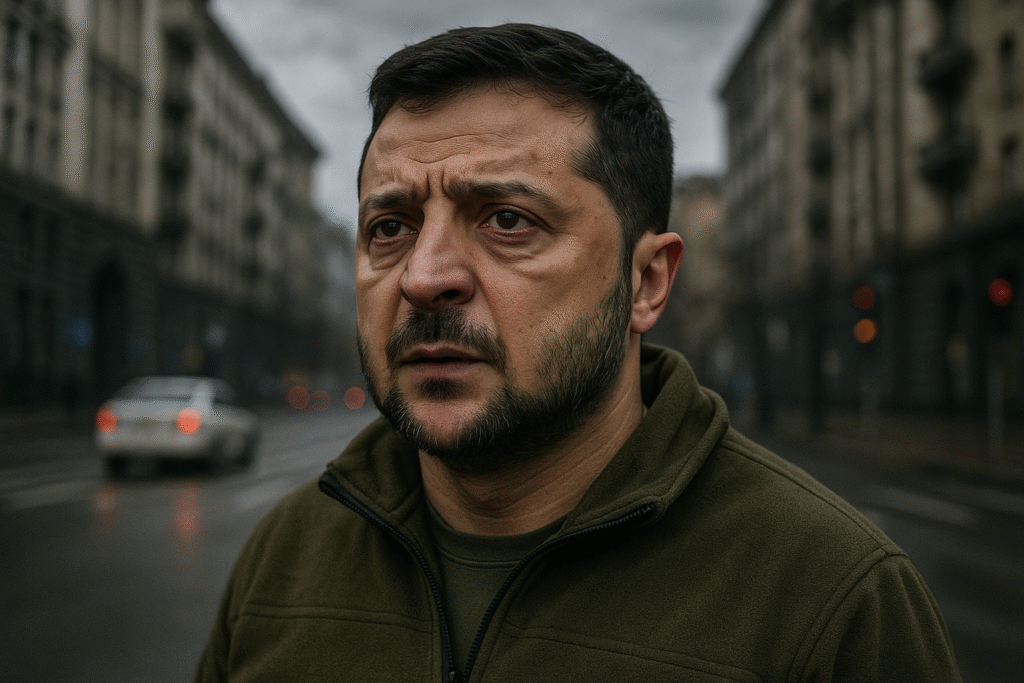
Ukraine’s wartime diplomacy entered one of its most critical phases on Tuesday, as President Volodymyr Zelenskyy signaled he may travel to the United States “in the coming days” to finalize a peace agreement with President Donald Trump, even as Russian missile and drone attacks killed civilians across Kyiv and other regions overnight.
The announcement followed what US and Ukrainian officials described as “highly productive” negotiations in Geneva, where both sides worked to refine a US-led framework aimed at ending the nearly three-year conflict. At the same time, battlefield intensity surged, Russian advances continued in eastern Ukraine, drone incursions spread to Romania and Moldova, and political pressure at home mounted for Zelenskyy’s government.
Zelenskyy Preparing for a Critical Visit to Washington
Ukraine’s national security chief Rustem Umerov confirmed on Tuesday that Kyiv expects to move swiftly.
“We look forward to organizing a visit of Ukraine’s President to the US at the earliest suitable date in November to complete final steps and make a deal with President Trump,” Umerov wrote.
The Ukrainian delegation, which participated in the Geneva talks alongside US Secretary of State Marco Rubio, said the meetings produced a “common understanding” on key terms. Zelenskyy added that there were “signals that President Trump’s team is hearing us,” though sensitive issues remain unresolved.
Zelenskyy has repeatedly warned that the US proposal still contains points that “risk Ukraine’s dignity or a key alliance.” A previous draft of the 28-point plan appeared to concede major Russian demands, including freezing battle lines, recognizing de facto Russian control in several occupied regions, restricting Ukraine’s military to 600,000 personnel, and prohibiting future NATO membership.
Ukraine and several European governments opposed those conditions and have pushed for revisions.
Russia Pressures Negotiators as Abu Dhabi Talks Loom
While Washington and Kyiv worked to narrow differences in Geneva, Russia signaled it would not accept the modified version.
Russian officials said Moscow had not yet received the updated text and still viewed the earlier US draft as “the only substantive proposal.” The Kremlin’s spokesman said the first draft “could become the basis” for a settlement, while analysts predicted Russia would push to return to the original terms.
A Russian foreign policy expert in Moscow noted that accepting Ukraine’s revisions “would require more flexibility than the Kremlin has shown.” With Russian forces continuing to make incremental gains around Pokrovsk, Kupiansk and parts of the Kharkiv region, Moscow sees little incentive to soften its stance.
US Army Secretary Dan Driscoll is expected to meet Russian negotiators in Abu Dhabi, where Russia is likely to insist on restoring the full list of concessions.
Europe Backs Ukraine but Warns of Difficult Road Ahead
European leaders cautiously welcomed progress but stressed that the talks must reflect European and Ukrainian interests—not only US and Russian priorities.
France’s President Emmanuel Macron warned that no peace agreement should resemble “a capitulation” for Kyiv and said Ukraine’s military must not be restricted in size. Germany’s foreign minister called the Geneva round a “decisive success” for Europe, noting that provisions affecting NATO and the EU were removed from the negotiations.
Still, European officials acknowledged that major disagreements remain, including the status of occupied territories, security guarantees, and Ukraine’s long-term alignment.
War Continues as Diplomacy Advances
Even as negotiators worked in Switzerland and diplomats prepared for the next round, Russian strikes pounded Ukrainian cities overnight.
Kyiv reported at least six deaths across multiple districts after apartment buildings were hit by drones and missiles. Firefighters battled flames in the Pechersk and Dniprovskyi neighborhoods, rescuing more than a dozen people. Zelenskyy said Russia launched 22 missiles and over 460 drones nationwide, targeting energy infrastructure and residential areas.
Russian attacks also struck the regions of Kharkiv, Dnipro, Chernihiv, and Cherkasy. Meanwhile, Ukrainian forces claimed hits on an oil refinery in Russia’s Krasnodar region and an oil terminal in Novorossiysk.
In border states, tensions spread. Moldova reported drone fragments falling on homes, prompting evacuations. Romania scrambled fighter jets after drones entered its airspace—one of several such incursions since the war began.
Growing Public Frustration Inside Ukraine
While Ukraine negotiates abroad, domestic pressures are rising. Corruption scandals have strained public trust, and unpopular mobilization tactics—such as forced recruitment checks in the streets—have drawn criticism.
On the streets of Kyiv, many residents expressed skepticism about the rush toward a US-brokered deal.
“Trump’s plan is basically a capitulation,” said one resident. Others questioned whether any agreement could be trusted while Russian missiles still hit cities daily.
Still, Zelenskyy said Ukraine would work “calmly and quickly” to secure an agreement that protects national sovereignty.