
By Harshit
WASHINGTON, DECEMBER 21 —
You may not own a single dumbbell, resistance band, or gym membership — but you already possess one of the most effective strength-training tools available: your own body. Despite this, many people still believe that real strength can only be built by lifting heavy weights, while others repeat the same basic body-weight routines for years and wonder why progress stalls.
The reality, backed by exercise science, is clear: muscles respond to challenge, not equipment. When body-weight exercises are progressed correctly, they can build meaningful strength, improve mobility, protect joints, and counter age-related muscle loss — all without stepping into a gym.
The Science Behind Strength Without Weights
Strength gains are driven by a principle known as progressive overload. This means gradually increasing the demand placed on muscles so they are forced to adapt.
Contrary to popular belief, progressive overload does not require heavier weights. With body-weight training, overload can be achieved by:
- Changing joint angles
- Increasing movement difficulty
- Slowing the tempo
- Adding pauses or isometric holds
- Training closer to muscular fatigue
Research shows that time under tension — how long a muscle remains engaged — is a key driver of muscle adaptation. Slower reps, controlled pauses, and sustained holds increase this tension, triggering strength and muscle development even without external load.
Muscular fatigue also plays a role. Training until you are challenged but still in control signals the nervous system to adapt. This does not mean collapsing or pushing through pain — it means choosing progressions that safely bring muscles close to their limit.
Why Body-Weight Training Works Long Term
Body-weight exercises recruit multiple muscle groups at once and improve coordination, balance, and joint stability. This makes them particularly effective for functional strength — the kind that supports daily movement, posture, and injury prevention.
According to public health data from the Centers for Disease Control and Prevention, even modest strength training helps reduce the risk of falls, metabolic disease, and age-related decline. Body-weight training lowers barriers to entry, making consistency — the most important factor in fitness — far more achievable.
Breathing: Your Built-In Stability System
Proper breathing is often overlooked in strength training, yet it plays a critical role in core engagement and spinal stability.
Exhaling during exertion — such as standing up from a squat or pushing away from the floor in a push-up — helps align the rib cage over the pelvis. This coordination activates deep core and pelvic floor muscles, improving power output and reducing strain on the lower back.
Strength is not just about muscles; it is about how efficiently the body organizes force.
How to Progress Body-Weight Exercises Safely
One of the most common mistakes in body-weight training is staying with the same version of an exercise indefinitely. Progression is essential.
The goal is to choose a variation that feels challenging but controllable, then advance only when you can complete the full rep range with good form.
General guideline:
- 2–3 sets
- 8–12 reps, or 20–30 seconds for holds
- 2–3 sessions per week
Always consult a physician before starting a new exercise routine, and stop immediately if pain occurs.
Lower-Body Progression (Squat Pattern)

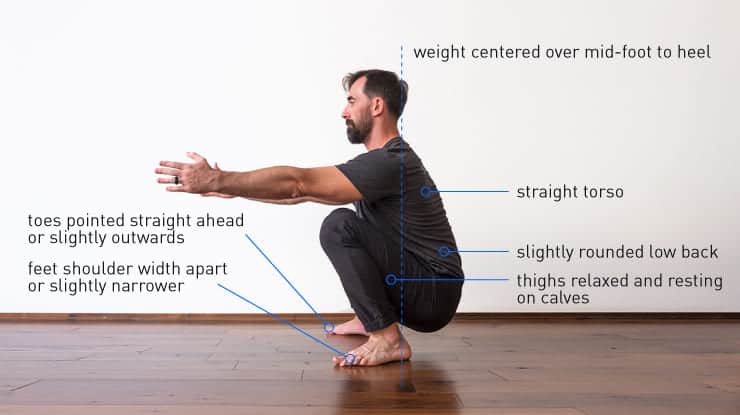

- Wall Sit
Back against a wall, knees bent near 90 degrees. Hold while breathing steadily. - Body-Weight Squat
Feet hip-width or slightly wider. Sit hips back and down; exhale as you stand. - Split Squat
One foot stepped back. Lower straight down, then press through the front heel to rise.
Increase difficulty by slowing the lowering phase, adding pauses, or increasing reps.
Upper-Body Progression (Push Pattern)

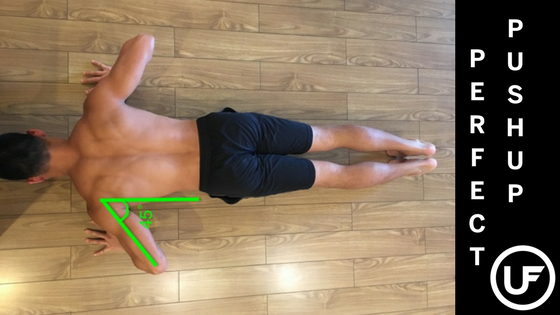

- Incline Push-Up
Hands on a counter or bench, body in a straight line. - Push-Up
Hands under shoulders, core engaged, spine neutral. - Decline Push-Up
Feet elevated to increase load on the upper body.
Progress by slowing reps or pausing at the midpoint.
Core Progression

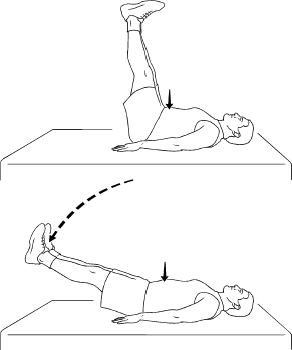

- Dead Bug
Opposite arm and leg extend while keeping the lower back stable. - Leg Lowers
Lower legs toward the floor while maintaining core engagement. - Hollow-Body Hold
Head, shoulders, arms, and legs lifted, forming a controlled “banana” shape.
If the lower back lifts, modify the position to maintain support.
Why Consistency Beats Equipment
Body-weight training removes the most common barriers to fitness: cost, time, and access. When strength training can be done anywhere, adherence improves — and consistency is what drives long-term results.
Strength gained through body-weight movement also transfers directly to real-world tasks: climbing stairs, lifting groceries, maintaining balance, and protecting joints as you age.
The Bottom Line
You do not need a gym, machines, or heavy weights to build real strength. When body-weight exercises are progressed intelligently — using tempo, fatigue, and variation — they provide everything muscles need to adapt.
Strength training is not about what you lift. It is about how you challenge your body to change.