
By Harshit, SAN FRANCISCO, November 6, 2025 — 12:06 AM EDT
The Golden State Warriors and Sacramento Kings meeting on Wednesday night was expected to showcase some of the NBA’s premier star power — Stephen Curry, Domantas Sabonis, and Zach LaVine headlining both sides. Instead, the matchup has become defined by who isn’t on the floor.
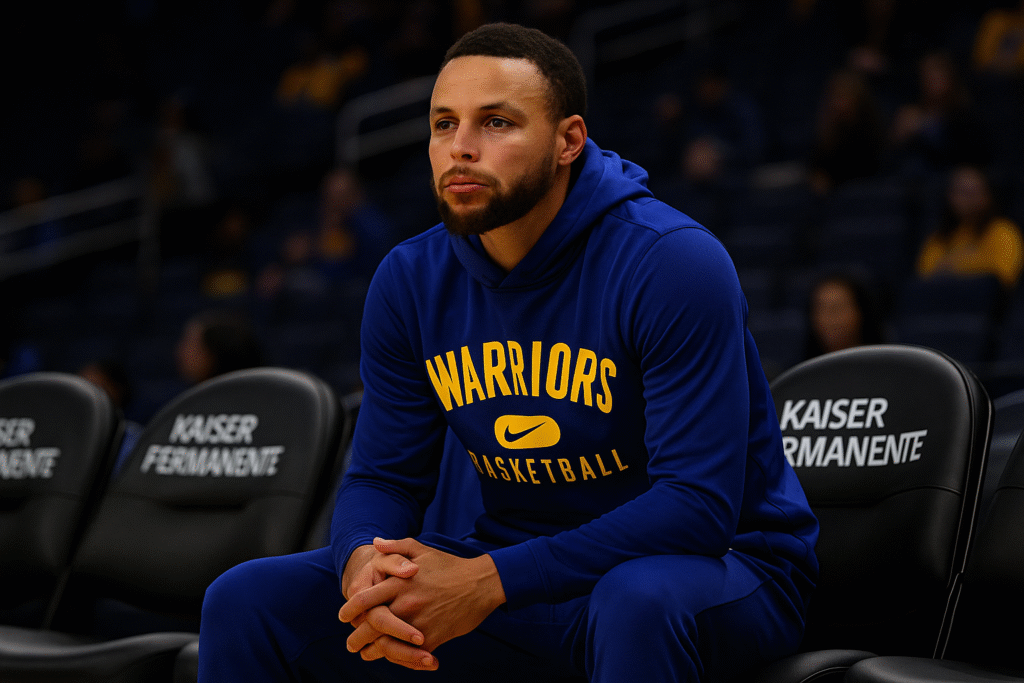
Golden State confirmed Wednesday afternoon that Stephen Curry will not play, ruling the two-time MVP out due to an illness, not an injury. Sacramento, already managing lineup changes early in the season, will also be without star center Domantas Sabonis and offseason addition Zach LaVine.
The result: a primetime regional rivalry that suddenly has a very different tone — one focused on depth, adjustments, and emerging talent stepping into elevated roles.
Curry’s Absence: Illness, Not Injury
There was initial speculation that Curry might be dealing with a minor leg issue after he appeared fatigued late in Tuesday’s loss to the Phoenix Suns. However, Curry clarified postgame that he had been battling a sickness, which affected his stamina and conditioning during the fourth quarter.
The Warriors training staff made the decision to hold him out just hours before tip-off, prioritizing rest over risking further strain on the second night of a back-to-back.
Curry’s absence is notable not just because of his scoring, but because of how much of Golden State’s offensive system relies on his movement, spacing gravity, and late-game execution. Without him, the Warriors must shift from a motion-heavy offense to a more direct driving and interior creation approach.
Warriors Rotation Adjustments
With Brandin Podziemski also dealing with lingering soreness, Golden State’s backcourt depth is suddenly thinner than anticipated.
This sets the stage for several players to take on larger opportunities:
- Gary Payton II is expected to see extended defensive assignments on Sacramento perimeter scorers.
- Will Richard, the Warriors’ young developing guard, is likely to receive one of his longest runways of the season.
- Jonathan Kuminga — who flourished in last postseason’s matchup against the Kings — may become the focal scoring option in the half-court.
Kuminga’s aggressiveness in transition and willingness to drive into contact will be crucial in producing offense without Curry’s three-point shot creation.
The Warriors have historically struggled offensively when Curry sits, often dipping nearly 15–20 points per 100 possessions depending on lineup combinations. The coaching staff’s emphasis will be on ball security, pace control, and not letting Sacramento dictate tempo early.
Kings Also Short-Handed
The Kings are facing key limitations of their own:
- Domantas Sabonis, the hub of Sacramento’s dribble-handoff offense, is sidelined.
- Newly acquired Zach LaVine, expected to be a central scoring engine, is also unavailable.
Without Sabonis, Sacramento loses their offensive anchor — the player who sets play tempo, orchestrates read-and-react passing, and screens to free De’Aaron Fox downhill.
This responsibility now shifts heavily to Fox, who will likely increase his usage rate and attempt to pressure Golden State’s interior defense early.
Coach Mike Brown will need to rely more on Trey Lyles, Keegan Murray, and Malik Monk to maintain scoring balance and perimeter spacing.
A Game About Depth and Identity
This matchup, originally billed as another chapter in the recent playoff rivalry between the teams, now becomes a test of system identity:
- How does Golden State score and defend without its foundational star?
- Can Sacramento generate offense against a Warriors defense geared to stop dribble penetration?
- Which young or rotational players can produce in real pressure minutes?
Both teams are in the early stretch of the season, but games like this reveal long-term truth: depth, adaptability, and continuity matter just as much as headline talent.