
By Harshit, Washington, D.C. | October 20, 2025
Kevin Hassett Signals Potential Resolution Amid Partisan Standoff
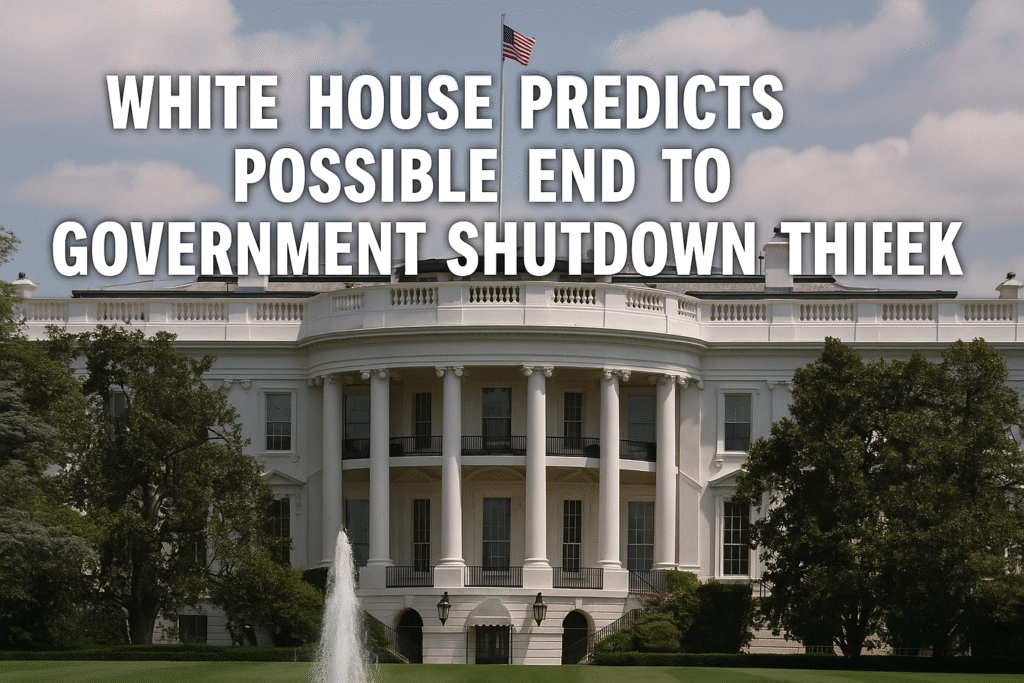
Top White House economic advisor Kevin Hassett on Monday indicated that the ongoing federal government shutdown is “likely to end sometime this week,” while warning that the Trump administration may implement “stronger measures” to compel Democratic cooperation if the stalemate persists. Hassett, director of the White House National Economic Council, shared his assessment during an interview on CNBC’s Squawk Box.
The remarks came deep into the third week of the shutdown, which has stalled amid a partisan conflict in the Senate over federal funding priorities. Republicans have pushed for a short-term resolution to restore funding at current levels, while Democrats demand that any stopgap legislation include additional spending on healthcare protections, particularly the extension of enhanced Affordable Care Act (ACA) tax credits set to expire at year’s end.
Political Calculations and Nationwide Protests
Hassett suggested that Democrats have been waiting for a politically strategic moment to vote to reopen the government, noting the impact of the upcoming nationwide “No Kings” protests against President Donald Trump.
“Now there’s a shot that this week, things will come together, and very quickly,” Hassett said. “The moderate Democrats will move forward and get us an open government, at which point we could negotiate whatever policies they want to negotiate with regular order.”
Hassett referred specifically to Senate Minority Leader Chuck Schumer, D-N.Y., blaming him for delaying action. “I think the Schumer shutdown is likely to end sometime this week,” Hassett said. “But if it doesn’t, I think that the White House is going to have to look very closely, along with [White House budget chief Russell] Vought, at stronger measures that we could take to bring them to the table.”
High Stakes for Healthcare and Federal Funding
With polls indicating that a majority of Americans hold the Trump administration and Republicans responsible for the impasse, Democrats have largely remained firm, emphasizing healthcare protections as a non-negotiable component of any stopgap measure. “Every day gets better for us,” Schumer told Punchbowl News earlier this month, noting that Democrats had long anticipated healthcare as the focal point of the shutdown debate.
Senate Majority Leader John Thune, R-S.D., reportedly offered Democratic leaders a vote on extending the ACA tax credits in exchange for reopening the government. However, Democratic leadership appears to be rejecting the proposal, instead calling for direct involvement from President Trump in the negotiations.
Economic and Operational Impacts
The shutdown has already begun affecting federal operations, with IRS furloughs impacting nearly half of its workforce and the Trump administration initiating layoffs of federal workers. Critical government services, ranging from airport security to federal contract oversight, remain constrained.
Hassett emphasized that the White House has been actively engaged in the process but insists that the Senate must resolve the matter. “Trump has been very active throughout this process, but it’s also his position that this is a thing that the Senate needs to work out,” he said.
Negotiation Dynamics and Possible Outcomes
Analysts note that the timing of votes and the negotiation strategy are critical, as the shutdown intersects with political optics ahead of upcoming public demonstrations. The White House appears prepared to escalate pressure if Democrats continue to delay reopening the government, signaling potential executive measures aimed at forcing bipartisan compromise.
Economists caution that a prolonged shutdown could have tangible consequences for federal spending, GDP growth, and consumer confidence, especially as key social programs and public services face disruption. Meanwhile, markets remain jittery amid uncertainty, adding pressure for a swift resolution.
Looking Ahead
As the shutdown enters its third week, the window for compromise may narrow, with lawmakers balancing political considerations, public opinion, and economic implications. If Democrats and Republicans reach a temporary agreement on funding, the Trump administration is expected to negotiate longer-term policy priorities, including healthcare subsidies, under normal legislative procedures.
For now, the White House remains hopeful that the shutdown will conclude this week, with moderate Democrats potentially moving first to reopen government operations. Should that not occur, stronger administrative measures may be considered to break the impasse, leaving the political and economic stakes higher than ever.