
By Harshit, WASHINGTON, Nov. 7, 2025
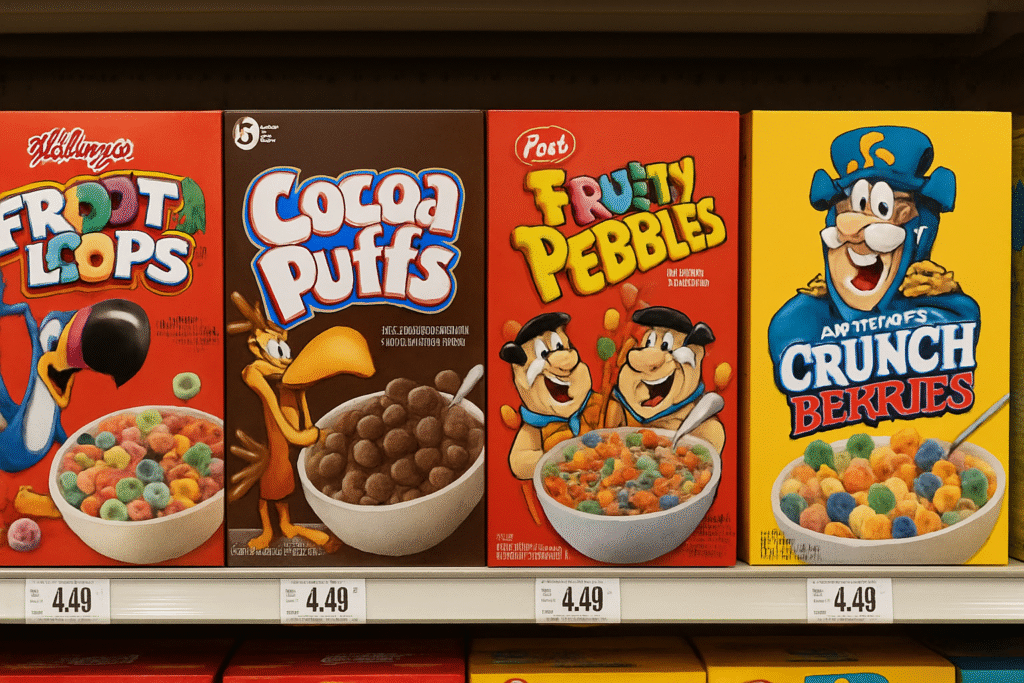
Nearly one in five packaged foods and beverages sold in U.S. grocery stores contain synthetic food dyes, according to new research analyzing more than 39,000 products from major national brands. The study, published in the Journal of the Academy of Nutrition and Dietetics, highlights ongoing concerns about artificial colorings in foods — particularly in products designed to appeal to children — and their potential link to behavioral issues such as hyperactivity and attention difficulties.
Synthetic food dyes, such as Red 40, Yellow 5, and Blue 1, are added to enhance the visual appeal of processed foods. Bright colors are often seen as more fun, flavorful, and exciting to young consumers, which makes such products more likely to attract children and influence parents’ purchasing decisions. However, experts warn that these dyes may come with hidden risks.
Child-Targeted Foods Show Higher Dye and Sugar Levels
Researchers from The George Institute for Global Health, the University of North Carolina, and the Center for Science in the Public Interest examined ingredient lists from packaged items produced by the 25 largest food manufacturers in the United States. Their analysis focused closely on five categories heavily marketed to children: confectionery, sugar-sweetened drinks, ready-made meals, breakfast cereals, and baked snacks including cookies, pastries, and cakes.
They found stark differences between foods intended for children and the general product market:
- 28% of child-targeted products contained synthetic dyes
- Only 11% of other food categories contained dyes
- Products with dyes contained 141% more added sugar on average
On average, foods containing synthetic colorings had 33.3 grams of sugar per 100 grams, compared to 13.8 grams in dye-free items. The findings suggest a strong marketing strategy that combines bright colors with sweetness to capture the attention — and tastes — of young consumers.
Dr. Elizabeth Dunford, one of the study’s authors, emphasized the issue:
“The continued presence of synthetic dyes in children’s foods is troubling, especially considering decades of evidence showing potential behavioral effects. The high sugar content alongside these dyes is a clear sign that these products are being engineered to be attractive — not healthy.”
Major Brands Widely Use Synthetic Dyes
The study also identified which types of companies and products were most likely to contain artificial colors.
- Ferrero used synthetic dyes in 60% of its confectionery items.
- Mars, known for colorful candies, used dyes in 52% of its products.
- Among beverages, 51% of PepsiCo’s energy drinks were found to contain synthetic dyes.
- Across the market, 79% of sports drinks contained at least one synthetic coloring ingredient.
These findings reveal that artificial dyes are not only common in sweets and snacks, but also in beverages marketed as “performance-enhancing” or “hydrating,” which are often consumed by teenagers and young athletes.
Regulatory Action Still Limited in the U.S.
Although scientific research over the past 40 years has repeatedly raised concerns about the neurological impact of synthetic dyes, the U.S. Food and Drug Administration (FDA) has not enforced strict limits or warning labels.
In contrast, the European Union requires warning labels on food products containing certain dyes — a regulation that prompted many European manufacturers to switch to natural alternatives.
Dr. Thomas Galligan, Principal Scientist for Food Additives at the Center for Science in the Public Interest, said voluntary change is not enough:
“Some companies promised to eliminate synthetic dyes years ago, but have not followed through. Without mandatory regulation or warning labels, there is little incentive to fully remove these additives.”
State Action Rising — But Consumers Must Stay Alert
With federal rules lagging, several U.S. states have introduced legislation targeting synthetic dyes in children’s foods. Measures include requiring clearer labeling, banning certain dyes in school meals, or restricting their use entirely.
However, experts say parents and consumers should continue to take matters into their own hands.
“Until policy catches up with science, the most effective step consumers can take is to read ingredient labels carefully,” Dr. Dunford said. “If a product contains synthetic dyes or high added sugar, especially if it’s targeted at kids, it’s best to avoid it.”