
By Harshit
CARACAS, JANUARY 6 —
Political repression in Venezuela has intensified sharply in the days following the US-led operation that removed former president Nicolás Maduro, even as opposition forces call for the immediate release of political detainees and citizens describe a climate of fear on the streets.
Opposition leader María Corina Machado has amplified calls from her political movement, Vente Venezuela, demanding freedom for all civilians and military personnel jailed for political reasons. In a statement posted on X and reposted by Machado, the movement said:
“Those who unjustly hold the civilian and military political prisoners should free them immediately.”
Military Presence Expands Across Major Cities
Residents across the country report a heavy security deployment, particularly in Caracas and other urban centres.
In Guayana City, in Bolívar State, a resident told the BBC World Service that military personnel have been guarding supermarkets amid fears of looting. Streets were largely empty over the weekend, with residents hesitant to leave their homes.
“You can see some military in the streets, some guarding supermarkets,” she said. “They are preventing riots or violence. Everyone is scared to go out.”
In the capital, shop owners have reportedly limited customer entry and are using dogs to guard stores, fearing chaos and theft. Long queues have formed as prices for basic food items surge. A kilogram of cornflour, a staple food, has reportedly tripled in price in some areas.
Checkpoints, Phone Searches and Journalist Detentions
According to community leaders in Caracas neighbourhoods such as Petare, hooded armed men have been patrolling streets and checking citizens’ mobile phones, including WhatsApp statuses.
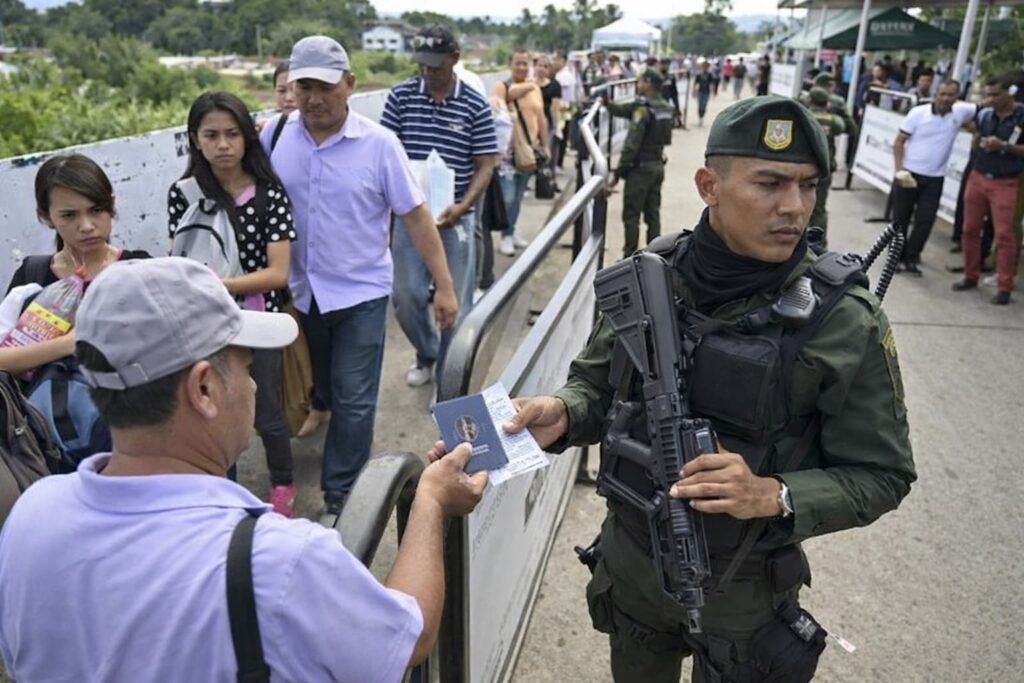
Dozens of military checkpoints have appeared across the city, and foreign journalists have been barred from entering Venezuela. The Union of Journalists and Media Workers reported that 14 journalists were detained on Monday. All were later released, though one was deported.
Photos shared by Interior Minister Diosdado Cabello show armed police units patrolling Caracas overnight, with officers chanting loyalty slogans and carrying automatic weapons.
Opposition Support Goes Underground
While public celebrations of Maduro’s removal are rare due to fear of reprisals, opposition sentiment remains strong behind closed doors.
“Inside our homes, we are happy,” said a Caracas student interviewed by the BBC. “But for our own safety, we can’t just go out and celebrate. People fear the intelligence services, the police, and the armed militias.”
Thousands of images shared online show Venezuelans holding protest signs from inside their homes or clanging pots in symbolic acts of dissent — a traditional form of protest in the country.
UN and International Criticism Mounts
The Office of the United Nations High Commissioner for Human Rights has criticised the US operation that captured Maduro, saying it undermined fundamental principles of international law, including respect for territorial integrity and political independence.
France, China and several Latin American governments have echoed similar concerns, warning that the operation sets a dangerous precedent and risks civilian harm.
Despite international condemnation, the remaining figures of Maduro’s former regime remain in power inside Venezuela, now led by interim president Delcy Rodríguez — a figure widely rejected by the opposition.
Machado Remains Symbol of Democratic Resistance
Machado, recently awarded the 2025 Nobel Peace Prize, is widely regarded as the moral centre of Venezuela’s opposition. Barred from running in the disputed 2024 election, she campaigned for opposition candidate Edmundo González, who independent tallies suggest won by a large margin despite Maduro being declared the victor.
She has lived in hiding for much of the past year and has vowed to return to Venezuela, despite acknowledging the serious risks involved.
A Nation in Fear, Waiting for What Comes Next
With armed patrols, rising prices, and widespread fear of arrest, daily life in Venezuela has become increasingly tense. While many Venezuelans privately welcome the end of Maduro’s rule, the visible machinery of repression remains firmly in place.
As opposition groups demand the release of political prisoners and international pressure grows, the country now stands at a crossroads — caught between hope for democratic change and fear of an entrenched security state tightening its grip.