
By Harshit, LOS ANGELES, Nov. 5, 2025
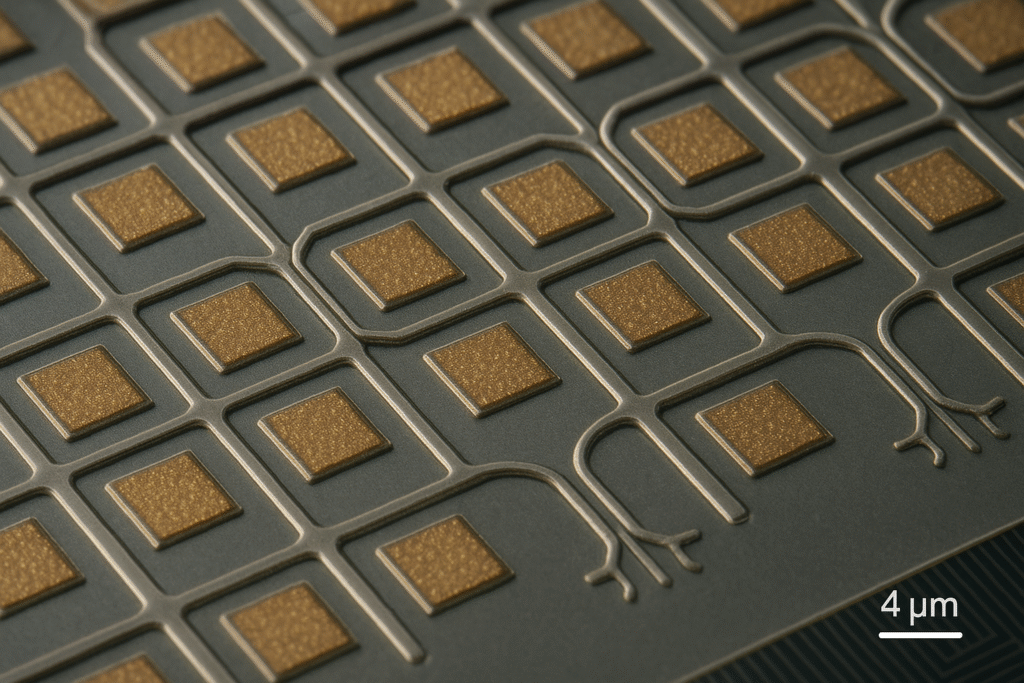
Scientists at the USC Viterbi School of Engineering and the School of Advanced Computing have taken a major step toward building hardware that mimics the human brain. Researchers have created artificial neurons that replicate the electrochemical behavior of biological nerve cells, marking a milestone in neuromorphic computing, the field dedicated to developing computing systems modeled on the brain.
The discovery, recently published in Nature Electronics, could dramatically shrink chip sizes, cut energy consumption, and bring artificial intelligence closer to artificial general intelligence (AGI). Unlike traditional processors or earlier neuromorphic designs, these new neurons do not just simulate brain activity mathematically — they physically reproduce neuronal functions using actual chemical interactions.
A New Class of Brain-Like Hardware
The research, led by Professor Joshua Yang of USC’s Department of Computer and Electrical Engineering, builds on over a decade of work on artificial synapses. Central to the innovation is the diffusive memristor, a device that mimics how biological neurons transmit information.
In standard silicon chips, computations rely on electrons moving through circuits. Yang’s devices, in contrast, use ion motion, closely resembling how neurons communicate via electrical and chemical signals. This approach allows each artificial neuron to fit in a footprint roughly the size of a single transistor, whereas older designs required tens or even hundreds.
How Artificial Neurons Mimic the Brain
In natural neurons, ions such as potassium, sodium, and calcium generate the electrical impulses that drive brain activity. At the synapse, an electrical impulse converts to a chemical signal, transmitting information to the next neuron. The receiving neuron then converts the chemical signal back into an electrical impulse, continuing the process.
Yang and his team recreated this intricate process using silver ions embedded in oxide materials. These ions produce electrical pulses that emulate fundamental brain functions such as learning, movement, and planning.
“Even though it’s not exactly the same ions as in our artificial neurons, the physics governing the ion motion and dynamics are very similar,” Yang explained.
The choice of silver allows for easy diffusion and dynamic behavior that mirrors natural neuron activity, giving rise to the diffusive memristor — a device named for its ability to conduct ions and diffuse dynamically.
Efficiency: The Brain’s Secret Advantage
One of the key insights of this research is that modern computing is limited not by power, but by efficiency. Current AI systems consume enormous amounts of energy to process data. The human brain, by contrast, operates on roughly 20 watts, yet can learn from just a few examples — a feat that supercomputers require megawatts to achieve.
“Ions are a better medium than electrons for embodying principles of the brain,” Yang said. “Electrons allow fast operations but require software-based learning. Ions enable hardware-based learning, which is fundamentally how the brain works.”
This approach means artificial neurons can process information adaptively and energy-efficiently, much like human neurons, making large-scale neuromorphic systems more practical and sustainable.
Implications for AI and Computing
The artificial neurons developed by Yang’s team could lead to a new generation of brain-like chips that are both smaller and more energy-efficient. For example, a typical smartphone contains billions of transistors to perform calculations, consuming significant energy. In contrast, a neuron-sized diffusive memristor requires a footprint of only a single transistor, drastically reducing chip size and energy requirements.
“We are designing building blocks that could eventually reduce chip size and energy consumption by orders of magnitude,” Yang said. “This could make sustainable AI possible, with brain-level intelligence without burning unsustainable amounts of energy.”
Such advances could accelerate the development of AGI and open doors to understanding the human brain itself by recreating its dynamics in hardware.
Next Steps and Challenges
While the artificial neurons demonstrate remarkable performance, there are challenges to overcome. The silver used in the devices is not yet compatible with standard semiconductor manufacturing, so future work will explore alternative ionic materials capable of achieving similar results.
Yang and his team are now focused on integrating large numbers of artificial neurons and synapses to test how closely these systems can replicate the brain’s efficiency and capabilities.
“Even more exciting,” Yang said, “is the prospect that such brain-faithful systems could help us uncover new insights into how the brain itself works.”
If successful, these efforts could transform AI hardware by combining biological fidelity, computational efficiency, and scalability — essentially creating chips that think more like humans while consuming far less energy.
The Road Ahead
Neuromorphic computing, inspired by the brain, has long been a dream of AI researchers. By physically replicating the ion-based signaling and chemical interactions that drive neuronal activity, USC scientists are moving that dream closer to reality. These artificial neurons could one day enable devices capable of learning, adapting, and reasoning in ways previously reserved for biological brains.
The innovation also has broader implications for sustainable AI. As machine learning models grow larger and more complex, energy consumption has become a pressing concern. Hardware designed around brain-like principles — low-power, adaptive, and efficient — offers a pathway toward powerful AI that is environmentally and economically viable.
In short, USC’s artificial neurons represent a significant leap toward AI that learns efficiently, scales sustainably, and mirrors the brain’s natural intelligence. Researchers and engineers around the world will be watching closely as this technology develops, potentially transforming everything from consumer electronics to supercomputing and robotics.