
By Harshit
NEW YORK, DEC. 12 —
Technology evolves quickly, but some domains become so essential to the U.S. economy that they shift from being “trends” to permanent, structural pillars. As 2025 comes to a close, several technology arenas have proven themselves to be evergreen — not because they are fashionable, but because they address the most fundamental needs of the nation: security, productivity, economic resilience, and human well-being.
These pillars of innovation are shaping how Americans work, learn, connect, and build the next generation of digital infrastructure.
I. Artificial Intelligence as Infrastructure — Not a Tool
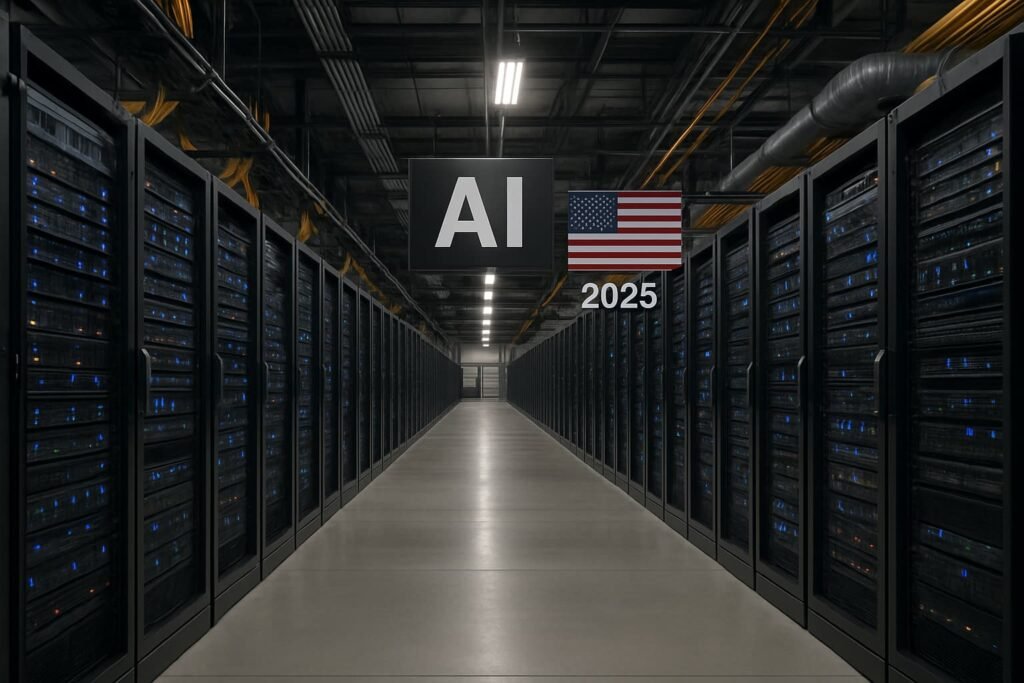
AI is no longer a “feature.” In 2025, it has become a foundational layer of the U.S. economy, integrated into everything from federal cybersecurity defenses to medical diagnostics.
Three AI domains prove permanently relevant:
1. Generative AI → Agentic AI
Generative models like ChatGPT and Gemini transformed productivity.
But 2025 marks the rise of Agentic AI — autonomous systems capable of planning, executing tasks, and integrating with business workflows without constant human prompting.
Enterprises are deploying AI agents for:
- IT operations and incident resolution
- Supply chain automation
- Customer service and sales workflows
- Research and compliance
This shift makes AI a permanent operational necessity, not a trend.
2. Micro LLMs and Edge Intelligence
The future of AI is distributed.
Small, domain-specific AI models running on personal devices, cars, sensors, and medical wearables replace the need for cloud-only processing.
Benefits include:
- Lower latency
- Higher privacy
- Lower cost
- Better reliability in mission-critical environments
3. AI Governance (AI TRiSM)
With AI woven into hospitals, banks, factories, courts, and classrooms, the U.S. must manage risk at scale.
AI Trust, Risk, and Security Management (TRiSM) has become a core capability for enterprises, focusing on fairness, transparency, model monitoring, and regulatory compliance.
II. Cybersecurity and Zero Trust Architecture
Cybersecurity is no longer an IT department function — it is a national resilience requirement.
Zero Trust Becomes the National Standard
Federal mandates require agencies to adopt Zero Trust, the model that assumes:
- No identity is trusted by default
- Every request must be verified
- Every action must be continuously authenticated
This has fueled massive investment in:
- Identity security
- Privileged access management
- Micro-segmentation
- Behavioral analytics
AI-Powered Defense Systems
Autonomous threat detection, AI-driven incident response, and predictive vulnerability scanning now protect U.S. infrastructure from nation-state actors and ransomware groups.
AI is solving challenges humans cannot keep up with — scale, speed, and complexity.
Privacy-Enhancing Technologies (PETs)
U.S. healthcare, banking, and cloud-computing ecosystems depend on secure data sharing. Emerging PETs such as:
- Homomorphic Encryption
- Federated Learning
- Differential Privacy
allow organizations to analyze data without exposing it — a crucial requirement in an era of rising data breaches.
III. Connectivity: 5G Advanced, Fiber Expansion, and Satellite Broadband
The U.S. “Connected Nation” strategy has fundamentally altered how Americans access digital infrastructure.
5G Advanced and the Path to 6G
5G Advanced powers:
- Autonomous vehicles
- Smart manufacturing
- AR/VR consumer services
- Remote medical robotics
- Smart agriculture
6G research, now underway, aims for integrated satellite-terrestrial networks and hyper-low latency computing at national scale.
Rural America Transformed by Satellite Broadband
Low Earth Orbit (LEO) systems — particularly Starlink and next-gen U.S. constellations — have drastically reduced the digital divide, enabling nationwide broadband access for the first time.
This shift affects:
- Education
- Healthcare delivery
- Small business growth
- Emergency response
IV. Digital Health and Continuous Monitoring
Healthcare is shifting from reactive treatment to proactive, real-time monitoring.
Wearables as Medical Devices
The FDA’s rapid approval of AI-enabled diagnostics has enabled devices like:
- Smartwatches
- Smart rings
- Adhesive biosensors
- Continuous Glucose Monitors (CGMs)
to serve as true medical companions.
These devices now detect:
- Atrial fibrillation
- Sleep apnea
- Glucose instability
- Early respiratory infections
- Stress and cardiovascular risk patterns
Remote Patient Monitoring (RPM)
U.S. hospitals and insurers embrace RPM to:
- Reduce readmissions
- Improve chronic disease management
- Lower operational costs
AI predicts medical events hours or days before symptoms appear — improving outcomes across the country.
V. The Connected Home and Intelligent Living
The Matter protocol, adopted universally by Apple, Amazon, Google, and Samsung, has eliminated compatibility headaches.
AI-Driven Home Automation
Homes now operate on predictive intelligence:
- HVAC systems adjust based on weather and occupancy
- Security cameras distinguish familiar patterns from anomalies
- EV chargers optimize around energy pricing
- Smart panels manage solar, battery storage, and grid demand
Smart homes are now tied directly to energy efficiency and cost savings — not novelty.
Conclusion: The Permanent Pillars of U.S. Technology
As of December 2025, the U.S. tech landscape is shaped by five enduring forces:
- AI as autonomous infrastructure
- Zero Trust and AI-driven cybersecurity
- Universal high-speed connectivity
- Continuous digital health monitoring
- Predictive, interoperable smart living
These domains will define the next decade of U.S. innovation, economic competitiveness, and digital life.