
WASHINGTON, APRIL 13, 2026 —
Key Takeaways
- Sterling College in Vermont announced it will close at the end of this semester, becoming the latest in a wave of small college closures that has accelerated sharply in 2026.
- An estimated 442 U.S. colleges and universities are currently considered financially vulnerable — a figure that higher education analysts say represents the largest crisis in American higher education since the Great Depression.
- The closures are hitting rural and low-income communities hardest, eliminating not just degrees but local employers, healthcare training pipelines, and economic anchors for towns that have no alternative institutions within commuting distance.
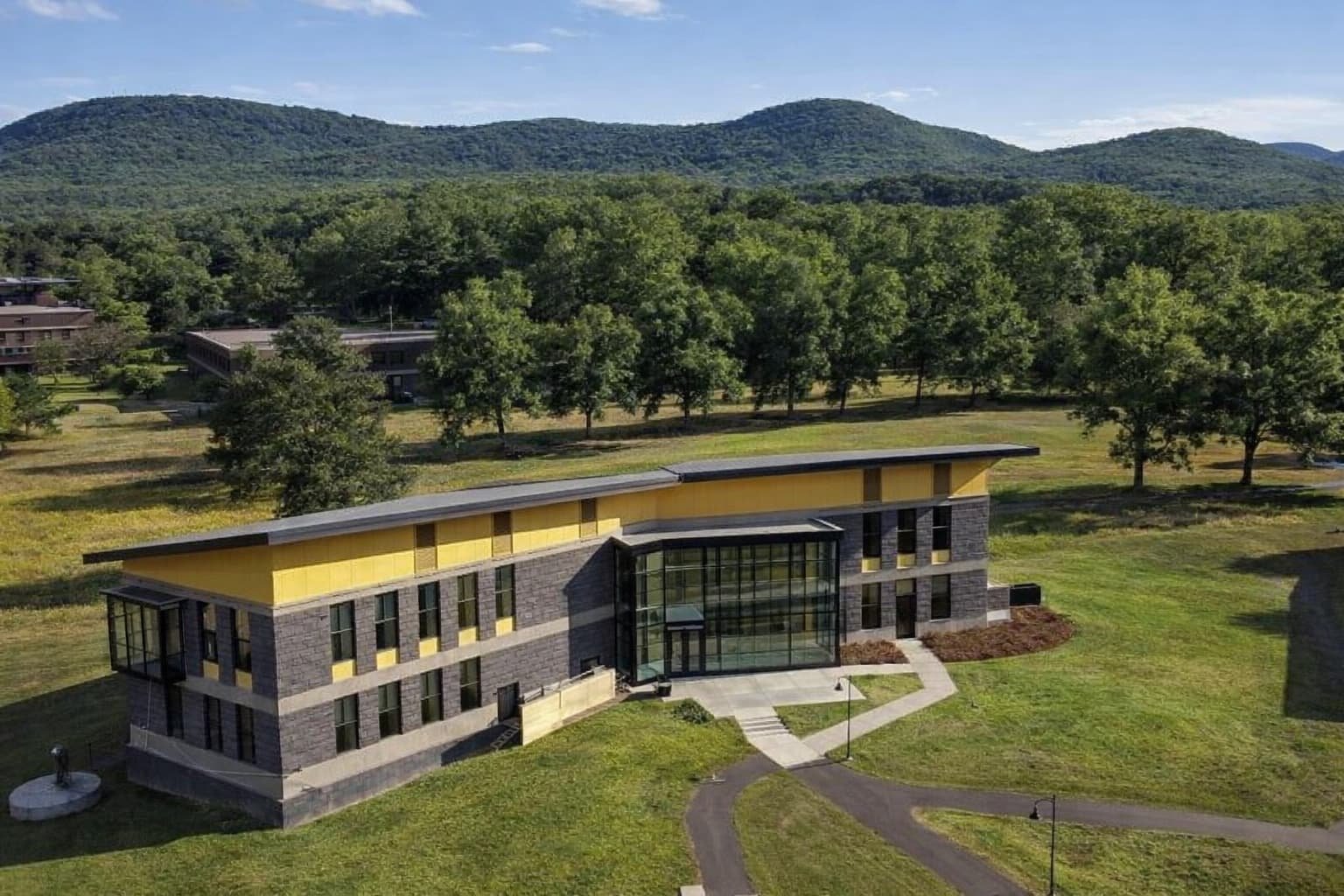
When Sterling College in Craftsbury Common, Vermont, announced this week that it would close at the end of the current semester, its students did not have the luxury of a long goodbye. They are scrambling to transfer credits, relocate, and rebuild academic plans — often in the middle of a semester — with the weight of loans already taken and futures suddenly rewritten.
Sterling is not an isolated case. It is a data point in what analysts now describe as the Great College Collapse — a structural unwinding of hundreds of small American institutions that have been pushed past the breaking point by a convergence of demographic decline, rising operating costs, falling federal support, and a generation of students who increasingly question whether a four-year degree is worth the cost.
How Bad Is It — and Why Now
The warning signs have been building for a decade. The U.S. birth rate began declining in 2008 during the financial crisis, and the children born in that dip are now reaching college age. The result is a demographic cliff — a multi-year period in which the traditional college-age population is structurally smaller than at any point since the 1970s. For large research universities with massive endowments and global reputations, the impact is manageable. For small private colleges already operating on thin margins in rural areas, it is existential.
At the same time, student loan debt in the United States has crossed $1.9 trillion, and public skepticism about the return on investment for a four-year private college degree has never been higher. Enrollment at small private institutions has been declining steadily since 2020, with the steepest drops in the Northeast and Midwest — exactly the regions where most vulnerable colleges are concentrated.
The financial math is unforgiving. Small colleges depend on tuition revenue for 70% to 90% of their operating budgets. When enrollment falls even 10% to 15%, institutions that were already running thin surpluses flip to deficits almost immediately. Endowments at most of these schools are too small to bridge multi-year gaps, and federal Title IV funding follows students — meaning when students leave, the money leaves with them.
The Human Cost Beyond the Headlines
| Who Loses When a Small College Closes | Impact |
|---|---|
| Students mid-program | Credits may not transfer; loans remain; degree timeline disrupted |
| Faculty and staff | Often 100–300 jobs lost per closure in towns with no comparable employer |
| Local economy | Colleges are frequently the largest single employer in small rural towns |
| Healthcare pipelines | Nursing, physical therapy, and social work programs vanish with the institution |
| First-generation students | Often chose local small colleges precisely because they couldn’t afford or relocate to larger ones |
The closures are not evenly distributed across American geography or demographics. The institutions most at risk are predominantly small private colleges in rural Northeastern and Midwestern states with student bodies under 1,000 that were built to serve regional, working-class communities. These are not elite liberal arts colleges with billion-dollar endowments. They are institutions where a majority of students are first-generation college attendees, Pell Grant recipients, or both.
When these schools close, those students often do not transfer to larger institutions and complete their degrees. Many stop out entirely. The credential gap that was already widening between wealthy and low-income Americans accelerates further.
What Is Driving the Acceleration in 2026
Several forces have converged this year to push the closure rate higher than at any prior point. Federal student loan policy changes under the One Big Beautiful Bill Act have made repayment harder for lower-income borrowers, reducing the perceived value of degrees from schools where earnings outcomes are modest. The Iran war’s energy shock has pushed operating costs higher — heating, transportation, and food service costs for residential campuses have risen sharply alongside oil prices.
State governments facing their own Medicaid-driven budget pressures are reducing direct appropriations to private colleges that have historically received modest state support. And the accreditation system — the quality-control mechanism that grants colleges the authority to award federal financial aid — is under pressure from the Trump administration to revoke accreditation from institutions that don’t meet new performance metrics, which could trigger the very death spiral it is meant to prevent.
The 442 institutions flagged as financially vulnerable represent roughly 10% of all degree-granting colleges and universities in the United States. Not all of them will close. Some will merge with larger institutions, convert to different program structures, or find donors to bridge funding gaps. But enough will close that higher education analysts project the map of American college access will look meaningfully different by 2030 than it did in 2020.
Why This Matters
The collapse of small colleges is not simply a story about institutions. It is a story about who gets to access higher education in America and where. The students most affected are not the ones who can transfer seamlessly to flagship state universities. They are the ones who chose a small regional college because it was close to home, offered flexible scheduling around work, had a financial aid package that made attendance possible, or simply felt like a place where they could succeed.
For rural communities, the closure of a local college is economically comparable to the closure of a major factory — a shock that ripples through the local tax base, the real estate market, and the labor pipeline for healthcare and education for a generation. Unlike factory closures, college closures rarely generate organized political response or federal intervention.
The 442 institutions currently considered at risk are not abstractions. Each one is a community. Each closure leaves a hole that does not simply fill itself.