
By Harshit
WASHINGTON, NOVEMBER 8
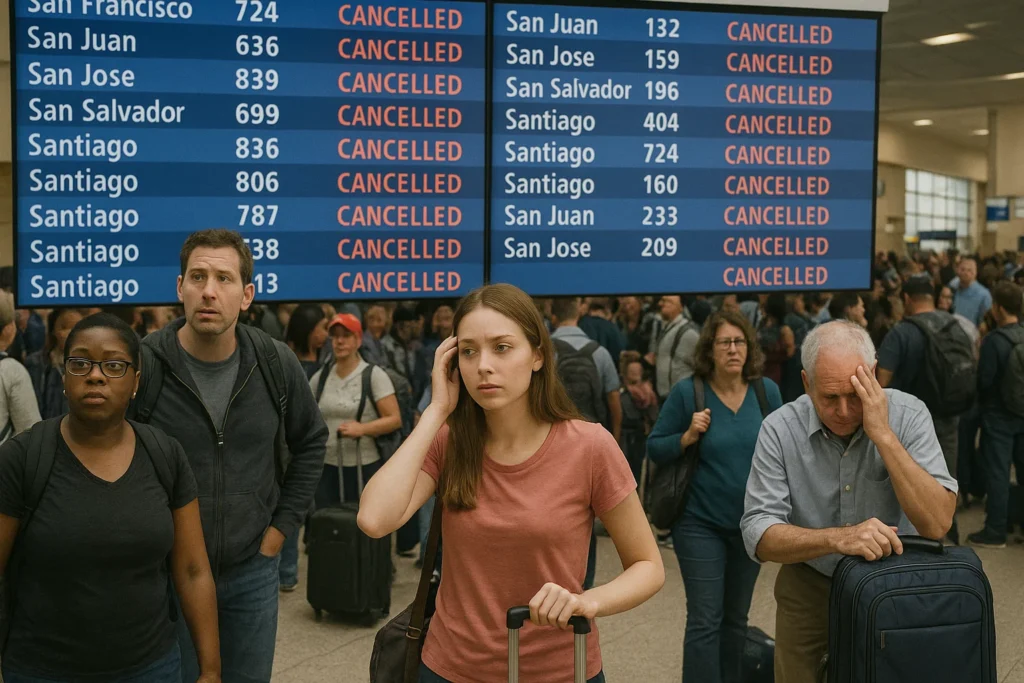
Travel plans for millions of Americans face severe disruption this week as the longest government shutdown in U.S. history continues to affect air travel. Over 1,000 flights were canceled on Friday, the first day of mandatory cuts ordered by the Federal Aviation Administration (FAA), and officials warn that delays and cancellations are expected to escalate through the weekend and into next week.
The cancellations stem from staffing shortages at the nation’s airports, as federal air traffic controllers and Transportation Security Administration (TSA) personnel remain unpaid during the shutdown. While these employees are considered essential and are required to report to work, many have skipped shifts due to financial strain or other obligations, creating a safety concern that the FAA is addressing with temporary flight reductions.
“Controllers are resigning every day now because of the prolonged nature of the shutdown. We’re also 400 controllers short — shorter than we were in the 2019 shutdown,” said Nick Daniels, president of the National Air Traffic Controllers Association.
The FAA ordered airlines to cut 4% of flights at 40 high-volume airports across the country, including major hubs such as New York’s JFK and LaGuardia, Los Angeles International, Chicago O’Hare, Dallas-Fort Worth, and San Francisco International. If the shutdown persists, officials say that cancellations could escalate to 10% of flights next Friday, and possibly as high as 15–20% if staffing shortages continue to worsen.
Flight Delays Across Major Airports
Even with flight reductions, delays remain extensive. On Friday:
- Ronald Reagan Washington National Airport reported average departure delays of four hours.
- San Francisco International Airport saw inbound flights delayed about one hour.
- Phoenix Sky Harbor had 90-minute delays.
- Chicago O’Hare reported 61-minute average delays.
- Houston Hobby Airport had nearly three-hour delays, while George Bush Intercontinental experienced 46-minute inbound delays.
Across the country, more than 4,500 flights were delayed Friday, compounding frustration for travelers who had hoped the cancellations would ease congestion in the skies.
Airlines Responding to the Crisis
Airlines have scrambled to adjust schedules and communicate with passengers. Major carriers reported the following Friday cancellations:
- Delta Air Lines: 170 flights
- United Airlines: 200 flights
- American Airlines: 220 flights
- Southwest Airlines: 120 flights
Many airlines are waiving change fees for travelers wishing to adjust itineraries or book backup flights. Officials advise passengers to avoid layovers, book directly with airlines, and purchase backup tickets to minimize the risk of being stranded.
“Don’t book a basic ticket. Book Economy or a flexible fare, so you can reuse ticket value if cancellations occur,” advised Frontier Airlines CEO Barry Biffle.
Airports Most Affected
The 40 airports facing mandatory flight reductions span all regions of the country:
- Northeast: Boston, Newark, JFK, LaGuardia, Philadelphia, Teterboro
- Midwest: Chicago O’Hare, Midway, Cincinnati/Northern Kentucky, Detroit, Indianapolis, Louisville, Minneapolis-St. Paul
- South: Charlotte, Dallas-Fort Worth, Dallas Love Field, Fort Lauderdale, Houston Intercontinental, Houston Hobby, Atlanta, Memphis, Orlando, Miami, Tampa
- DC Area: Baltimore/Washington, Reagan, Dulles
- West: Denver, Las Vegas, Los Angeles, Oakland, Ontario, Phoenix, Portland, Salt Lake City, San Diego, San Francisco, Seattle-Tacoma
- Hawaii & Alaska: Daniel K. Inouye International, Ted Stevens Anchorage
Smaller airports also face indirect effects as flights connecting from these hubs are delayed or canceled.
The Human Impact
Travelers struggling with cancellations are seeking alternatives, including car rentals. Hertz reported a 20% year-over-year increase in one-way rentals, while Turo saw a 30% jump in bookings and a 44% surge in online searches in impacted markets.
While airlines are required to provide full refunds for canceled flights, passengers are not entitled to hotels or meals unless the airline is at fault. Experts emphasize that the flight reductions are primarily FAA-mandated safety measures and not airline negligence.
Safety Considerations
Safety remains the overriding concern as the shutdown drags on. The National Transportation Safety Board (NTSB) emphasized that low staffing levels, mandatory overtime, and extended workweeks can compromise air travel safety.
“THIS is safety management, the very foundation of our aviation system, and it’s the right thing to do,” said NTSB Chair Jennifer Homendy.
The FAA and DOT maintain that international flights are largely unaffected, although airlines may exercise discretion in adjusting schedules.
Outlook
If the government shutdown continues, travelers can expect a gradual increase in cancellations and delays, potentially impacting as much as 10% of flights next week. Officials encourage passengers to monitor airline notifications closely and consider alternative travel arrangements to avoid being stranded.
As the impasse continues into its second month, the combination of unpaid essential workers and mandatory flight cuts has created an unprecedented disruption in U.S. air travel, illustrating the cascading impact of a prolonged government shutdown on everyday life.