
WASHINGTON, MARCH 19, 2026 —
Key Takeaways
- The U.S. economy grew just 0.7% last quarter and added only 116,000 jobs in all of 2025 — the weakest hiring year outside a recession since 2002
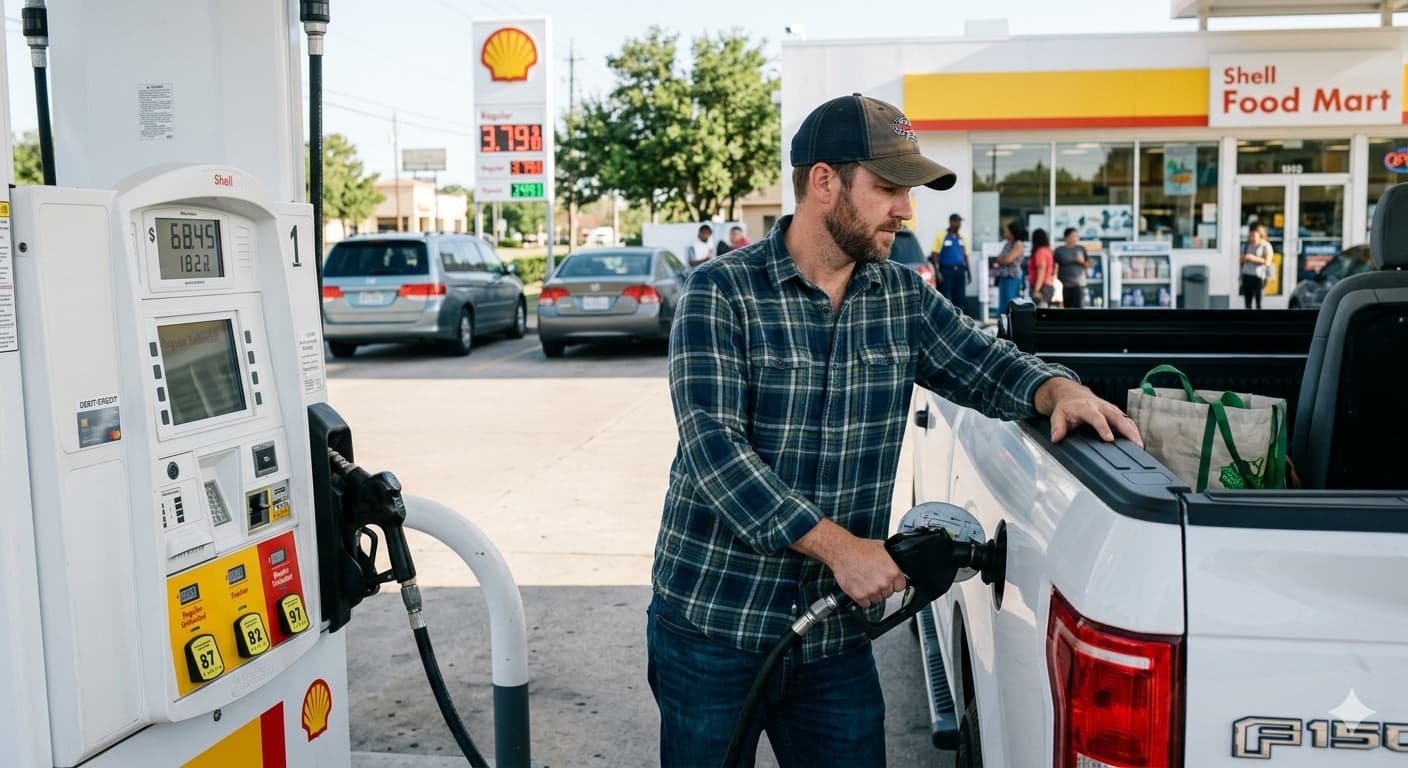
- Oil has surged above $109 a barrel since the Iran war began, pushing gas prices nearly $1 higher per gallon in four weeks and threatening to push inflation above 3% by year end
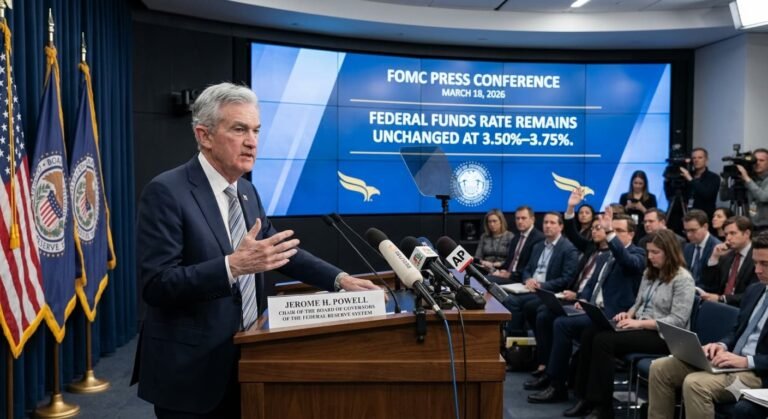
- The Federal Reserve held rates steady Wednesday and signaled only one cut in 2026 — leaving millions of Americans trapped between rising prices and a weakening job market
America’s economy entered 2026 already wobbling. The Iran war — now in its 20th day — has turned a wobble into something far more dangerous. Rising oil prices. Falling job creation. Inflation heading back up. A Federal Reserve with nowhere to go. Economists have a word for this combination. It is one nobody in Washington wants to use out loud. Stagflation.
On Wednesday, Fed Chair Jerome Powell pushed back on the term — but only barely. Stagflation, he said, belongs to the 1970s, when unemployment and inflation both hit double digits. What America has now is different — a tension between rising prices and a labor market that is quietly deteriorating. A mini-version, Powell acknowledged, of exactly that problem.
For the 330 million Americans living through it, the distinction between stagflation and a mini-version of stagflation offers little comfort at the gas pump.
The Economy Before the War — Already Cracking
Before the first bomb fell on Iran on February 28, America’s economy was already showing signs of strain that most headlines missed.
The U.S. economy grew just 0.7% in the fourth quarter of 2025 — the weakest quarterly reading since the pandemic. For the full year, growth came in at 2.1% — the worst annual pace since 2016. Job creation in 2025 was even more alarming. The economy added just 116,000 jobs for the entire year — the lowest total outside of a recession since 2002. In five of the past nine months, the economy actually lost jobs.
Consumer spending — which drives roughly two-thirds of all U.S. economic activity — was already slowing. The University of Michigan’s consumer sentiment survey was falling before the war began. Americans were making more trips to stores but spending less on each visit, switching to lower-cost goods and cutting back on restaurants and travel.
Then the war started. And everything accelerated.
The Iran War’s Damage to the U.S. Economy — By the Numbers
Iran War Economic Impact — Before vs. After
| Indicator | Before War (Feb 28) | Now (March 19) | Change |
|---|---|---|---|
| Oil Price (Brent) | ~$72/barrel | $109–111/barrel | +52% |
| National Gas Average | ~$2.92/gallon | ~$3.54/gallon | +$0.62 |
| U.S. GDP Growth Q4 2025 | 0.7% | Unchanged | Weak baseline |
| Core PCE Inflation | 2.8% | Projected 3%+ | Rising |
| Fed Funds Rate | 3.5–3.75% | 3.5–3.75% | No change |
| First Expected Rate Cut | June 2026 | Oct–Dec 2026 | Delayed 6 months |
| Dow Jones (since war) | — | -5% | Declining |
The Stagflation Trap — Why the Fed Cannot Help
The Federal Reserve’s toolkit was built for one problem at a time. When inflation is too high, the Fed raises rates to cool spending. When growth is too low, it cuts rates to stimulate the economy. Stagflation breaks that toolkit entirely — because raising rates to fight inflation makes the growth problem worse, and cutting rates to fight weak growth makes the inflation problem worse.
That is exactly where America finds itself in March 2026. The Fed held rates steady Wednesday — its second consecutive hold — because cutting rates with oil at $109 and inflation above its 2% target would be indefensible. But holding rates means mortgage costs stay elevated at 6.26%, credit card rates stay punishing, and businesses have no relief on borrowing costs at a moment when their own revenue is being squeezed by the same energy shock.
Goldman Sachs warned that if oil prices remain elevated, inflation could rise from its 2.4% January reading to 3% or higher by year end. The Energy Policy Institute at the University of Chicago said that historically, every time oil prices have reached 4% to 5% of GDP and stayed elevated, a recession has followed.
What This Means For You
The Iran war’s economic damage is not abstract. It is in your gas tank, your grocery cart, your mortgage payment, and your paycheck.
At the gas pump: The national average has risen from $2.92 to $3.54 in four weeks. Energy analysts warn it could approach $4.00 if Gulf attacks continue. Every additional 10 cents per gallon costs the average American household approximately $150 per year in extra fuel costs.
At the grocery store: Oil is an ingredient in virtually everything — fertilizer, plastics, transportation. Goldman Sachs projects food prices will reflect the energy shock within 60 to 90 days. Spring planting season is now at risk due to Gulf fertilizer shortages.
In your paycheck: With the job market already weak — the economy lost jobs in five of the past nine months — economists warn that if consumers pull back spending sharply, businesses will be forced to cut staff further. JPMorgan Asset Management called the combination of job losses and surging gas prices a “very nasty one-two punch to the economy.”
In your mortgage: The Fed’s rate hold means no relief on home borrowing costs until at least fall 2026. Every month rates stay at 6.26% costs a buyer of a $400,000 home approximately $300 more per month than they would have paid when rates were at 5%.
The war that began 20 days ago was sold to Americans as a short, surgical campaign against Iran’s nuclear infrastructure. Its economic consequences are neither short nor surgical. And with oil above $100, growth near zero, and the Fed frozen, the bill is just starting to arrive.