
By Harshit
WASHINGTON, JANUARY 18 — By most traditional indicators, the U.S. economy has avoided the worst-case scenarios once feared during the inflation surge of the early 2020s. Growth has not collapsed, unemployment remains historically low, and inflation—while still above the Federal Reserve’s long-term target—has cooled significantly from its peak. Yet for millions of Americans, the economy in 2026 feels less like a recovery and more like a recalibration that has left clear winners and losers.
This disconnect between economic data and lived experience is shaping public sentiment, business behavior, and policy debates across the country.
Growth Without a Boom
U.S. economic growth entering 2026 is best described as moderate but durable. Gross domestic product continues to expand, supported by consumer spending, government investment, and productivity gains driven by technology adoption. However, growth is no longer fueled by stimulus checks, emergency lending, or ultra-low interest rates.
Instead, the economy is adjusting to a new baseline where borrowing is more expensive and capital is allocated more selectively. This has reduced speculative excess but also slowed expansion in interest-sensitive sectors such as housing, venture capital, and commercial real estate.
The Labor Market’s Quiet Shift
The U.S. labor market remains one of the strongest pillars of the economy, but its character has changed. Hiring has slowed, job openings have declined from record highs, and workers are switching jobs less frequently. Economists increasingly describe the environment as “low-hire, low-fire.”
Layoffs remain limited outside of select industries, particularly technology and finance. At the same time, employers are more cautious, prioritizing productivity and profitability over headcount growth. Wage growth continues, but at a slower pace, and workers without specialized skills are finding it harder to negotiate raises.
Inflation Is Lower—but Still Felt
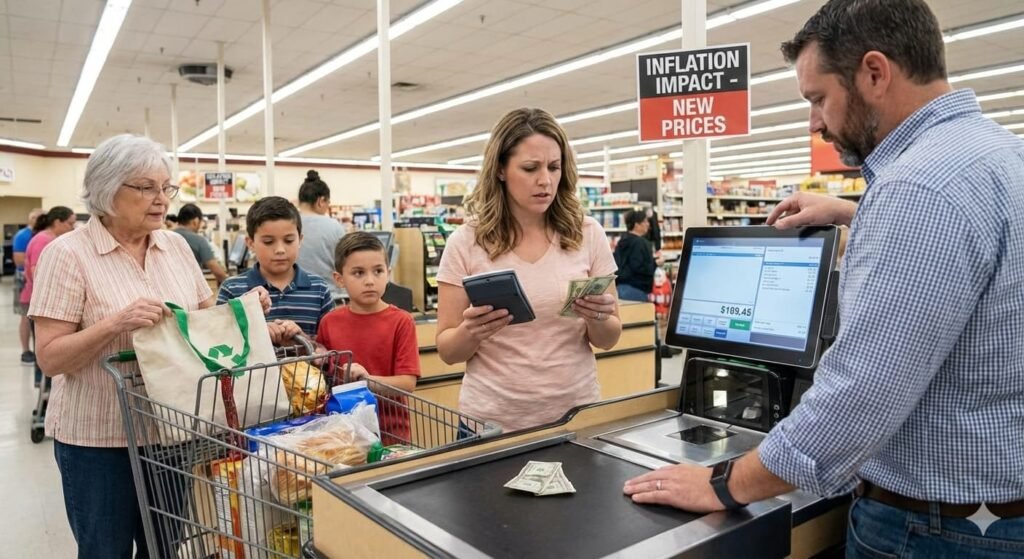
Inflation has eased from the highs seen in 2022 and 2023, but prices have not fallen. Housing, healthcare, insurance, and education costs remain elevated, absorbing a larger share of household budgets. This has created what economists call “inflation fatigue,” where consumers feel financial pressure even when headline inflation numbers improve.
For policymakers, this presents a challenge. Declaring victory over inflation risks ignoring the ongoing cost-of-living strain facing middle- and lower-income households.
Interest Rates as the New Normal
One of the most important shifts in the 2026 economy is the acceptance that higher interest rates are not temporary. Businesses and consumers alike are adapting to a world where credit is more expensive and financial discipline matters.
This shift is reshaping corporate investment decisions, housing affordability, and federal budget priorities, particularly as debt-servicing costs rise.
An Economy That Defies Simple Labels
The U.S. economy in 2026 is neither booming nor broken. It is stable, uneven, and deeply transitional. Understanding that nuance is essential for investors, workers, and policymakers alike.