U.S. Economy Holds Steady Near 2% Growth as Inflation and Policy Uncertainty Shape 2026 Outlook
By Harshit, WASHINGTON, March 6, 2026 — The United States economy in 2026 is settling into a phase of cautious stability. After several years of volatility following the pandemic recovery and aggressive monetary tightening, economic growth is projected to stabilize around 2.0% to 2.1% real GDP, signaling resilience but also reflecting a slower expansion compared with the post-pandemic surge.
Economists broadly describe the current environment as an “equilibrium phase”—an economy that is neither overheating nor falling into recession, but instead navigating structural shifts driven by technology, fiscal policy, and global trade realignment.
Business Investment and AI Infrastructure Drive Growth
One of the strongest pillars supporting economic growth in 2026 is business investment, particularly in advanced technology and infrastructure.
Corporate spending on artificial intelligence data centers, semiconductor manufacturing, and power-grid modernization has accelerated significantly. These investments are helping offset slower growth in other sectors, especially consumer goods and commercial real estate.
The U.S. government’s industrial policy initiatives over the past several years—combined with the private sector’s race to scale AI computing capacity—have created a wave of capital expenditures focused on domestic production and digital infrastructure.
Large technology firms and energy utilities are expanding capacity to support the massive computing power required by next-generation AI systems. This expansion is also contributing to increased electricity demand across several regions.
Fiscal Stimulus Continues to Support Consumers
Another factor supporting the economy is the fiscal stimulus introduced through the One Big Beautiful Bill Act of 2025, which expanded the State and Local Tax (SALT) deduction cap from $10,000 to $40,000 and introduced new corporate investment incentives.
The policy changes have provided a short-term boost to consumer spending, particularly among middle- and upper-income households. Strong asset prices in both the housing and equity markets have further supported household balance sheets, helping sustain consumption despite persistent inflation.
However, the fiscal outlook remains a significant long-term concern.
The Congressional Budget Office (CBO) projects the federal deficit will reach approximately $1.9 trillion in fiscal year 2026, equivalent to about 5.8% of GDP. Meanwhile, public debt has crossed 101% of GDP, raising questions about fiscal sustainability and the government’s ability to respond to future economic shocks.
Labor Market Enters “Low-Hire, Low-Fire” Phase
The U.S. labor market in 2026 presents a mixed picture. Economists increasingly describe it as a “low-hire, low-fire” environment, where job growth continues but hiring momentum has slowed significantly.
The unemployment rate has stabilized between 4.3% and 4.5%, slightly higher than the historic lows seen in 2023 but still low by historical standards.
A key factor shaping the labor market is restricted labor supply. Immigration policy changes enacted in 2025 have tightened workforce availability in sectors such as construction, agriculture, and hospitality.
At the same time, the job market is becoming increasingly bifurcated.
Healthcare remains one of the fastest-growing sectors, adding roughly 80,000 jobs per month as the aging U.S. population increases demand for medical services.
In contrast, many white-collar industries—including finance, legal services, and entry-level technology roles—are experiencing stagnant hiring, as companies adopt AI tools that improve productivity without expanding headcount.
Employees are also becoming more cautious about switching jobs. The “quit rate” has declined sharply, suggesting workers are holding onto existing positions amid a cooling hiring environment. Wage growth has gradually slowed toward a long-term average of around 3.5% annually.
Inflation Remains the Central Economic Challenge
Despite slower economic growth, inflation remains one of the most pressing concerns for U.S. households.
Headline inflation has moderated in part due to lower global oil prices, but Core PCE inflation, the Federal Reserve’s preferred measure, continues to hover between 2.8% and 3.0%, above the central bank’s 2% target.
One reason for the persistent price pressure is the delayed impact of tariffs on imported goods. These higher import costs have gradually passed through supply chains, keeping core goods inflation elevated.
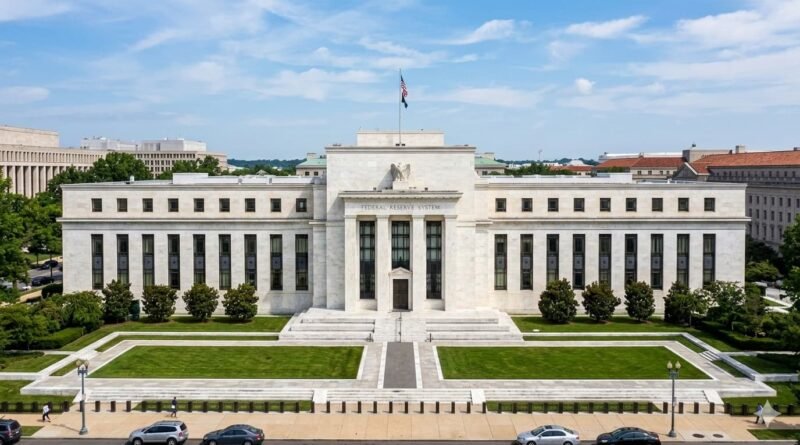
Federal Reserve Faces Leadership Transition
Monetary policy in 2026 is also shaped by an important leadership transition.
Federal Reserve Chair Jerome Powell’s term ends in May 2026, and the appointment of a new central bank leader has introduced uncertainty about the future direction of policy. Former Fed governor Kevin Warsh has emerged as a widely discussed candidate for the role.
Currently, the federal funds rate sits between 3.50% and 3.75%, reflecting the Fed’s cautious stance as it balances inflation risks against economic growth.
Financial markets expect the central bank to begin a gradual easing cycle later in the year, with two quarter-point rate cuts projected in the second half of 2026, potentially bringing the policy rate to around 3.25% by year-end.
AI Boom Drives Electricity Demand Surge
A notable structural shift in the 2026 economy is the rapid increase in electricity demand, largely driven by AI infrastructure expansion.
Massive new data centers require enormous power capacity, placing strain on regional electricity grids and pushing residential electricity prices up by an estimated 4.2% this year.
This dynamic has created an unusual situation: while oil and natural gas prices remain relatively low, utility costs are rising and becoming a meaningful component of core inflation.
For manufacturers, higher electricity prices are also increasing production costs, adding another layer of economic complexity.
Housing Market Remains Stagnant
The U.S. housing market continues to struggle under the weight of high mortgage rates and limited inventory.
Affordability has fallen to its lowest level in nearly three decades, discouraging many potential buyers and slowing new home sales. Builders remain cautious due to elevated financing costs and labor shortages.
As a result, housing activity in 2026 is widely expected to remain largely stagnant, contributing little to overall economic growth.
Global Trade and the Dollar Outlook
On the global stage, the United States is navigating an increasingly fragmented trade environment.
The renegotiation of the U.S.–Mexico–Canada Agreement (USMCA) is expected to dominate North American trade discussions in 2026, with proposed updates focusing on automotive rules of origin and digital trade regulations.
Meanwhile, the U.S. dollar is projected to soften by roughly 5–10% during the year after a long period of strength.
A weaker dollar could make U.S. exports more competitive internationally, but it also raises the cost of imported goods, potentially complicating the fight against inflation.
Another emerging trend is the growing use of dollar-backed stablecoins for cross-border payments, which may improve global liquidity while also introducing new financial stability risks.
Risks That Could Disrupt the Outlook
Although the baseline outlook for 2026 is relatively stable, several risks could still disrupt the economy.
One concern is the commercial real estate refinancing wave expected this year. Many office buildings financed during the low-rate era are now approaching loan maturities and must refinance at much higher interest rates, potentially putting pressure on regional banks.
Geopolitical tensions also remain a key risk. Escalating trade disputes with major economic partners or disruptions to global shipping routes could quickly reignite supply-chain inflation.
Finally, political gridlock ahead of the November 2026 U.S. midterm elections may complicate negotiations over fiscal policy, including the federal debt ceiling and long-term funding for social programs.
For now, however, the U.S. economy appears to be navigating a delicate balance—maintaining steady growth while confronting persistent inflation and structural transformation driven by technology.