
By Harshit
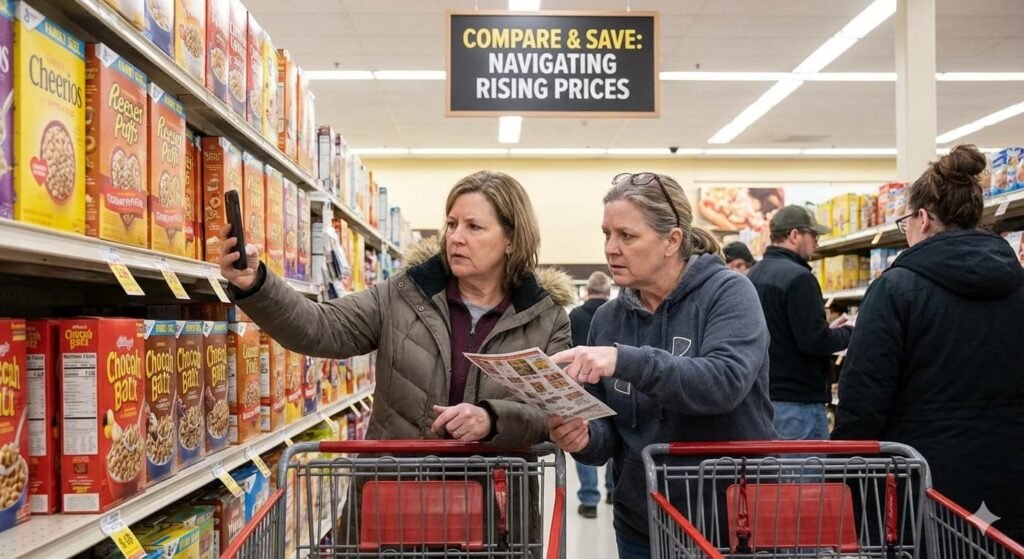
NEW YORK, JANUARY 30 — After years of steadily rising prices, U.S. companies are encountering a clear shift in consumer behavior: resistance. In early 2026, businesses across retail, services, travel, and consumer goods are reworking pricing strategies as customers become more selective, more price-aware, and less willing to absorb incremental increases.
This pushback is forcing corporate America to rethink how prices are set, communicated, and adjusted in a high-cost but slowing-growth environment.
Price Sensitivity Replaces Brand Loyalty
During the peak inflation years, many companies relied on strong demand and limited alternatives to pass higher costs directly to consumers. That approach is losing effectiveness.
In 2026, shoppers are comparing prices more aggressively, switching brands more frequently, and delaying purchases unless value is clear. Even long-established brands are finding that loyalty weakens quickly when price gaps widen.
As a result, pricing power—once taken for granted—is now under constant pressure.
The Rise of Precision Pricing

Rather than broad, across-the-board increases, companies are moving toward more precise pricing models. Advanced analytics are being used to segment customers based on behavior, income sensitivity, and purchase timing.
This allows firms to:
- Offer targeted discounts without eroding overall margins
- Adjust prices dynamically based on demand conditions
- Protect premium pricing for less price-sensitive segments
While effective, these strategies require careful execution to avoid customer backlash or perceptions of unfairness.
Shrinkflation Faces Growing Scrutiny

Reducing product size while maintaining price—commonly known as shrinkflation—has been a quiet tool for managing costs. In 2026, consumers are increasingly aware of the tactic.
Public criticism, social media attention, and regulatory scrutiny are making shrinkflation riskier. Some companies are reversing course by restoring sizes or clearly communicating changes to maintain trust.
Transparency is becoming as important as pricing itself.
Services Face a Different Challenge
Service-based businesses, including healthcare-adjacent services, hospitality, and professional firms, face unique constraints. Labor costs remain high, leaving limited room to lower prices.
Instead of discounting, many service providers are restructuring offerings—bundling services, introducing tiered pricing, or charging explicitly for premium options that were once included.
This shift reframes pricing discussions around choice rather than cost.
Promotions Return—Selectively
Promotions, once scaled back to protect margins, are returning in a more disciplined form. Companies are using short-term, targeted promotions to stimulate demand without resetting customer expectations permanently.
Flash sales, loyalty-based discounts, and limited-time offers are replacing broad markdowns. The goal is to move inventory and sustain engagement without training customers to wait for discounts.
Investor Expectations Shape Decisions
Public companies face pressure to balance revenue stability with volume retention. Investors are closely watching how pricing adjustments affect customer retention and long-term brand strength.
Executives are increasingly discussing pricing elasticity and customer churn on earnings calls, signaling how central pricing strategy has become to business performance.
What This Means for Competition
As price sensitivity rises, competitive gaps narrow. Smaller and more agile firms can win customers by offering clearer value, even without scale advantages.
At the same time, large companies with sophisticated data capabilities gain an edge in executing nuanced pricing strategies. The competitive landscape is becoming less about who can raise prices—and more about who can price intelligently.
A New Phase of Consumer-Business Tension
The pushback against higher prices marks a turning point. Consumers are no longer absorbing increases quietly, and businesses can no longer rely on inertia.
In 2026, pricing has become a conversation rather than a command.
The Bottom Line
U.S. companies are learning that pricing power is conditional. In an environment where consumers feel stretched, success depends on balance—maintaining margins without alienating customers.
Those that adapt thoughtfully will preserve trust and competitiveness. Those that don’t may find resistance growing stronger.