
U.S. Companies Shift Focus From Cost Cutting to Revenue Protection
By Harshit
NEW YORK, FEBRUARY 10 — After several years dominated by layoffs, budget tightening, and efficiency drives, U.S. companies are entering a new strategic phase in 2026: protecting revenue. Rather than concentrating solely on cutting costs, many businesses are now prioritizing customer retention, pricing stability, and long-term demand preservation as economic growth remains steady but restrained.
This shift marks a subtle but important change in how corporate America is preparing for the next phase of the business cycle.
Cost Cutting Reaches Its Limits
Between inflation shocks and higher borrowing costs, U.S. firms spent much of the past two years trimming expenses. Headcount was optimized, discretionary spending reduced, and operations streamlined. By early 2026, many companies have exhausted the most obvious cost-saving measures.
Further reductions now risk damaging product quality, customer experience, or employee morale. Executives increasingly recognize that excessive austerity can weaken competitive positioning rather than strengthen it.
As a result, attention is moving away from internal cuts and toward safeguarding external revenue streams.
Retention Becomes a Strategic Priority
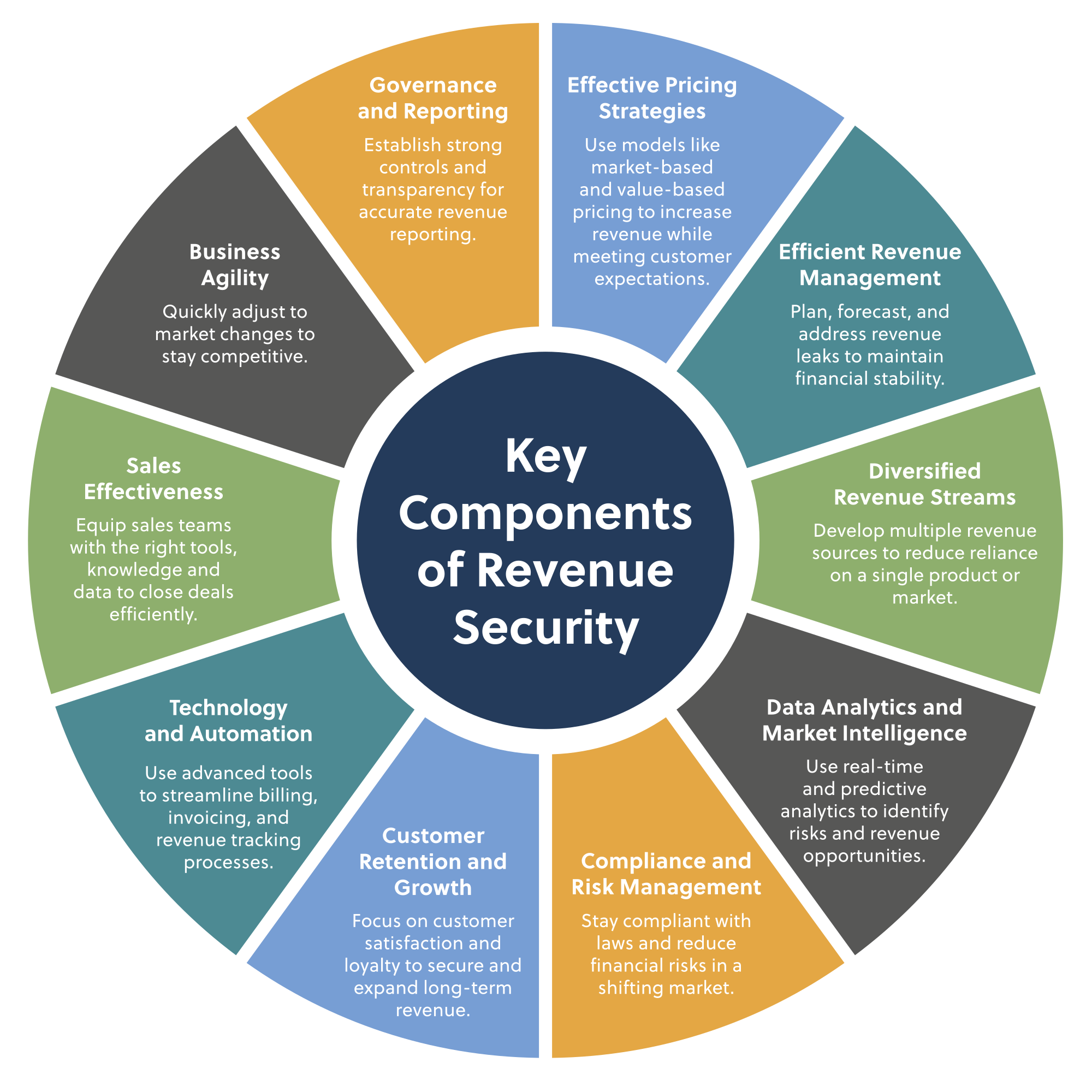
Customer retention is emerging as one of the most important performance metrics in 2026. Acquiring new customers remains expensive, while existing customers provide more predictable revenue.
U.S. companies are investing more heavily in:
- Loyalty programs and subscription retention
- Customer service improvements
- Data-driven personalization
- Post-sale engagement and support
These investments are designed to reduce churn and stabilize cash flow, even if overall market growth remains modest.
Pricing Stability Over Aggressive Increases
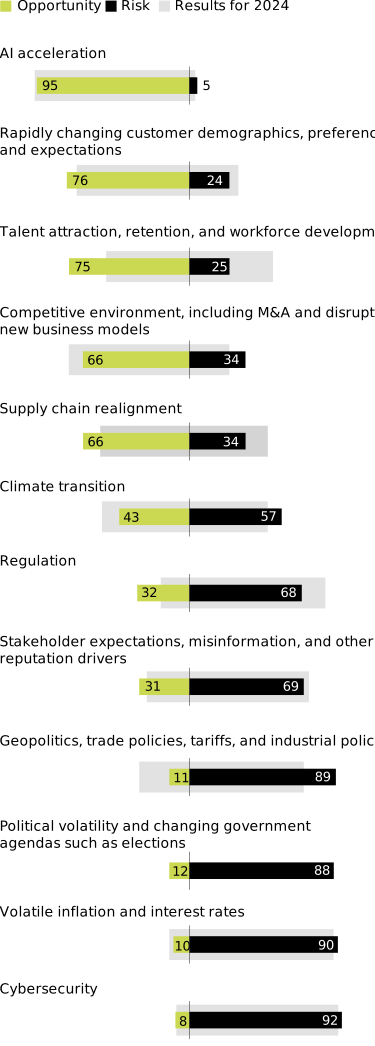
After years of price hikes, many businesses have encountered resistance from consumers. In response, companies are becoming more cautious about further increases.
Instead of pushing prices higher, firms are focusing on:
- Defending existing price points
- Offering value-based bundles
- Adjusting product mix rather than headline prices
This approach helps maintain demand while avoiding reputational damage that can result from frequent or poorly explained price changes.
Revenue Risk Management Gains Attention
Revenue volatility is now treated as a core business risk. Companies are mapping exposure to factors such as consumer pullbacks, contract concentration, and regional demand swings.
Diversifying revenue sources—by geography, customer segment, or product line—is increasingly viewed as a form of insurance. While diversification does not guarantee growth, it reduces dependence on any single market.
This mindset reflects lessons learned during recent periods of disruption.
Sales Teams Adapt Their Role
Sales organizations are also adjusting. Instead of prioritizing rapid expansion, teams are being incentivized to deepen relationships with existing clients, extend contracts, and identify cross-selling opportunities.
Performance metrics are evolving to reward retention, contract renewal rates, and lifetime customer value rather than raw volume alone.
For many firms, stable revenue now outranks aggressive growth targets.
Investors Reward Predictability
Financial markets are reinforcing this shift. Investors in 2026 are placing a premium on companies that demonstrate consistent revenue and controlled volatility.
Businesses that protect revenue during uncertain periods often command stronger valuations than those chasing growth that may not be sustainable.
This investor preference is shaping executive decision-making across industries.
Small and Mid-Sized Firms Follow the Same Path
The emphasis on revenue protection is not limited to large corporations. Smaller U.S. businesses, facing tighter credit and thinner margins, are also focusing on keeping existing customers satisfied rather than expanding rapidly.
For these firms, losing a key customer can have outsized consequences—making retention essential to survival.
A More Defensive—but Durable—Strategy
The move toward revenue protection does not signal pessimism. It signals realism. U.S. companies are acknowledging that stability can be as valuable as expansion in an uncertain environment.
In 2026, success is increasingly defined by resilience—maintaining demand, preserving trust, and staying relevant to customers.
The Bottom Line
As the business cycle matures, U.S. companies are adjusting their priorities. Cost cutting laid the groundwork. Revenue protection is now the strategy that sustains momentum.
Firms that manage this transition effectively are positioning themselves for long-term strength—regardless of how quickly the broader economy accelerates.