
By Harshit
WASHINGTON, JANUARY 12, 2026 —
Climate science in the United States is entering 2026 with a noticeably different emphasis than it had even a few years ago. While measuring temperature trends and tracking atmospheric changes remain central tasks, researchers are increasingly focused on how climate data translates into real-world impacts for communities, infrastructure, public health, and economic planning.
This shift does not reflect a change in scientific consensus, but rather a change in scientific priorities. With decades of data now confirming long-term warming trends, the question driving much of today’s research is no longer whether climate change is occurring, but how it is altering risk in specific places and what that means for decision-makers.
From Global Averages to Local Consequences
For much of the past several decades, climate research relied heavily on global indicators—average surface temperature increases, global sea-level rise, and long-term atmospheric concentrations of greenhouse gases. While these measures remain essential, they are often too abstract to guide local planning decisions.
In 2026, U.S. climate scientists are increasingly working at regional and local scales. Rather than focusing solely on global averages, researchers are examining how climate trends interact with geography, population density, and existing infrastructure. Heat exposure in urban neighborhoods, flood risk along specific river basins, and drought patterns affecting agricultural regions have become central areas of study.
Agencies such as National Oceanic and Atmospheric Administration continue to collect and analyze long-term climate data, but that data is now more frequently used to inform practical questions, such as where extreme heat is likely to strain power grids or how rainfall patterns may affect water management systems.
The Growing Role of Attribution Science
One of the most important developments shaping climate research in recent years is the advancement of attribution science. This field examines how human-driven climate change influences the likelihood or severity of specific weather events.
By early 2026, attribution studies have become more methodologically robust and more widely understood. Rather than claiming that climate change directly “caused” a particular storm or heat wave, scientists assess how warming has shifted the baseline conditions under which weather occurs.
For example, a heat wave may still be influenced by natural variability, but attribution analysis can determine whether rising background temperatures made that heat wave more intense or more likely. This probabilistic approach has helped improve scientific communication by avoiding overstatement while still conveying meaningful risk.
Climate Science and Infrastructure Planning
Another defining trend in U.S. climate science is its closer integration with infrastructure planning. Roads, bridges, power systems, and water networks were largely designed based on historical climate patterns. As those patterns shift, scientists and engineers are working together to assess how existing infrastructure performs under new conditions.
Research increasingly focuses on questions such as how extreme heat affects pavement durability, how changing precipitation patterns influence stormwater systems, and how coastal infrastructure responds to gradual sea-level rise combined with storm surge.
These studies are not theoretical. They inform building codes, maintenance schedules, and long-term investment decisions made by state and local governments. Climate science, in this context, functions as a risk assessment tool rather than a distant warning system.
Public Health as a Scientific Priority
Climate science in 2026 also places greater emphasis on public health impacts. Rising temperatures, changes in air quality, and shifts in seasonal patterns affect human health in ways that are measurable and increasingly well documented.
Heat-related illness remains a major focus, particularly in urban areas where dense development amplifies temperature extremes. Researchers also examine how climate conditions influence respiratory health through air pollution and wildfire smoke, as well as how changing ecosystems affect allergens and disease vectors.
By framing climate impacts in terms of health outcomes, scientists are better able to communicate relevance to policymakers and the public. Health data provides a tangible connection between abstract climate trends and everyday experience.
Advances in Observation and Modeling
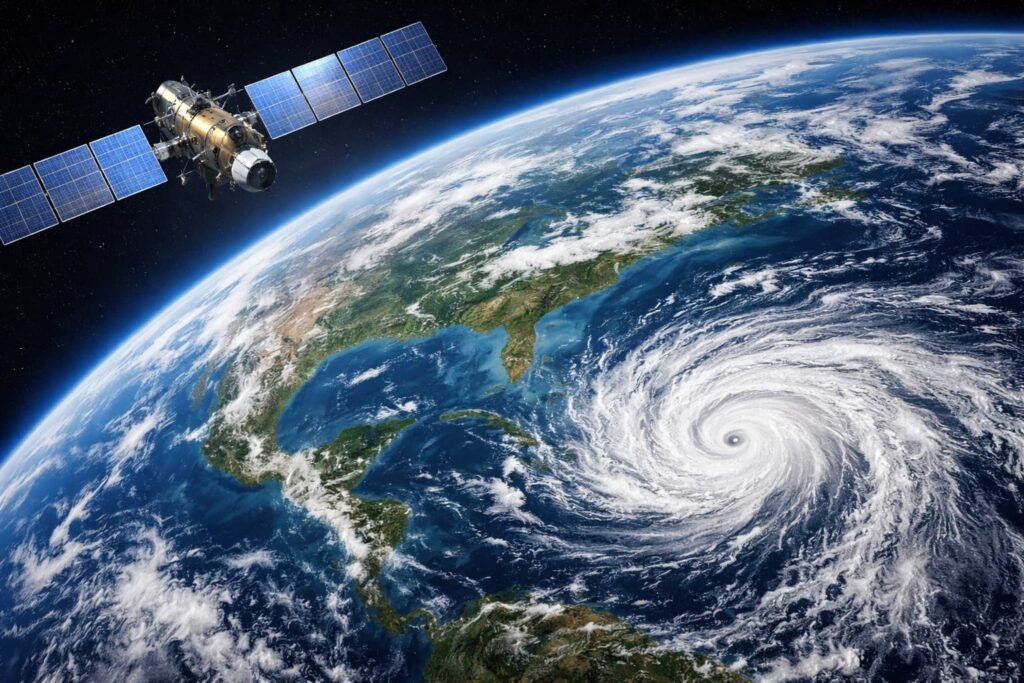
Technological improvements continue to strengthen climate research. Satellite systems operated by organizations such as NASA provide increasingly detailed observations of land, ocean, and atmospheric conditions. These datasets allow scientists to monitor changes with greater precision and consistency over time.
At the same time, advances in computing power have improved climate modeling. Higher-resolution models capture regional differences more accurately, helping researchers simulate how global trends manifest locally. These tools do not predict exact outcomes, but they improve understanding of plausible scenarios and risk ranges.
The emphasis remains on transparency about uncertainty. Scientists are careful to communicate confidence levels and limitations, recognizing that uncertainty is a feature of complex systems, not a weakness of the science.
Communication and Public Understanding
As climate science becomes more impact-focused, communication has become an increasingly important part of the research process. Scientists are refining how they present findings to avoid both understatement and alarmism.
Clear explanations of probability, risk, and uncertainty help decision-makers interpret results without misrepresentation. This approach supports informed planning rather than reactive policymaking.
Researchers emphasize that climate science does not offer precise forecasts for every location, but it does provide valuable guidance on changing risk patterns that can inform long-term decisions.
Looking Ahead Through 2026
As the year progresses, U.S. climate science is expected to continue this trajectory toward applied research and interdisciplinary collaboration. The goal is not to replace foundational climate measurement, but to build upon it with analysis that directly supports resilience and adaptation.
In this sense, climate science in 2026 reflects maturity rather than urgency. With the underlying trends well established, the focus has shifted to understanding consequences, managing risk, and integrating scientific insight into everyday decision-making.
The evolution of climate science toward impact-focused research underscores a broader reality: scientific knowledge becomes most valuable when it helps societies prepare, adapt, and respond thoughtfully to long-term change.