
By Harshit, LOUISVILLE, KY, Nov. 5 / 11:48 EDT
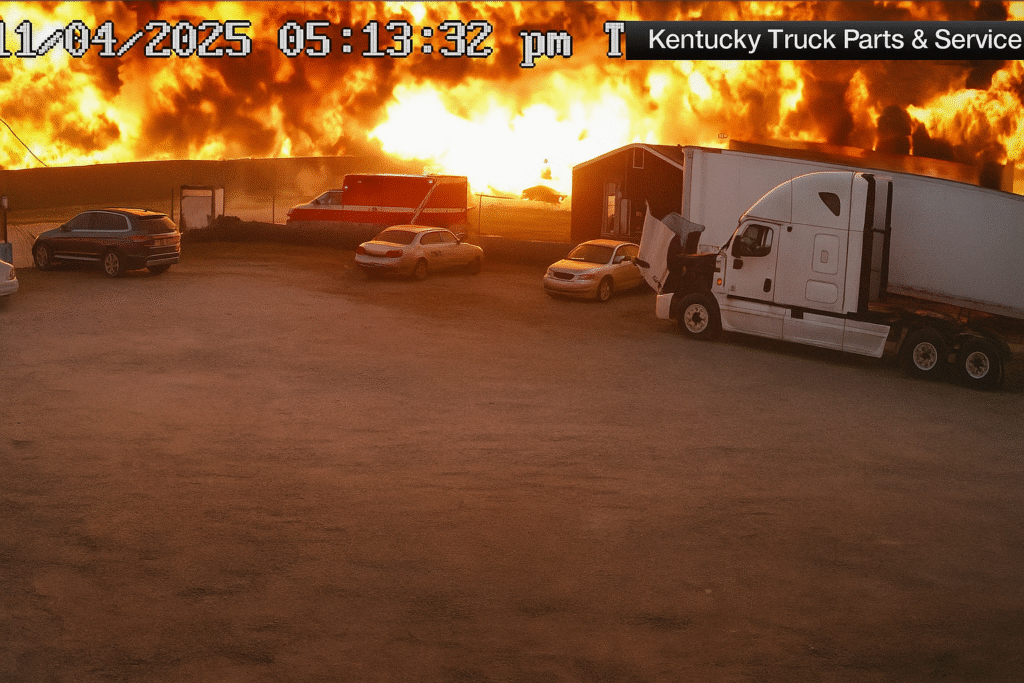
A UPS cargo plane crashed shortly after taking off from Louisville Muhammad Ali International Airport on Tuesday night, leaving at least nine dead and several others injured, authorities confirmed. The fiery crash created a large debris field that included wreckage from the plane as well as cargo items, including Hawaiian-style dresses, witnesses said. Investigators warned that the death toll could rise as rescue and recovery efforts continue.
The McDonnell Douglas MD-11F cargo jet, registered N259UP, had taken off from the airport’s southern runway near UPS’s massive Worldport sorting facility. Officials said the plane was carrying roughly 220,000 pounds of jet fuel at the time of the crash, contributing to the intense blaze that followed impact.
“We can now confirm at least nine victims of the crash. The number is expected to grow as first responders continue working on site,” Louisville Mayor Craig Greenberg told CNN.
UPS Worldport Facility and Local Impact
The crash occurred near Louisville’s 5.2 million-square-foot Worldport facility, which serves as UPS’s main air hub. The facility, capable of processing more than 400,000 packages per hour and accommodating 125 aircraft, is the company’s largest in the world and employs 20,000 people. Operations were halted Tuesday night, and UPS has not yet confirmed when they will resume fully.
Though the area is largely industrial, the crash narrowly avoided causing even greater casualties. Governor Andy Beshear said the plane came dangerously close to a restaurant, Stooges Bar and Grill, and a nearby Ford SUV assembly plant, both of which could have magnified the disaster. The bar, located just a few hundred feet from the crash site, was spared, and staff and patrons were unharmed.
“We are so beyond thankful that every patron and staff member made it out safely,” Stooges owner Debbie Self wrote in a Facebook post.
Other nearby facilities included hotels, a high school with nearly 2,000 students, an amusement park, and a convention center hosting a large livestock show. The proximity of these sites underscored how narrowly the crash avoided an even larger-scale catastrophe.
Casualties and Hospital Updates
At least 15 injured patients were treated in hospitals across the University of Louisville Health system, with 13 already discharged. Two burn victims remain in critical condition. Officials said the number of hospitalizations has decreased, though the full extent of injuries and fatalities is still being assessed.
Sixteen families reported loved ones missing overnight, and city officials continue search and rescue operations at the debris site. Authorities have urged residents to report any plane debris found on private property to the NTSB but cautioned against moving or tampering with the wreckage.
Aircraft Details and Historical Context
The plane, a McDonnell Douglas MD-11F, was more than 34 years old, having first flown on June 30, 1991. Originally operated as a passenger aircraft for Thai Airways International, the MD-11 was later converted into a freighter amid rising fuel costs for three-engine jets. Over its lifetime, the aircraft logged nearly 62,000 flight hours and had a maximum takeoff weight of 630,500 pounds. The aircraft was powered by General Electric CF6-80C2D1F engines, known for their long lifespan and reliability.
The MD-11 has a historical precedent for accidents during takeoff. In 1979, American Airlines Flight 191, a DC-10 aircraft—a predecessor of the MD-11—experienced an uncontained engine failure that led to the detachment of its left engine and hydraulic failure, ultimately killing all 271 people on board. Investigators are examining whether similar factors, such as engine detachment or mechanical malfunction, played a role in Tuesday’s crash.
Photos from the scene show one of the plane’s engines lying mostly intact on the ground, a potential clue for the National Transportation Safety Board (NTSB) as they begin their investigation. Aviation experts say that uncontained engine failure can sever fuel lines or critical structural components, which may have contributed to the fireball seen during the crash.
Investigation Underway
The NTSB has dispatched a team of at least 28 investigators to lead the probe. Officials will examine the debris field, the plane’s maintenance records, and flight data to determine the cause of the crash. Mayor Greenberg has requested public assistance in documenting and reporting debris but emphasized that citizens should not move any wreckage on their own.
At present, there is no indication that air traffic control staffing shortages, exacerbated by the ongoing federal government shutdown, played a role in the crash. Louisville’s ATC tower, which handles takeoffs and landings at the airport, has not issued warnings or reported operational deficiencies in connection with the incident.
Kentucky Governor Andy Beshear is scheduled to provide a full update on the investigation and recovery efforts. Authorities continue to maintain a reduced shelter-in-place order in a quarter-mile radius around the crash site as search and debris collection operations continue.
Flights and Airport Operations
Passenger flights to and from Louisville are resuming on a limited basis, though a major backlog remains due to the crash. Only one runway is currently in operation, significantly slowing operations and causing delays. The Federal Aviation Administration has lifted the temporary restricted airspace around the airport, and flights are gradually returning to normal.
The Worldport hub, crucial to UPS operations nationwide, remains closed temporarily. The facility handles around 300 daily flights and processes more than 400,000 packages per hour. UPS has stated its commitment to the safety of employees, customers, and the Louisville community, but no timeline has been provided for resuming full operations.
Eyewitness Accounts and Cargo
Witnesses described seeing debris scattered across the crash site, including remnants of the cargo manifest. Hawaiian-style dresses were reportedly among the items, presumably intended for a Honolulu-bound shipment. UPS has not yet confirmed the exact cargo contents or plans to contact recipients. Typically, customers have a 60-day window to file claims for lost packages.
Residents in the surrounding areas reported seeing and documenting debris from the crash, highlighting the widespread impact of the incident. City officials are using these reports to aid the reconstruction of the crash scene and to assist investigators in determining how the plane broke apart.
Analysis of Potential Causes
Early reports suggest the plane may have lost an engine during or immediately after takeoff, a scenario reminiscent of past MD-11 and DC-10 incidents. Aviation analysts note that uncontained engine failures can produce high-velocity debris capable of damaging the fuselage, fuel lines, or other critical systems, potentially leading to loss of control.
The MD-11 has a three-engine configuration, and while known for durability, older models like the 1991-built aircraft involved in the Louisville crash are more susceptible to mechanical stress. Investigators will carefully review maintenance records, pilot communications, and flight data recorder information to understand whether engine detachment, hydraulic failure, or pilot error contributed to the tragedy.
Broader Implications
The crash underscores the risks inherent in operating older cargo aircraft, particularly those converted from passenger jets. It also highlights the importance of regulatory oversight, maintenance protocols, and rapid emergency response. Fortunately, the crash occurred primarily in an industrial area, narrowly avoiding denser residential zones and crowded venues.
Governor Beshear emphasized that the area’s proximity to schools, restaurants, and industrial plants could have resulted in a significantly higher death toll. “It could have been far worse,” he said, noting the plane narrowly missed high-risk locations such as a convention center hosting a livestock show and a nearby high school.
The incident also has implications for UPS operations and the air cargo industry at large. The Louisville hub serves as a major logistical center for the company, and disruptions could affect package delivery nationwide. As UPS and regulators assess safety protocols, other cargo carriers operating similar aircraft may review risk management strategies and aircraft usage policies.
Community Response and First Responder Efforts
First responders worked through the night amid flames, debris, and hazardous conditions. Louisville fire and emergency medical personnel were credited with containing the fire and rescuing survivors. Mayor Greenberg and Governor Beshear both praised the efforts of emergency teams and called on residents to support families affected by the crash.
The community has rallied around victims and first responders, offering temporary employment and support to displaced workers, such as those at Stooges Bar and Grill. Local leaders have also emphasized the importance of mental health services for responders and residents coping with the aftermath of the disaster.
Conclusion
The UPS cargo plane crash in Louisville is one of the deadliest aviation incidents in recent years, and the investigation is just beginning. With at least nine confirmed dead, critical injuries, and substantial destruction, authorities are working around the clock to determine the cause, recover victims, and restore safety at the airport and surrounding areas.
While preliminary reports suggest engine failure may have played a role, investigators caution against speculation until the NTSB completes a thorough review. For now, the city of Louisville, UPS employees, and the aviation community remain in shock, focusing on recovery, accountability, and preventing a similar tragedy in the future.