
By Harshit, LONDON, Oct. 22, 2025
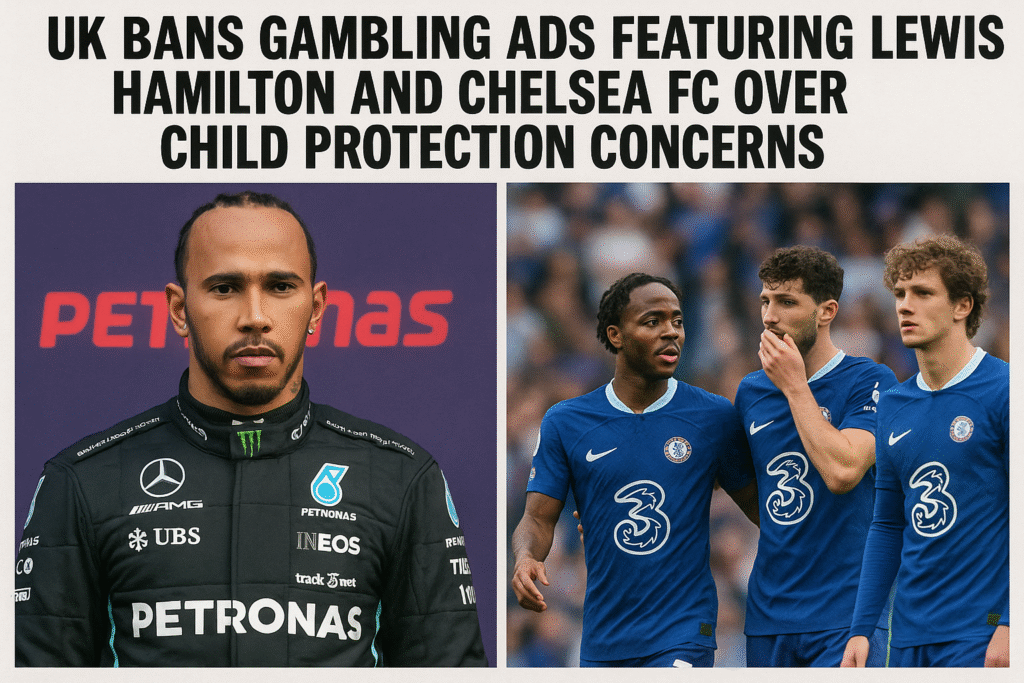
The UK’s Advertising Standards Authority (ASA) has banned gambling advertisements featuring Formula 1 racing driver Lewis Hamilton and the Chelsea Football Club logo, citing concerns that the content could appeal to children. The ads, published by betting firms Kwiff and Betway, have been prohibited amid growing scrutiny of gambling marketing aimed at young audiences.
Lewis Hamilton and Kwiff Under the Spotlight
Kwiff, operated by Eaton Gate Gaming, promoted the British Grand Prix on X (formerly Twitter) in July, using a post featuring Lewis Hamilton and describing the event as a “huge weekend.” The post included an “18+” symbol and the BeGambleAware.org logo but also linked to an article about the race on Kwiff’s company blog.
The ASA received a complaint from a University of Bristol researcher, who argued that the post was likely to appeal to under-18s. Despite Kwiff’s claim that data showed Hamilton primarily attracted older audiences, ASA found evidence suggesting otherwise.
The ruling noted Hamilton’s significant appeal among youths, citing his 150,000 UK-based Instagram followers under 18. His appearances in the F1 24 video game (rated suitable for ages three and up) and as a storyteller on BBC CBeebies reinforced his attraction to younger audiences.
Kwiff subsequently reviewed its social media content and removed posts featuring mainstream sports stars, including Hamilton. The ASA concluded that the company should have anticipated Hamilton’s broad appeal, particularly to underage audiences.
Image alt text: Lewis Hamilton at the 2025 British Grand Prix, featured in Kwiff’s banned advertisement.
Betway’s Chelsea-Themed Advertisement
In a separate case, Betway’s YouTube advertisement was also banned. The advert, seen in May, depicted football fans wearing Chelsea FC clothing. ASA ruled that YouTube was an unsuitable platform, as the platform could not guarantee that children under 18 would be excluded from viewing age-restricted gambling content.
Betway argued that as Chelsea’s official European betting partner, it had contractual rights to use the club’s logo. The company also cited YouTube’s ad policies as safeguards to prevent underage exposure. Nevertheless, ASA determined that a significant number of viewers could bypass age restrictions, making the advert non-compliant with UK advertising codes.
ASA warned both Kwiff and Betway not to feature characters or sports personalities with strong appeal to under-18 audiences in gambling advertisements. The rulings reflect heightened regulatory vigilance over gambling marketing, particularly in sports contexts where young fans are easily exposed.
Image alt text: Chelsea FC logo displayed on a stadium banner during a Premier League match, previously used in a banned Betway advertisement.
Implications for Sports and Gambling Sponsorships
The ASA’s decision raises questions about the role of high-profile athletes and football clubs in gambling promotions. Lewis Hamilton’s and Chelsea FC’s broad popularity, including among minors, made these campaigns particularly risky under the UK’s strict advertising codes.
Betway expressed concern that the ban could set a “damaging precedent for gambling sponsorships in sport,” emphasizing the contractual obligations with Chelsea FC. Kwiff, on the other hand, acknowledged the need to reconsider marketing strategies to avoid underage exposure in future campaigns.
Experts suggest the rulings could reshape sports sponsorship agreements, forcing companies to carefully vet not only the content but also the channels through which gambling ads are displayed. Social media platforms, in particular, may face increased scrutiny over the effectiveness of age-restriction mechanisms.
Growing Regulatory Focus on Child Protection
The bans are part of a broader trend in the UK and globally to protect minors from gambling-related harm. With the rise of social media and digital advertising, children are increasingly exposed to gambling content, prompting regulators to tighten restrictions on both messaging and platforms.
ASA highlighted that while advertising may include disclaimers like “18+” and BeGambleAware.org, these markers are insufficient when the promoted content features figures with a known youth following. Both Lewis Hamilton and Chelsea FC have wide-ranging appeal beyond adult audiences, making them unsuitable for gambling promotions aimed at general online viewers.
Regulators have also emphasized the need for advertisers to consider indirect influence. Young fans may be motivated to gamble not only by direct promotion but also by the association of their favorite sports stars and teams with betting companies.
Responses and Next Steps
The BBC has contacted Kwiff, Betway, Lewis Hamilton’s management team, and Chelsea FC for comment. Both betting firms have acknowledged the ASA rulings and are reviewing internal policies to prevent future breaches.
The ASA’s intervention underscores the delicate balance between sports sponsorship revenue and child protection. As gambling companies increasingly seek visibility through high-profile partnerships, regulatory bodies are likely to maintain strict oversight to prevent underage exposure.
“This ruling demonstrates that even subtle associations with popular sports personalities can have regulatory consequences,” said an advertising expert. “Brands must carefully evaluate the appeal of their endorsers and the platforms they use.”