
WASHINGTON, MARCH 27, 2026 —
Today is payday for more than 46,000 Transportation Security Administration officers working at airports across the United States. Most of them will receive nothing.
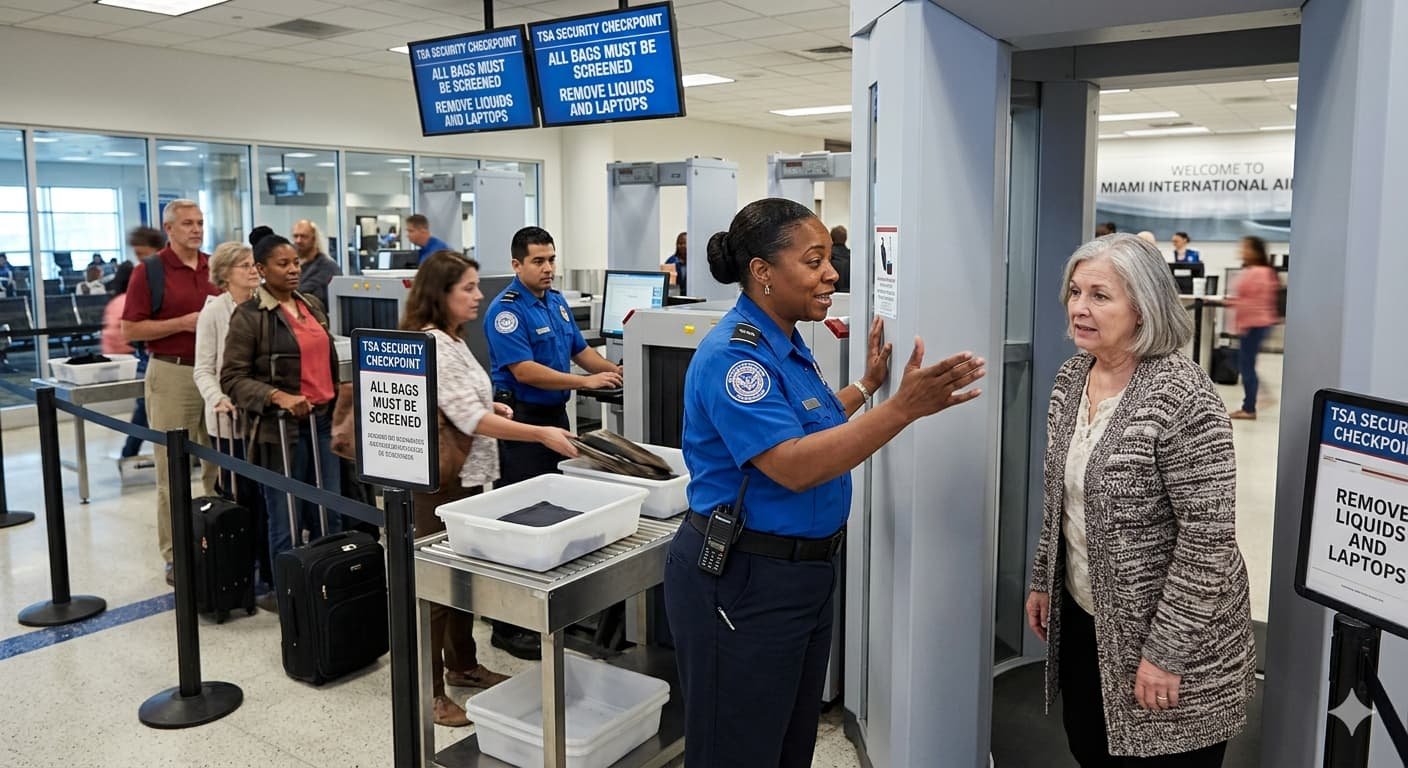
The partial government shutdown that has paralyzed the Department of Homeland Security since February 14 — now in its 41st day — hit its most critical point yet Friday morning as TSA workers faced their second missed full paycheck. Thousands have already stopped showing up for work. Hundreds have quit entirely. And at airports from Atlanta to Houston to LaGuardia, the consequences are visible in security lines that stretch past check-in counters and into terminal lobbies, with wait times exceeding two hours at the busiest airports in the country.
President Trump said Thursday night he would sign an executive order directing the Homeland Security secretary to immediately pay TSA agents — an extraordinary step that came as senators reviewed what they described as a “last and final” offer to end the congressional standoff that has left the agency running on fumes during spring break travel season.
What $1 Billion in Unpaid Wages Looks Like
The numbers from the TSA’s own testimony to Congress are staggering. TSA employees have worked 87 days without timely pay in fiscal year 2026. By Friday, the agency calculated that nearly $1 billion in payroll has not been paid on schedule — money that was earned by workers who screened more than three million passengers on peak travel days, every single day, without compensation.
The human cost is documented in real time. Aaron Barker, a union leader representing TSA employees in Atlanta — the busiest airport in the world — told CNN that officers are dealing with “eviction notices, vehicle repossessions, empty refrigerators and overdrawn bank accounts.” One TSA agent in Atlanta who recently relocated for the job said he had asked for extensions on both his rent and car payments. “It’s more than I can express,” he said of the pressure.
Nationwide, more than 11% of scheduled TSA employees missed work on Wednesday — more than 3,120 callouts in a single day. Multiple airports are experiencing callout rates above 40%. At Houston Hobby International Airport, the single-day callout rate hit 55% in mid-March. Nearly 500 of the agency’s roughly 50,000 transportation security officers have now quit during the shutdown — each one requiring four to six months to replace and certify.
Why Congress Still Has Not Acted
The shutdown exists because Congress has not passed a full-year appropriations bill funding the Department of Homeland Security for fiscal year 2026. Senate Democrats have refused to support Republican funding proposals without guardrails on ICE, Customs and Border Protection, and other federal law enforcement agencies conducting immigration sweeps — particularly after two U.S. citizens were fatally shot by federal immigration agents in Minneapolis in January.
Democrats want federal agents to wear identification, remove face masks during operations, and refrain from conducting raids near schools, churches, and other sensitive locations. Republicans have countered with offers that Democrats call insufficient. The Senate held its funding vote open for five hours Thursday hoping negotiations would break the impasse. They didn’t. Only one Democrat — Senator John Fetterman of Pennsylvania — crossed the aisle to vote with Republicans.
Congress is scheduled to leave Washington for a two-week Easter and Passover recess Friday. The prospect of lawmakers departing on vacation while TSA workers miss a second paycheck and spring break travelers face two-hour security lines has added a layer of political urgency to a standoff that has dragged on for six weeks.
Trump’s Executive Order — And Whether It Will Work
Trump’s announcement that he would sign an order directing DHS to pay TSA workers immediately raised a constitutional question that legal experts are still debating: does the president actually have that authority?
The TSA is funded through specific congressional appropriations — not executive discretion. Max Stier, CEO of the Partnership for Public Service, a nonpartisan government accountability organization, put the problem plainly: “My question is if he can do it, why didn’t he do it before?” The White House acknowledged that the legal basis for the order is uncertain. Republicans in the Senate said there were other options besides invoking a national emergency, though they did not specify what those options were.
Transportation Secretary Sean Duffy had warned earlier this week that the current airport disruptions are “child’s play” compared to what happens if TSA workers miss a third paycheck. That moment — unless Congress acts or Trump’s executive order holds up legally — is now three weeks away.
Spring break is here. Every major airport in America is at peak capacity. And the workforce keeping those airports secure has not been paid in weeks.