
By Harshit, Washington, D.C., October 25, 2025 7AM EDT
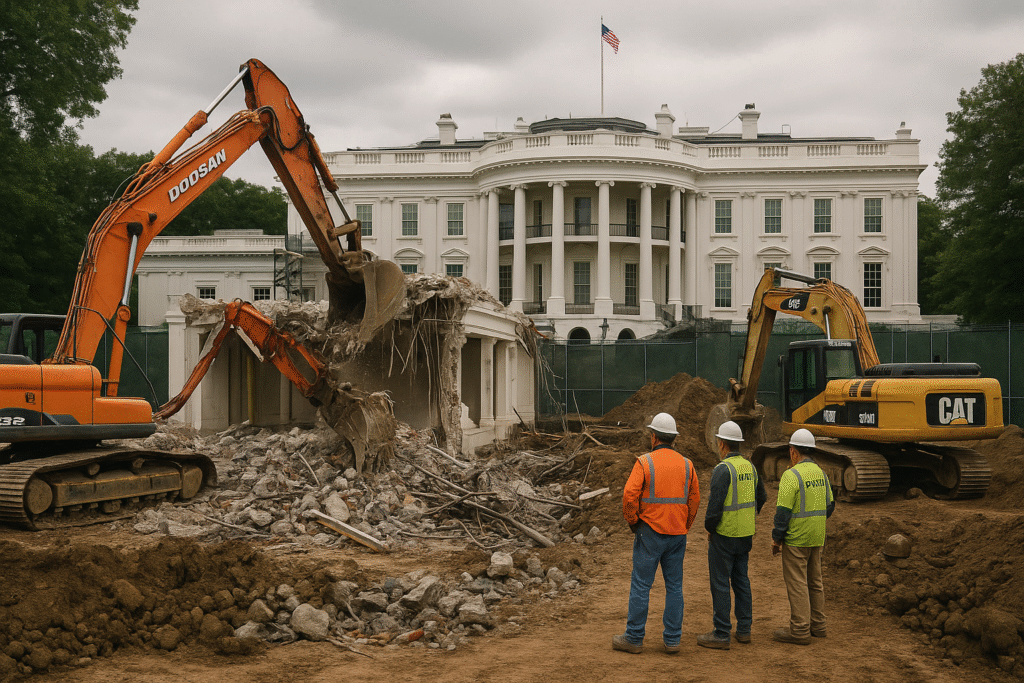
President Donald Trump officially broke ground on an ambitious White House expansion project on Monday, marking the beginning of construction for a massive new ballroom that will replace the East Wing. The project, backed by private donors, will be the largest addition to the executive mansion in modern history, nearly doubling the footprint of the White House’s main 55,000-square-foot structure.
Despite Trump’s claims that the expansion would not “interfere” with the existing building, crews completed the demolition of the East Wing in just four days. The move has sparked widespread public attention due to the scale, cost, and design of the project, which promises to transform the historic east side of the White House.
Former East Wing and Its Role
Until this week, the East Wing served multiple key functions. It housed a movie theater, offices for the first lady and her staff, and a calligraphy workshop, where official invitations for state events were prepared. Additionally, the East Wing served as the main visitor entrance, hosting public tours of the White House.
With demolition complete, all public tours have been suspended indefinitely, according to the White House website. Officials say the new ballroom and accompanying facilities will consolidate these functions while providing modernized spaces for official events.
New Features of the East Wing Expansion
The reconstruction will include:
- A 90,000-square-foot ballroom, nearly twice the size of the existing main White House building.
- Offices for the first lady and her staff, maintaining administrative functions displaced by the demolition.
- New guest suites for “President’s White House Guests,” intended for visiting dignitaries and officials.
The White House has not confirmed whether the guest suites and offices are counted in the 90,000-square-foot total, but architectural analyses suggest that the project’s total footprint could exceed that figure once all spaces are included.
Design and Architecture
The new ballroom will feature a neoclassical facade, reflecting Trump’s executive order mandating that all new federal buildings be designed in classical and traditional architectural styles. The lead architect, James McCrery II, is a well-known classicist, tasked with ensuring the design is consistent with the historical and symbolic character of the White House.
Through analysis of renderings, photos, and satellite imagery, it is clear that the expansion will preserve the overall aesthetic integrity of the executive mansion while dramatically increasing the functional space available for events. The ballroom itself will now seat nearly 1,000 guests, up from earlier estimates of 650, providing ample space for state dinners, large press events, and other official gatherings.
Project Cost and Funding
Originally announced in January, the expansion was projected to cost $200 million, financed entirely by private donations. However, as plans grew more ambitious, including the increase in ballroom size and addition of guest suites, Trump has revised the projected cost to over $300 million.
The funding remains private, with donors covering the full expense of the construction, although some critics have raised questions about transparency, reporting, and long-term maintenance costs for the expanded East Wing.
Significance and Controversy
The expansion is the most significant White House construction project in decades, reflecting Trump’s emphasis on large ceremonial spaces and high-profile public events. While supporters highlight the modernization and functionality of the addition, critics argue that such a dramatic increase in size and cost is excessive and raises questions about priorities for federal projects.
The move also reflects the administration’s broader focus on classical architecture, which Trump has promoted across several federal construction initiatives. Observers note that the neoclassical design aligns with the president’s aesthetic vision while creating a visually imposing addition to the historic White House campus.
Conclusion
With the East Wing demolition complete, construction crews will now focus on the ballroom, offices, and guest suites, with the project expected to take several years to complete. Once finished, the expanded White House will offer an unprecedented ceremonial and administrative capacity, accommodating nearly 1,000 guests in the new ballroom alone.
The project underscores the Trump administration’s priorities in both architecture and symbolic presidential presence, while also igniting debate over the scale, cost, and public impact of the largest expansion in modern White House history.