
By Harshit
WASHINGTON / KYIV — Nov. 23, 2025
US President Donald Trump has given Ukraine less than a week to accept a sweeping 28-point peace proposal that critics say overwhelmingly favors Russia’s long-standing demands. Ukrainian President Volodymyr Zelensky, facing mounting international pressure, described the moment as “one of the most difficult” in his nation’s modern history.
Trump issued the deadline during a Fox News radio interview, saying Thursday would be the “final” day for Kyiv to agree to the terms. “If things are working well, you tend to extend deadlines. But Thursday is it,” he said. The comments signal the most forceful push yet from Washington to compel Ukraine toward a settlement.
A Plan That Mirrors Key Kremlin Demands
The plan requires Ukraine to withdraw from portions of eastern Donetsk still under its control, formally accept that Crimea, Luhansk and Donetsk are “de facto Russian,” cap its military at 600,000 troops, and permanently abandon NATO membership. These provisions echo conditions Moscow has insisted upon since the early months of the 2022 invasion.
In exchange, the proposal offers a halt to hostilities, international reconstruction funding, and a US-led oversight board. A US official confirmed the draft’s authenticity.
Speaking in a national address Friday evening, Zelensky said the document confronts Ukraine with a wrenching choice: “either the loss of dignity, or the risk of losing a key partner, or 28 difficult points, or an extremely harsh winter.”
Trump: “He’ll Have to Like It”
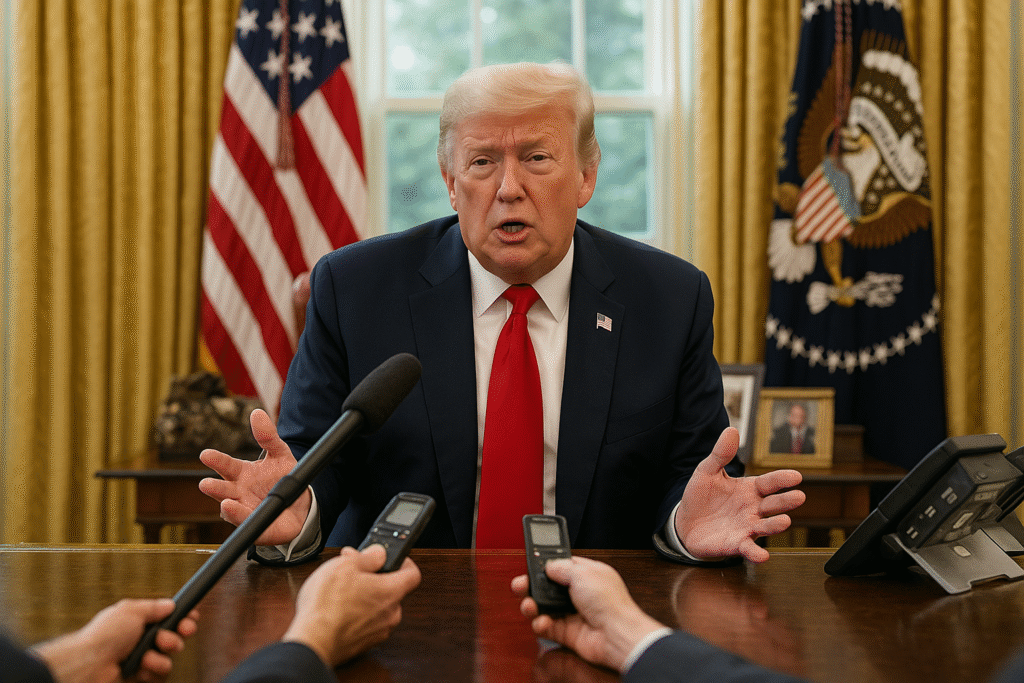
After Zelensky’s remarks, Trump told reporters in the Oval Office he believed the plan remained “a way of getting peace,” but suggested Kyiv had little practical room to negotiate.
“He’ll have to like it. And if he doesn’t like it then they should just keep fighting, I guess,” Trump said.
Earlier in the day, Russian President Vladimir Putin said he had received the proposal and that it “could form the basis of a final peace settlement.” Speaking at a security council meeting, Putin said Russia was prepared to “show the flexibility” he discussed with Trump during their August summit in Alaska, though he noted that substantive negotiations had not yet begun.
Europe Pushes Back, but Faces Exclusion
The leak of the plan triggered urgent talks among European leaders, several of whom voiced alarm over key provisions.
Germany’s Chancellor Friedrich Merz, France’s President Emmanuel Macron and UK Prime Minister Keir Starmer held a joint call with Zelensky Friday, pledging to defend “vital European and Ukrainian interests.” Their statement emphasized that any settlement must preserve Ukraine’s ability to “effectively defend its sovereignty,” diverging from the US proposal, which urges Ukrainian withdrawal from its own territory.
Starmer added that discussions at the G20 summit in Johannesburg would focus on “how we can strengthen this plan for the next phase of negotiations.”
“There is only one country around the G20 table that is not calling for a ceasefire,” Starmer said. “Time and again, Russia pretends to be serious about peace, but their actions never live up to their words.”
European Commission President Ursula von der Leyen confirmed EU leaders would meet Saturday on the sidelines of the G20 to review the draft. But the bloc appears largely sidelined from the initial shaping of the proposal, which was negotiated primarily between the US and Russia.
Ukraine’s Red Lines Confront New Pressure
Large portions of the plan mirror proposals Kyiv previously rejected, especially regarding territorial concessions and NATO. Ukrainian officials have repeatedly said they will not accept any limits on their military capabilities or any recognition — formal or implied — of Russian control over Ukrainian land.
Yet Zelensky signaled he would approach discussions without public confrontation. “We will work calmly,” he said, stressing that Ukraine would consult with the US and its partners “around the clock.”
The political cost of accepting the draft could be severe for Zelensky at home, where public resistance to territorial concessions remains overwhelming. But rejecting it risks straining relations with a US administration that has been increasingly explicit about wanting the war to end.
What the Plan Offers Moscow
The draft would grant Russia a powerful set of victories without battlefield gains. It calls for:
- recognition of Russian control over Crimea, Luhansk, and Donetsk “as de facto Russian,”
- U.S.-backed guarantees limiting Ukraine’s military structure,
- Ukraine’s permanent exclusion from NATO,
- a phased lifting of sanctions,
- and Russia’s eventual reintegration into the global economy, including re-entry to the G8.
Trump insisted in his Fox News interview that Putin is “not looking for more war,” describing the Russian military as “taking punishment.” Yet the terms outlined mirror Moscow’s long-standing goals.
Zelensky: “I Will Not Betray Ukraine”
While acknowledging the gravity of the moment, Zelensky vowed that any decision his government makes will protect Ukraine’s sovereignty.
“We will find a path forward,” he said, “but I will not betray Ukraine.”
Ukraine has less than a week to determine whether the Trump plan is a starting point for negotiation — or a line it will not cross.