
WASHINGTON, APRIL 2, 2026 —
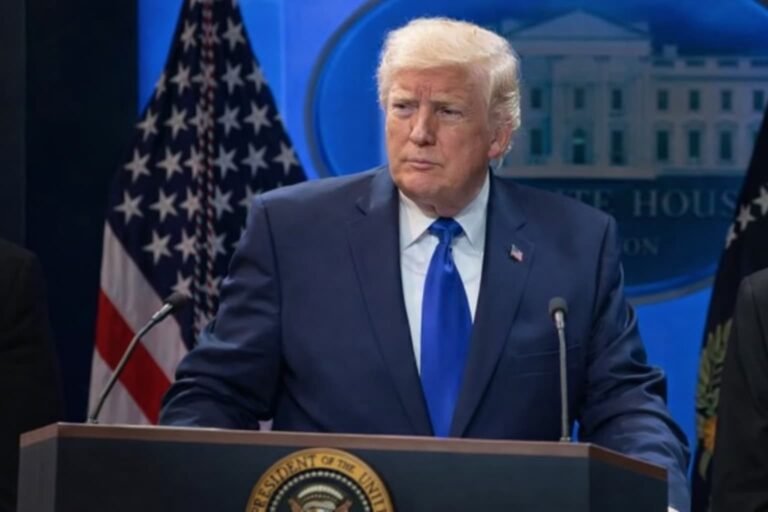
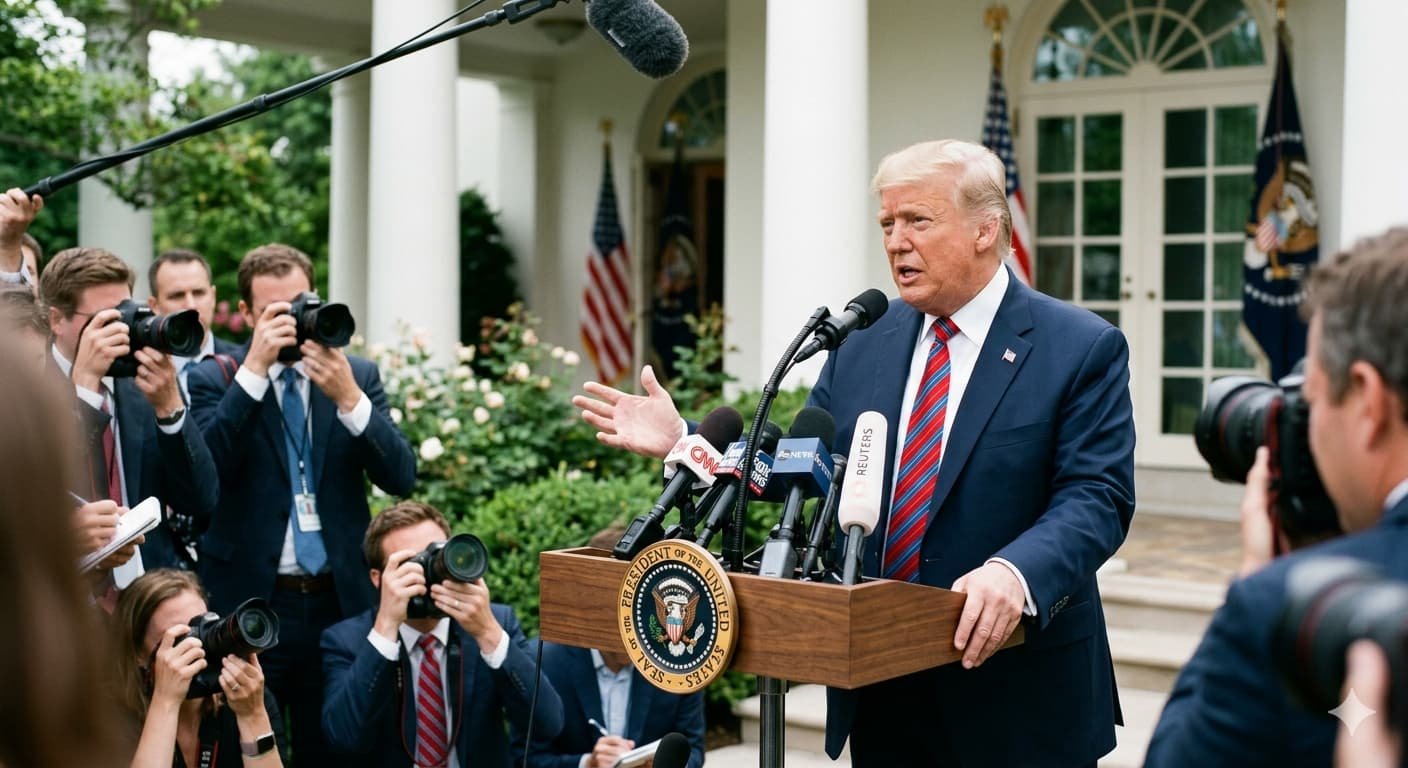
President Donald Trump has issued his most direct threat yet to one of the most consequential alliances in modern history — telling two separate news organizations Wednesday that he is “absolutely” and “beyond reconsideration” thinking about withdrawing the United States from NATO, the 77-year-old military alliance that has been the cornerstone of Western security since the end of World War II.
The threat came after Trump spent weeks pressuring NATO allies to send warships to help secure the Strait of Hormuz during the Iran war — and was met with refusals from every single European member of the alliance. Spain, Italy, France, Poland, and the United Kingdom all declined to join or materially support the U.S.-Israeli military campaign, citing legal and political concerns about the legality of the war.
“I was never swayed by NATO,” Trump told The Daily Telegraph in an interview published Wednesday. “I always knew they were a paper tiger, and Putin knows that too, by the way.” When Reuters asked him directly if he was considering withdrawing from the alliance, he replied: “Oh, absolutely, without question.”
What Triggered the Threat
The immediate cause of Trump’s fury is specific and fresh. In mid-March, as oil prices surged toward $110 a barrel and the Strait of Hormuz remained effectively blockaded by Iranian mines and missiles, Trump called on NATO allies to send naval vessels to help secure the vital waterway. He described the request as a “test” of alliance solidarity.
Every NATO member failed it — at least by Trump’s definition. Italy blocked landing rights for U.S. warplanes at a key airbase in Sicily. Spain’s defense minister called the Iran war “illegal and unjust.” Poland said it had no plans to send Patriot air defense systems to the Middle East. Britain’s Keir Starmer refused to allow U.S. forces to use British bases for offensive operations — though Britain did contribute to intercepting Iranian attacks on British-linked targets in the region.
Trump was particularly scathing about Britain. “You don’t even have a navy,” he told The Telegraph. “You’re too old and had aircraft carriers that didn’t work.” He dismissed Starmer’s energy policy with a single sentence: “All Starmer wants is costly windmills that are driving your energy prices through the roof.”
Secretary of State Marco Rubio had set the table for Trump’s comments on Monday, telling Al Jazeera that the U.S. may need to “re-examine” its relationship with NATO once the war ends. “If NATO is just about us defending Europe if they’re attacked but then denying us basing rights when we need them, that’s not a very good arrangement,” Rubio said.
The Legal Reality — Can Trump Actually Leave NATO?
Trump’s ability to withdraw the United States from NATO unilaterally is constrained by a law Congress passed in 2023 — specifically to prevent this exact scenario. The National Defense Authorization Act for FY2024 includes a provision stating that the president “shall not suspend, terminate, denounce, or withdraw” the United States from NATO without either a two-thirds Senate supermajority or an act of Congress.
The law was co-sponsored by then-Senator Marco Rubio himself — now Trump’s Secretary of State — along with Democratic Senator Tim Kaine.
Senate Minority Leader Chuck Schumer responded Wednesday: “The Senate will not vote to leave NATO and abandon our allies just because Trump is upset they wouldn’t go along with his reckless war.” Senator Mark Warner called the threat “reckless” and warned it would “weaken America.”
What Congress Passed vs. What Trump Is Threatening
| Issue | Detail |
|---|---|
| NATO founding year | 1949 — Article 5 collective defense treaty |
| U.S. troops in Europe | ~100,000 including ~37,000 in Germany |
| Law blocking unilateral exit | NDAA FY2024 — requires 2/3 Senate or act of Congress |
| Rubio’s role in that law | Co-sponsor — alongside Democrat Tim Kaine |
| Trump’s stated position | “Absolutely” and “beyond reconsideration” considering exit |
| Senate’s stated position | Will not vote to leave NATO |
| NATO members who refused Iran war | Spain, Italy, France, Poland, UK and others |
| Putin’s likely response | Interpreted as major strategic opportunity |
What NATO Allies Are Saying
European capitals reacted to Trump’s comments with alarm but measured language. Finnish President Alexander Stubb said he had spoken to Trump and described it as a “constructive discussion.” British Prime Minister Starmer publicly stressed that NATO remains “the single most effective military alliance the world has ever seen” and reiterated Britain will not be drawn into the Iran war.
Ian Bremmer, president of the Eurasia Group, identified the deeper concern: even if Trump cannot legally withdraw without Congress, if NATO members “can’t trust” that the U.S. will honor Article 5 — the mutual defense clause that forms the alliance’s core — then “the alliance is already broken in the way that matters most.”
The legal constraint on Trump is real. But the strategic damage from a president publicly calling the world’s most powerful military alliance a “paper tiger” — and doing so while the Strait of Hormuz remains blockaded, oil is above $110 a barrel, and Russia is watching — may not need a formal withdrawal to be felt.
What Happens Next
Trump addressed the nation Wednesday night in a primetime speech on the Iran war. He told the public that U.S. military objectives were “nearing completion” and that the war would end “shortly” — without offering a specific timeline. He again threatened further strikes on Iran and said that in the next two to three weeks, U.S. forces would “bring them back to the Stone Ages.”
He made no direct mention of NATO in the speech — but the threat stands. Whether it is a negotiating tactic designed to pressure European allies into greater support, or a genuine preview of post-war U.S. foreign policy, is the question every NATO capital is now urgently trying to answer.