
By Harshit, Portland | October 21, 2025 6 AM EDT
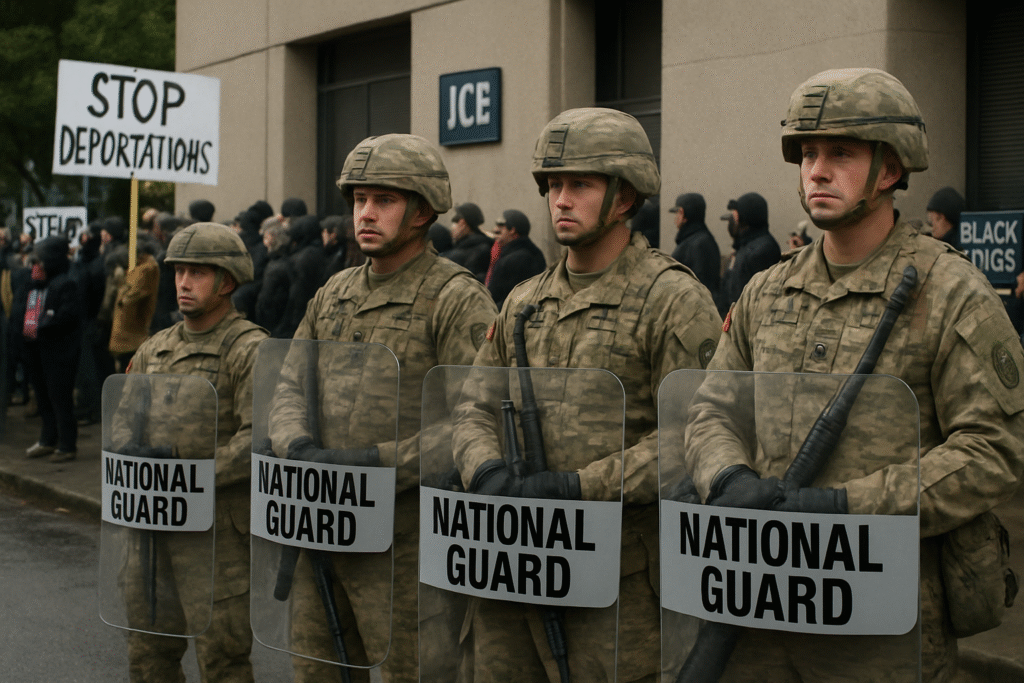
A ruling by the Ninth Circuit Court of Appeals on Monday granted a partial legal victory to the Trump administration, allowing the federal government to deploy National Guard troops in Portland, Oregon, amid ongoing clashes over immigration policies. While the decision overturns one of two lower court orders blocking the deployment, the second order remains in effect, preventing immediate troop mobilization.
The case underscores a broader legal and political confrontation over presidential authority and state control, with implications stretching to other cities, including Chicago, San Francisco, and Memphis.
The Court’s Decision
The three-judge Ninth Circuit panel reviewed a temporary restraining order issued by US District Judge Karin Immergut, who had recently extended two injunctions barring the federal deployment of troops to Portland. The appellate court ruled that the lower court erred in one of its decisions, siding with the administration’s argument that both orders relied on the same legal reasoning.
Two Trump-appointed judges, Ryan D. Nelson and Bridget S. Bade, supported the administration’s appeal. Judge Susan P. Graber, appointed by former President Bill Clinton, dissented, warning that the decision “erodes core constitutional principles, including sovereign States’ control over their States’ militias and the people’s First Amendment rights to assemble and to object to the government’s policies and actions.”
A White House spokesperson, Abigail Jackson, framed the ruling as a validation of presidential authority, stating, “President Trump is exercising his lawful authority to protect federal assets and personnel following violent riots that local leaders have refused to address.”
State and Local Response
Oregon Attorney General Dan Rayfield criticized the ruling, calling it “a dangerous path in America” that could give the president “unilateral power to put Oregon soldiers on our streets with almost no justification.” Rayfield requested an en banc review, where a larger panel of 11 appellate judges would reconsider the case. Attorneys from both sides have until October 22 to argue for or against the rehearing.
Governor Tina Kotek expressed concern over the deployment’s impact on National Guard personnel. “I’m very troubled by the decision of the court,” she said during a virtual press conference, noting that citizen soldiers had been pulled away from families and jobs for weeks. Kotek also challenged Trump’s portrayal of Portland as “war-ravaged,” asserting that the protests were largely peaceful and manageable by local authorities.
Protests and National Guard Deployment
Protests in Portland over federal immigration policies began in June, intensifying after Trump announced the deployment of 200 Oregon National Guard troops in late September. Clashes at the Immigration and Customs Enforcement (ICE) facility have been cited by federal officials as justification for mobilization.
The ruling in Oregon comes as Trump threatens to send troops to other cities, including San Francisco, describing Democrat-led cities as unsafe and in need of federal intervention. California Governor Gavin Newsom and local officials have pushed back, citing declining crime rates and legal concerns over federal overreach.
In Memphis, Tennessee, local officials filed a lawsuit challenging the deployment of the Tennessee National Guard, asserting that no conditions warranted their use under state law. Meanwhile, in Chicago, the Trump administration is appealing a temporary restraining order blocking federalized troop deployment, citing safety concerns at an ICE facility in Broadview. Local authorities argue that the protests are limited in scale and do not justify federal intervention.
Legal and Constitutional Debate
The Trump administration argues that troop deployments are necessary to protect federal personnel and property, invoking the Insurrection Act, which permits the president to deploy military forces domestically under certain circumstances. Critics contend that such actions violate state sovereignty and civil rights, creating tensions between federal and local authorities.
Senators from Oregon and other states have called for an inquiry into National Guard deployments, citing potential threats to civil liberties, military readiness, and the unconstitutional use of federal troops for domestic law enforcement. The debate continues to unfold amid nationwide protests, including the “No Kings” rallies, which have mobilized millions in over 2,700 events across the country.
Looking Ahead
As the legal battle continues, hundreds of National Guard troops remain on standby, awaiting clarity on deployment orders. The Ninth Circuit’s ruling represents a pivotal moment in defining the limits of presidential authority in domestic security operations and may influence ongoing litigation in multiple states.
With the Supreme Court potentially weighing in on Chicago’s troop deployment, and state leaders continuing to challenge federal action, the situation underscores the delicate balance between federal power, state sovereignty, and civil liberties in the United States.