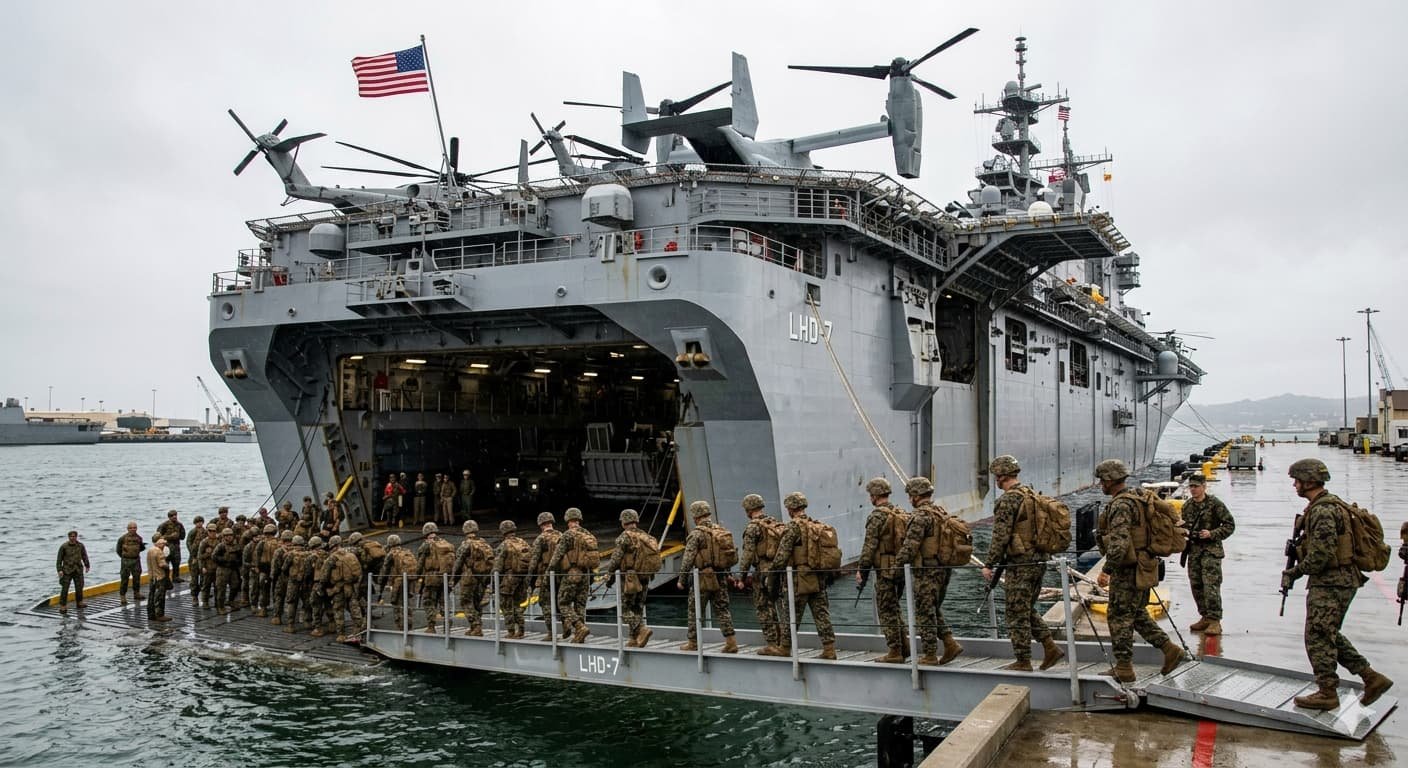

WASHINGTON, MARCH 21, 2026 — The contradiction at the heart of America’s Iran policy has never been more visible than it was on Friday. President Trump told the world the United States is considering “winding down” military operations in Iran. At the same time, the Pentagon confirmed it is deploying a second Marine Expeditionary Unit of 2,200 Marines to the Middle East — adding to the thousands of American service members already in the region. Oil is above $110. Gas is closing in on $4 a gallon. And the administration has now lifted sanctions on Iranian oil to ease the very energy crisis its own war created.
Day 21 of Operation Epic Fury delivered a portrait of a White House running out of options — and an energy crisis the administration’s own officials privately admit could last for months.
What Trump Said — And What the Pentagon Did
The “winding down” signal came from Trump directly, during a meeting with Japanese Prime Minister Sanae Takaichi at the White House Friday morning. Trump said the administration was “thinking about” winding down military efforts in Iran — language that markets and allies parsed intensely for any sign of a genuine off-ramp.
Within hours the Pentagon made the signal significantly more complicated. A second Marine Expeditionary Unit — 2,200 additional Marines — is heading to the Middle East aboard amphibious assault ships. The first unit, deployed at the start of the war, never made landfall in a combat zone. Military officials stressed the deployment was precautionary. But sending 2,200 Marines toward a war you are simultaneously considering winding down is a contradiction that no press secretary explained clearly on Friday.
Trump also called NATO allies “cowards” for declining to help the U.S. secure the Strait of Hormuz — the critical waterway through which 20% of the world’s oil normally flows. Belgium said Friday it would consider participating in Hormuz security operations — but only if a ceasefire was already in place. That condition effectively means no near-term help from Europe.
The Energy Crisis the Administration Can No Longer Hide
The most significant policy development of Day 21 was not a military strike or a diplomatic statement. It was an admission. Senior Trump administration officials told CNN privately on Friday that higher energy prices triggered by the war could linger for months — and that the U.S. has now exhausted all of its standard policy levers for alleviating the oil supply shock.
The acknowledgment marks a stark reversal from the war’s first week, when White House officials projected confidence that energy markets would stabilize quickly. In the three weeks since, oil has risen 45% from approximately $72 per barrel to above $110. Stanford economists estimated Friday that the typical American household will spend an additional $740 on gas this year because of the jump in global oil prices. Every one-cent increase in gasoline prices reduces consumer spending by $1.5 billion annually — meaning the full economic damage of this oil shock is still arriving in slow motion.
In a remarkable move, the Trump administration announced it is temporarily lifting sanctions on Iranian oil stranded at sea — the very country it is bombing — allowing those barrels to reach market in an attempt to ease prices. The waiver applies to Iranian oil and oil products currently loaded on ships and runs until April 19, 2026. National security analyst Beth Sanner was blunt: that move, along with the Strategic Petroleum Reserve release already underway, will not significantly lower prices or increase the number of barrels on the market enough to matter. The administration, she said, is doing “little tiny things that make it seem like they’re doing something.”
On the Ground — Day 21
Overnight Thursday, Iranian drones struck Kuwait’s Mina Al-Ahmadi oil refinery again — the second attack on the facility since the war began — sparking fires that crews worked through the night to contain. Israel launched fresh strikes in and around Tehran early Friday morning, on the first day of Nowruz — the Persian New Year — while Muslims around the world simultaneously observed the end of Ramadan. The symbolism of bombing Iran on its most celebrated holiday was not lost on either side.
Iran confirmed the death of IRGC spokesperson Ali Mohammad Naini in an Israeli airstrike in Tehran — one of the highest-profile Iranian military figures killed since the war began. The IRGC confirmed the death without providing further details about the circumstances.
The IRGC spokesperson’s death killed a man who had been the public face of Iran’s military communications throughout the conflict — and whose statements about Iranian strikes, casualty figures, and military objectives had shaped how the outside world understood Tehran’s war aims. His replacement has not been announced.
TSA Lines Stretch Two Hours as Iran War Hits American Airports
The war’s domestic reach extended to American airports Friday in a way that touched millions of ordinary travelers. Security lines at major U.S. airports are stretching to two hours or more amid TSA staffing shortages — a problem that predates the war but has been dramatically worsened by it. Gas prices closing in on $4 per gallon have accelerated a shift from road travel to air travel among American families — sending unexpected volume surges through airport security systems that were already understaffed.
What Comes Next
The Trump administration’s diplomatic signaling on Friday pointed toward one possible path: a negotiated conclusion built around Iran’s nuclear program. Back-channel conversations involving Omani intermediaries — who helped broker the 2015 nuclear deal — are reportedly underway, though no formal talks have been confirmed by either Washington or Tehran.
For now the war continues. The Marines are still heading toward the region. The oil is still above $110. And the administration that launched Operation Epic Fury three weeks ago is sending more troops into a conflict it is simultaneously describing as something it is thinking about winding down.