
By Harshit
DAVOS, SWITZERLAND — JANUARY 22, 2026
US President Donald Trump said the United States is exploring a potential deal involving Greenland after discussions with Nato leadership, backing away from weeks of threats to impose tariffs on European allies who opposed his push for America to acquire the Arctic island.
In a social media post following talks at the World Economic Forum in Davos, Trump said the meeting produced the “framework” of a future agreement covering Greenland and the wider Arctic region. He provided no specific details and stopped short of claiming any agreement on US ownership of the territory.
Trump Claims “Framework” for Arctic Agreement
Posting on Truth Social, Trump said negotiations had reached an early structure that could benefit both Washington and its allies.
“We have formed the framework of a future deal with respect to Greenland and, in fact, the entire Arctic Region,” Trump wrote. “This solution, if consummated, will be a great one for the United States of America, and all Nato Nations.”
Diplomatic sources, however, said there was no agreement granting the US control or ownership of Greenland, which remains a self-governing territory within the Kingdom of Denmark.
Denmark Signals Openness to Talks
Denmark’s Foreign Minister Lars Løkke Rasmussen struck a conciliatory tone, saying the day had ended “on a better note” after initial tensions.
“Now, let’s sit down and find out how we can address the American security concerns in the Arctic while respecting the red lines of the Kingdom of Denmark,” Rasmussen said.
Danish officials have consistently rejected any transfer of sovereignty, while remaining open to enhanced security cooperation.
Minerals and Security Central to Discussions
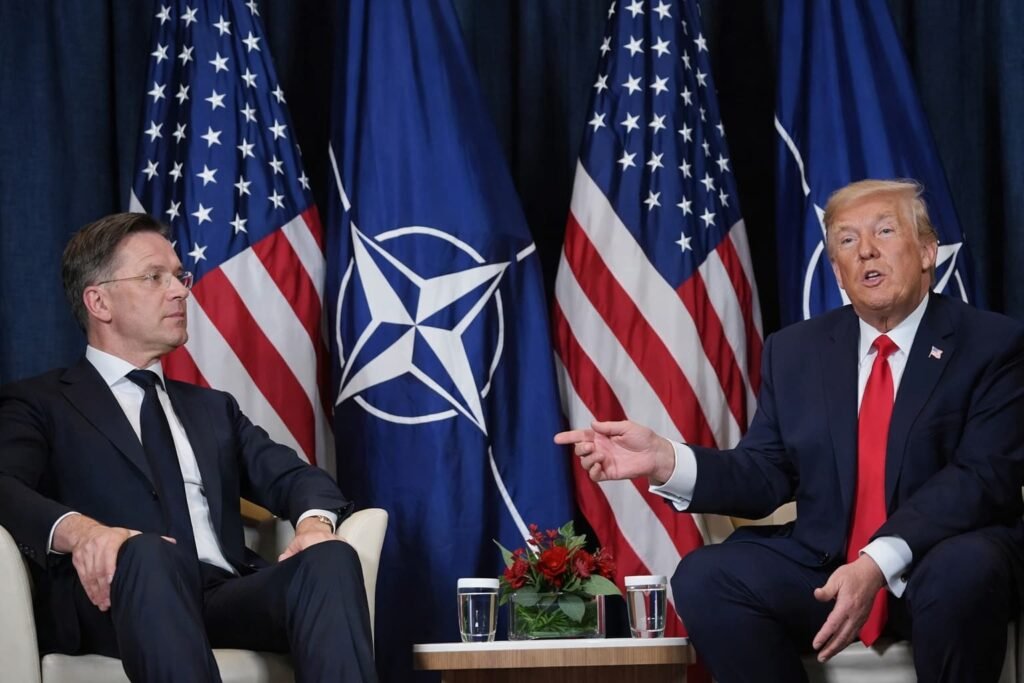
After meeting Nato Secretary General Mark Rutte, Trump suggested that mineral access could play a central role in any future arrangement.
Greenland holds large, largely untapped reserves of rare earth minerals critical for technologies such as electric vehicles, defence systems and mobile electronics. Trump described the proposal as a “long-term” and potentially permanent arrangement.
“It puts everybody in a really good position, especially as it pertains to security and to minerals,” he told reporters. “It’s a deal that’s forever.”
Rutte later said that Danish sovereignty over Greenland was not discussed during the meeting.
Tariff Threats Quietly Dropped
Trump also announced he would no longer impose the tariffs he had threatened against Nato allies, including the UK, Denmark, Germany, France and Sweden, after the Davos talks.
“Based upon this understanding, I will not be imposing the Tariffs that were scheduled to go into effect on February 1st,” Trump said.
The move appeared aimed at calming transatlantic tensions after weeks of sharp rhetoric that had unsettled European governments and financial markets.
No Military Option, Trump Says
Despite repeatedly stating that the US “needs” Greenland for national security, Trump ruled out using military force to seize the territory.
“I don’t want to use force. I won’t use force,” he said during his Davos address, while warning that allies who refused negotiations would be “remembered.”
Greenland Leaders Push Back
Greenlandic lawmakers reacted cautiously, stressing that any negotiations affecting the island must include Greenland itself.
“Nato in no case has the right to negotiate on anything without us,” Greenlandic MP Aaja Chemnitz said. “Nothing about us without us.”
The US already maintains a military presence at Greenland’s Pituffik Space Base and, under existing agreements with Denmark, can deploy additional forces without restriction.
A Tactical Retreat, Not a Resolution
While Trump’s softened tone marks a shift from confrontation to negotiation, officials on both sides acknowledge that major disagreements remain unresolved.
For now, Davos has produced de-escalation rather than agreement — and a pause in a dispute that continues to test Nato unity and Europe-US relations.