
NEW YORK, June 13, 2026 —
The number that defines the morning in American finance is $75 billion. That is how much money SpaceX raised when its shares began trading on the Nasdaq Stock Exchange Friday under the ticker symbol SPCX — making it not just the largest IPO in American history but the largest in the history of global equity markets, surpassing Saudi Aramco’s $29.4 billion raise in 2019 by a margin so large that comparisons to prior records feel almost beside the point.
Shares opened at $150. The implied valuation at that price gives SpaceX a market capitalization in excess of $500 billion at the opening price. By comparison, Boeing — America’s other major rocket and aerospace manufacturing company — has a market capitalization of approximately $110 billion. The market is valuing SpaceX at more than four and a half times the company that has built commercial aircraft for a century.
What SpaceX Actually Is — and Why This Valuation Is Being Accepted
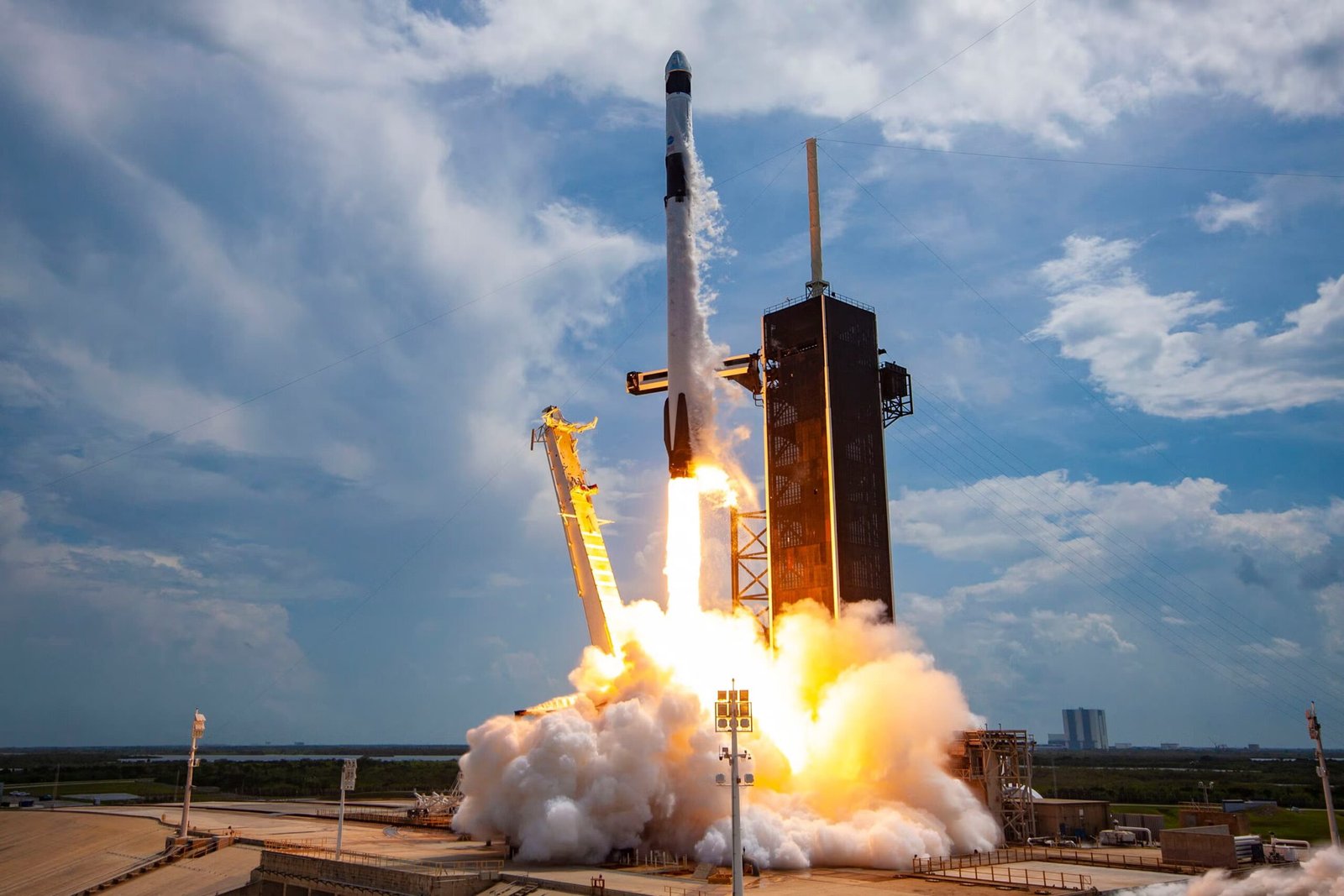
SpaceX is simultaneously three different companies that happen to share infrastructure, leadership, and a launch facility in South Texas. It is a launch services provider that has made orbital rocket delivery cheaper than any prior system in history through its reusable Falcon 9 and Falcon Heavy rockets. It is a satellite internet provider — Starlink — with more than 4 million subscribers globally and a revenue trajectory that has made it the fastest-growing broadband service on earth. And it is a deep-space exploration and colonization company building the Starship vehicle that is designed to eventually carry humans to Mars.
Each of those businesses, analyzed individually, would justify a significant standalone valuation. The launch services business has contracts with NASA, the Department of Defense, and dozens of commercial satellite operators that provide a revenue base the S-1 filing characterized as long-term and contracted. Starlink’s subscriber growth — accelerating as the company adds coverage in developing markets where terrestrial broadband infrastructure is limited — represents the kind of recurring subscription revenue that public market investors have rewarded with premium multiples across the technology sector.
The Starship program is the speculative asset in the portfolio — the component whose valuation depends on a future that has not yet arrived. NASA awarded SpaceX the Artemis III lunar lander contract. The Starship has completed twelve test flights, with the most recent on May 22 demonstrating the full-stack booster recovery that makes Mars-mission economics plausible. Investors buying SPCX at $150 are buying the contracted launch services cash flow and the Starlink subscription revenue at a known price, and getting the Mars option essentially for free.
The Employee Wealth Event That Arrived Friday Morning
SpaceX has been one of the most aggressive users of equity compensation in the aerospace and technology industries throughout its two-decade operating history. Engineers, technicians, executives, and support staff across the company’s Texas, California, Florida, and Washington state facilities have accumulated significant equity stakes through stock options and restricted stock units granted as compensation supplements to cash salaries that were often below comparable market rates.
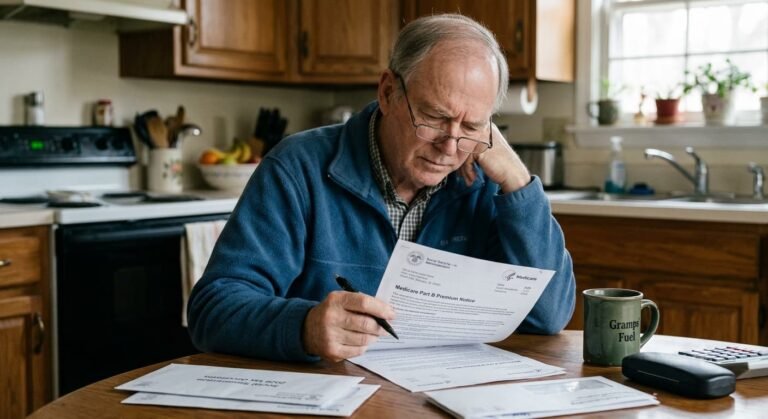
The former SpaceX employee whose 6,500 shares increased in value by approximately $1 million on Friday morning is not a senior executive. The story of that individual — confirmed by CBS News — represents the thousands of employees at every level who made the same trade across different years: lower cash compensation in exchange for equity in a private company that might never go public.
For the employees who are still with SpaceX and who hold unvested equity, Friday’s trading debut established the public market price that will govern future vesting events. For those who left before the IPO — and SpaceX’s attrition rate has been high given the intensity of its work culture — the value of their vested shares is now definitively established for the first time.
The internal SpaceX tender offer program — through which the company periodically allowed employees and early investors to sell shares on secondary markets at company-set prices — had valued the company at approximately $350 billion in its most recent round. Friday’s $500 billion-plus market cap represents a 43% premium above that most recent tender offer valuation for investors and employees who held through the IPO.
What the IPO Means for the Broader Market
The SpaceX IPO is the largest single liquidity event in the history of American financial markets. Its implications extend beyond the company itself in several directions simultaneously.
The $75 billion in capital raised goes to SpaceX for general corporate purposes — primarily the acceleration of Starlink expansion and Starship development. That capital does not flow to Elon Musk directly; it flows to the company. Musk’s wealth increase comes from the increase in the market value of his existing stake, which is now priced in the public market rather than the private secondary market.
For index funds and passive investors, SPCX will eventually be added to major indices — the S&P 500, the Nasdaq-100, and sector-specific aerospace and defense indices. When that inclusion happens, every investor who holds an index fund with those benchmarks will automatically own a proportional slice of SpaceX without taking any active investment action. Index inclusion events for companies of SpaceX’s size create significant mandatory buying by passive funds, which historically produces a period of additional price appreciation following inclusion.
For the broader IPO market, which had been largely dormant since the 2022 rate increase cycle began choking off the liquidity that early-stage investors require to exit positions, the SpaceX offering is the event that may reopen the pipeline. Multiple technology, aerospace, and clean energy companies that had been waiting for the right moment to go public had cited the IPO market’s dormancy as the primary reason for delay. A $75 billion raise that opened well and attracted institutional buying provides the market confidence signal that has been absent for four years.
| SpaceX IPO — Key Figures | Detail |
|---|---|
| Ticker | SPCX (Nasdaq) |
| IPO date | June 12, 2026 |
| Opening price | $150/share |
| Capital raised | $75 billion |
| Previous largest IPO globally | Saudi Aramco — $29.4 billion (2019) |
| Implied market cap at open | $500+ billion |
| Elon Musk ownership stake | ~42% |
| Musk net worth at open | ~$1 trillion+ |
| Most recent private tender offer valuation | ~$350 billion |
| Premium over last tender offer | ~43% |
| Starlink subscribers (global) | 4 million+ |
| Starship test flights completed | 12 (most recent May 22, 2026) |
| NASA Artemis III contract | Awarded to SpaceX |
| Former employee (6,500 shares) wealth increase Day 1 | ~$1 million |
| Last IPO to challenge this scale | Alibaba — $25 billion (2014) |
Pro Tips a Generic Article Would Miss
1. IPO day pricing is almost never the best entry price — and the 180-day lock-up expiration is historically the more significant event for retail investors.
When a company goes public, insiders — including current employees, early investors, and pre-IPO shareholders — are subject to a 180-day lock-up period during which they cannot sell their shares. When that lock-up expires approximately six months after the IPO date, a substantial portion of the float becomes available for sale simultaneously. For large IPOs with significant insider ownership — and SpaceX has both — the 180-day lock-up expiration has historically produced meaningful price pressure as insiders who have waited six months to sell begin doing so. Retail investors who buy on IPO day and hold through that lock-up expiration are taking on the risk of that selling pressure. The 180-day mark — roughly December 2026 for SPCX — is the date that long-term investors should be watching as much as the opening day price.
2. SpaceX’s S-1 filing contains a risk factor that most technology IPO S-1 filings do not: the company is the primary launch provider for the US military and NASA, and its contracts contain government termination-for-convenience clauses that can cancel revenue streams without requiring breach of contract.
Government contracts are a source of revenue stability and a source of contractual risk simultaneously. A termination-for-convenience clause allows the government to cancel a contract at any time for any reason, paying only for work already performed. For a company with significant government contract revenue — which SpaceX has through its NASA and DoD relationships — the presence of those clauses means that a portion of the contracted revenue base the IPO is priced on can be reduced without legal recourse. This risk exists for any defense contractor. It is material for SpaceX at scale and is disclosed in the S-1 but rarely highlighted in IPO coverage.
3. The Starlink revenue trajectory is real — but the satellite internet market is entering a period of competition that did not exist when Starlink launched.
Starlink’s first-mover advantage in broadband satellite internet is substantial. Its constellation size, its terminal cost, and its per-subscriber economics are currently unmatched. But Amazon’s Project Kuiper — which has been launching satellites through 2025 and 2026 — is the largest, best-capitalized competitive threat to Starlink that has ever existed. If Kuiper achieves its subscriber growth targets by 2028, Starlink’s pricing power and subscriber growth rate face real competitive pressure for the first time. Investors valuing SPCX on a forward Starlink revenue multiple should model the competitive scenario as well as the base case.
FAQ
Q: Can individual investors buy SpaceX stock now that it is public?
A: Yes. SpaceX shares now trade publicly on the Nasdaq under the ticker SPCX. Any individual investor with a brokerage account can purchase shares during market hours at the prevailing market price. The IPO allocation itself — the shares sold at the $150 offering price — went primarily to institutional investors and qualified buyers who participated in the book-building process before trading began.
Q: What is SpaceX worth after the IPO?
A: At the $150 opening price, SpaceX’s implied market capitalization exceeded $500 billion. Market capitalization can change minute by minute as the stock trades. The company’s enterprise value — which includes debt and adjusts for cash — may differ from the market capitalization figure. The S-1 filing provides the most current balance sheet data for assessing the company’s financial position.
Q: How does this IPO compare to previous record-setting offerings?
A: SpaceX’s $75 billion raise is the largest in the history of global equity markets. The previous records were Saudi Aramco at $29.4 billion in 2019, Alibaba at $25 billion in 2014, and SoftBank at $23.5 billion in 2018. SpaceX’s raise is more than double the second-largest IPO in history.
Q: What happens to SpaceX employees’ stock after the IPO?
A: Current SpaceX employees who hold equity through stock options or restricted stock units gained the ability to sell their vested shares in the public market for the first time. However, most employees are subject to the 180-day lock-up period that prevents selling until approximately December 2026. Former employees who hold vested shares and are not subject to the lock-up can sell immediately. The IPO price established the first definitive public market price for shares that had previously traded only on private secondary markets.
The SpaceX IPO is the single largest wealth creation event in a single trading session in the history of American financial markets. For the engineers who turned down higher salaries at Boeing or Lockheed to take equity in a startup that was nearly bankrupt in 2008, Friday morning is the arithmetic conclusion of a bet that lasted nearly two decades. For retail investors looking at SPCX on a brokerage screen for the first time, the question is not whether the company is remarkable — it obviously is. The question is whether $150 per share today prices in a future that has not yet arrived, and whether the 180-day lock-up expiration in December 2026 offers a more considered entry point than the first day of trading at a record valuation.