
WASHINGTON, APRIL 1, 2026 —
One year ago today, President Donald Trump signed the most sweeping package of American import tariffs in a century — and the legal, economic, and diplomatic fallout is still unfolding in courts, statehouses, and foreign capitals.
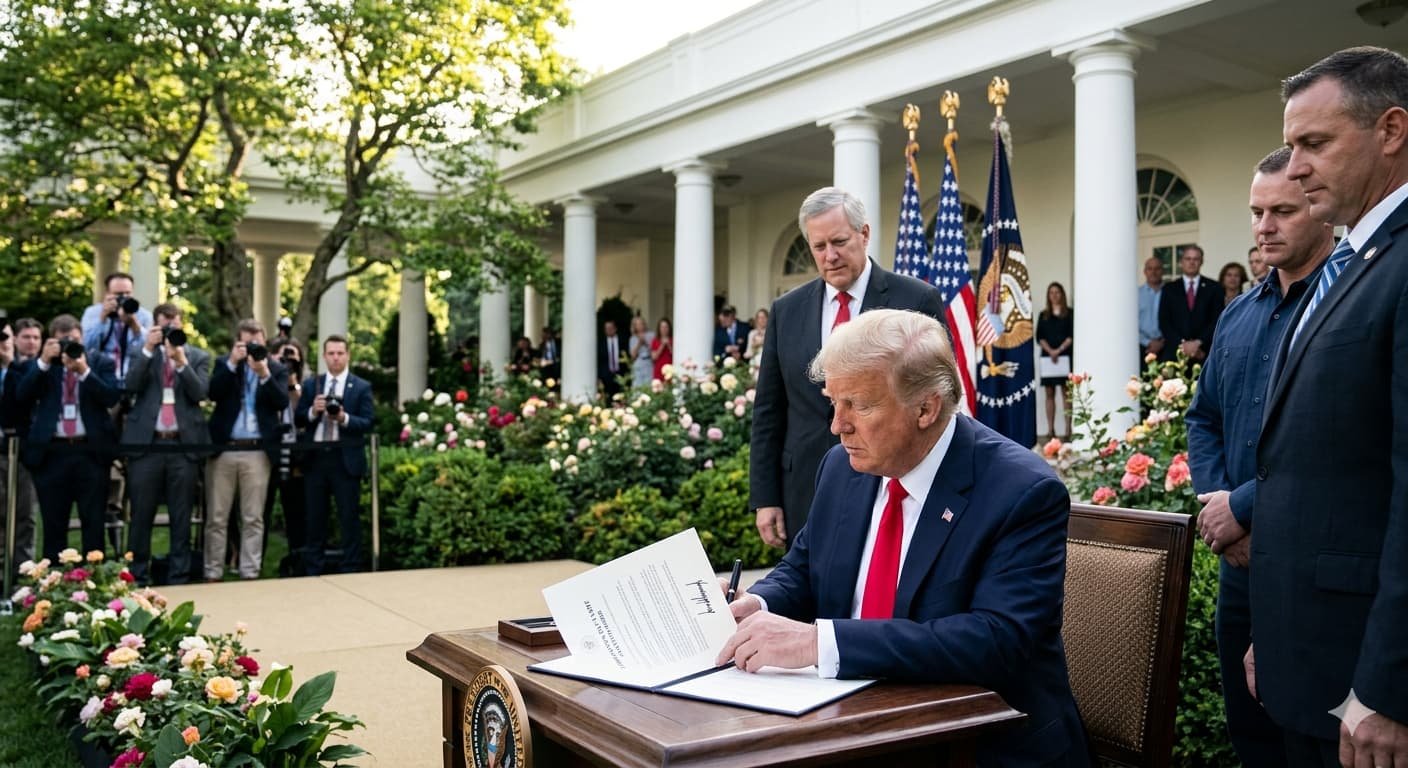
On April 2, 2025, Trump stood in the White House Rose Garden and declared what he called “Liberation Day,” signing an executive order that imposed a baseline 10% tariff on nearly all goods entering the United States, with steeper rates targeting major trading partners. The stated goal was to eliminate persistent U.S. trade deficits. The actual outcome has been a year of soaring prices, legal battles that reached the Supreme Court, and a global scramble to renegotiate trade relationships with Washington.
The Supreme Court Struck Down the Core Legal Authority
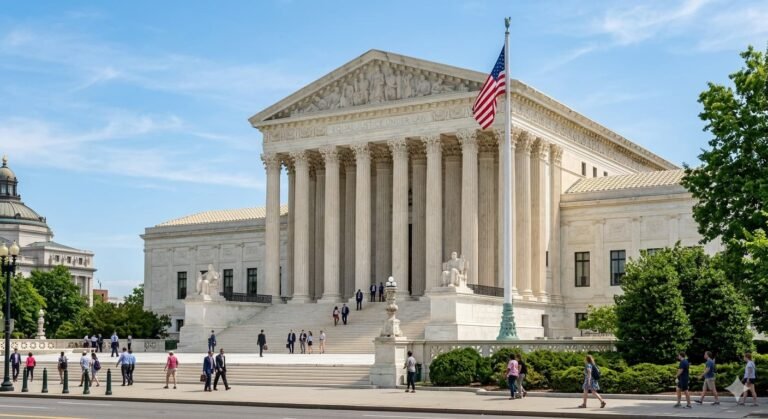
The single most consequential event of the tariff saga came in February 2026, when the U.S. Supreme Court ruled in Learning Resources, Inc. v. Trump that the International Emergency Economic Powers Act, or IEEPA, does not grant the president authority to impose tariffs. The government had collected an estimated $166 billion from more than 330,000 businesses in IEEPA tariffs that the Court found unconstitutional.
Following the ruling, the complex and unprecedented process of issuing refunds to impacted importers began. The scale of potential liability is staggering. Trade attorneys estimate approximately 300,000 shippers paid the tariffs, and by some projections there is as much as $175 billion in potential refunds owed.
President Trump said at a press conference that resolving the refund issue could take years. The Department of Justice faces mounting court deadlines over which cases get processed first and how quickly businesses receive payment.
Trump Moved to New Legal Ground — And New Tariffs
Within days of the Supreme Court ruling, the administration did not retreat. Trump announced a global tariff of 10% under Section 122 of the Trade Act of 1974, set to remain in effect for 150 days, through July 24, 2026. The administration has since floated raising that rate to 15%, which would require congressional approval for any extension.
The Trump tariffs represent the largest U.S. tax increase as a percentage of GDP since 1993, amounting to an average tax hike per household of $1,500 in 2026. Despite that burden, trade deficits continued to grow rather than shrink over the past year, even with the sweeping tariff activity in place.
The Global Fallout: Allies, Adversaries, and Auto Parts
The tariff war forced rapid diplomatic realignments. By July 2025, Trump had announced bilateral framework deals with eight trading partners, including the United Kingdom, Japan, South Korea, and the European Union.
China and the United States reached a series of rolling truces. In November 2025, the two countries agreed to extend their bilateral tariff reductions through November 10, 2026, with the U.S. also reducing its fentanyl-related tariffs on Chinese goods from 20% to 10%.
Canada bore some of the sharpest friction. Trump announced that 25% tariffs on all imported cars and car parts would take force, prompting Canadian Prime Minister Carney to declare that the United States was “no longer a reliable partner.” The relationship has remained tense, with Carney winning the April 2025 Canadian federal election on a platform of standing up to Washington.
On the domestic manufacturing side, the Commerce Department opened an inclusions window beginning April 1, 2026, allowing auto parts makers to apply for inclusion under the Section 232 tariff regime — a process that will run through April 14 before a public comment period begins.
What Americans Are Actually Paying
The Tax Policy Center estimates the average tariff rate on all U.S. imports currently stands at 12%, and tariffs are projected to raise approximately $963 billion over the next decade, with $194 billion raised in 2026 alone.
Consumers have absorbed those costs at the checkout line. Businesses report that despite the legal reversal of the IEEPA tariffs, prices have not meaningfully declined. Companies warned of potential shortages and higher prices following Trump’s original April 2 announcement, and experts say significant relief has not yet materialized for consumers.
The refund process, even when it ultimately reaches businesses, may not translate into lower prices for American households. Retailers have not yet received reimbursements, and the litigation pathway remains long.
As of today, April 1, 2026, one thing is clear: the tariff experiment that began with a Rose Garden ceremony has produced neither the clean trade victories the White House promised nor the catastrophic collapse critics predicted — but the final ledger will not be settled for years.