
By Harshit
SALT LAKE CITY, Dec. 4, 2025 — 6 AM EDT
A Utah safety volunteer who opened fire during a tense moment at a “No Kings” protest last June has been charged with manslaughter after prosecutors determined one of his shots recklessly killed a peaceful demonstrator. The decision has reignited debate over open-carry laws, protest safety, and the limits of armed civilian intervention in chaotic public gatherings.
Salt Lake County District Attorney Sim Gill announced Wednesday that Matthew Alder faces a single count of manslaughter for the death of Arthur Folasa “Afa” Ah Loo, a beloved Pacific Islander fashion designer and former Project Runway contestant who was participating in the demonstration. Alder, who was part of a volunteer team monitoring the protest, fired three rounds toward a man he believed was preparing to carry out a mass shooting—but prosecutors say the final shot crossed the line into criminal conduct.
A Split-Second Decision With Deadly Consequences
According to investigators, Alder fired at Arturo Roberto Gamboa, a man seen assembling an AR-15-style rifle near the crowd. Gill acknowledged that Alder had a legal right under Utah law both to carry a firearm and to use lethal force if he believed he was stopping an imminent threat.
But prosecutors say the third bullet, fired over the heads of protesters, struck Ah Loo and killed him instantly.
“In this case, our argument is that the third bullet was reckless, and if it is reckless, it is manslaughter,” Gill said in a press conference. He noted that another safety volunteer standing beside Alder did not believe the moment was safe enough to fire, underscoring the riskiness of Alder’s decision.
Alder reportedly yelled for Gamboa to stop and believed the man was advancing toward the crowd without responding. The perceived threat “scared the hell out of me,” Alder told detectives. But prosecutors say that even if his first two shots were legally justified, the fatal shot was not.
A Family Demands Accountability
For the grieving family of Afa Ah Loo, the charge came as a painful but necessary milestone.
Ah Loo’s widow, Laura Ah Loo, stood before cameras Wednesday fighting back tears as she described the devastation of losing her husband—a father, community mentor, and creative powerhouse known for championing Pacific Islander artists.
“The grief of losing him has been profound and overwhelming,” she said. “Sim Gill’s decision today is moral and just.”
Afa’s death sent shock waves through the arts and Pacific Islander communities nationwide, many of whom viewed him as a cultural beacon. His loss ignited calls for transparent accountability and questions about how a protest attendee could be killed by someone tasked with protecting demonstrators.
No Charges for the Man With the Rifle
In a twist that complicates the narrative, prosecutors also announced that Gamboa will not face charges, despite his actions triggering panic in the crowd.
Gill said there was insufficient evidence to show Gamboa broke the law. In a written decision, his office acknowledged that Gamboa’s behavior could be “reasonably perceived as alarming and irresponsible,” but noted that Utah law allows open-carrying of rifles, even during protests.
Gamboa’s attorney, Greg Skordas, said Gamboa was carrying the rifle unloaded and pointed at the ground, and that he may not have heard anyone telling him to drop the weapon before being shot.
A Protest Movement, a Tense Nation
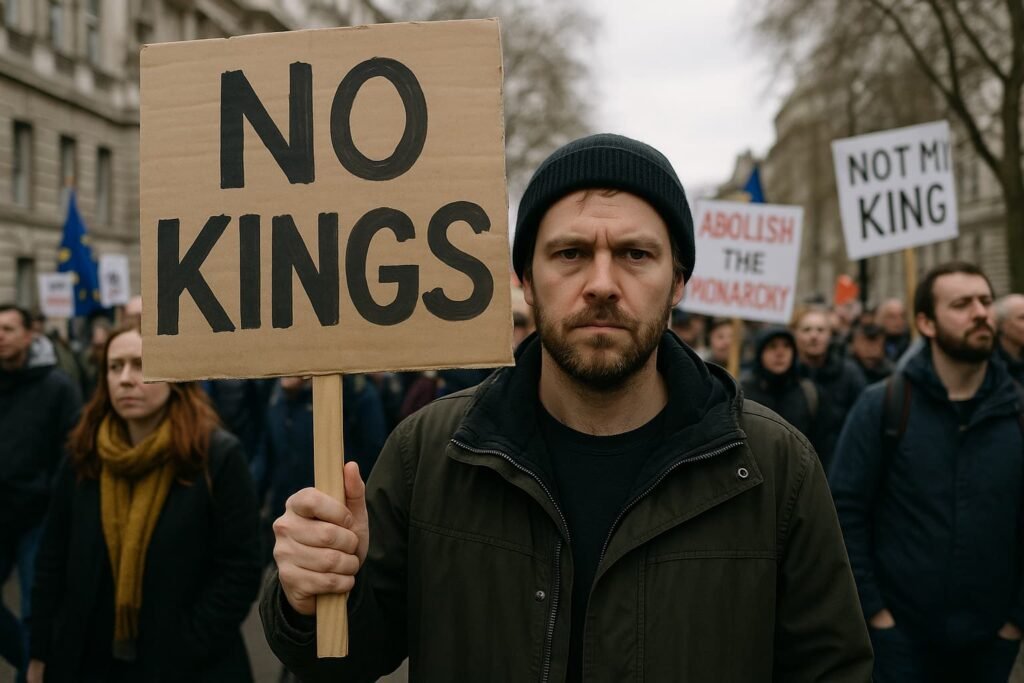
The “No Kings” demonstrations emerged earlier this year as a series of nationwide protests opposing President Donald Trump’s administration, accusing it of authoritarian tendencies. Rallies across the U.S. drew thousands and also saw an increased presence of armed civilian volunteers, raising concerns among legal experts and civil rights advocates about blurred lines between self-defense and vigilantism.
Utah’s open-carry laws allow most adults to carry firearms openly in public, and protests in the state often include individuals carrying rifles or sidearms. Gill emphasized that while Alder had the right to intervene in a perceived threat, he also held responsibility for every shot he fired.
“This case is not about politics,” Gill said. “It is about whether conduct was criminally reckless.”
Alder’s attorney has not yet commented on the charges.
The Road Ahead
Alder’s manslaughter case will likely hinge on forensic reconstruction, witness testimony, and whether jurors believe his final shot exceeded the bounds of reasonable self-defense. If convicted, he faces up to 15 years in prison.
Meanwhile, Ah Loo’s family hopes the case brings broader attention to safety protocols at public demonstrations.
“Afa deserved to come home that night,” his widow said. “He deserved better from all of us.”