
By Harshit
WASHINGTON, D.C., DECEMBER 6, 2025
The White House is facing backlash from one of pop music’s biggest stars after using Sabrina Carpenter’s hit song “Juno” in a social media video depicting law enforcement carrying out apparent immigration enforcement actions.
The Grammy-winning singer and songwriter condemned the video in a sharply worded post on social media, calling it “evil and disgusting” and demanding that her music not be used to support policies she opposes.
“Do not ever involve me or my music to benefit your inhumane agenda,” Carpenter wrote.
When contacted for further comment, a public relations representative for Carpenter referred media inquiries back to the singer’s public statement.
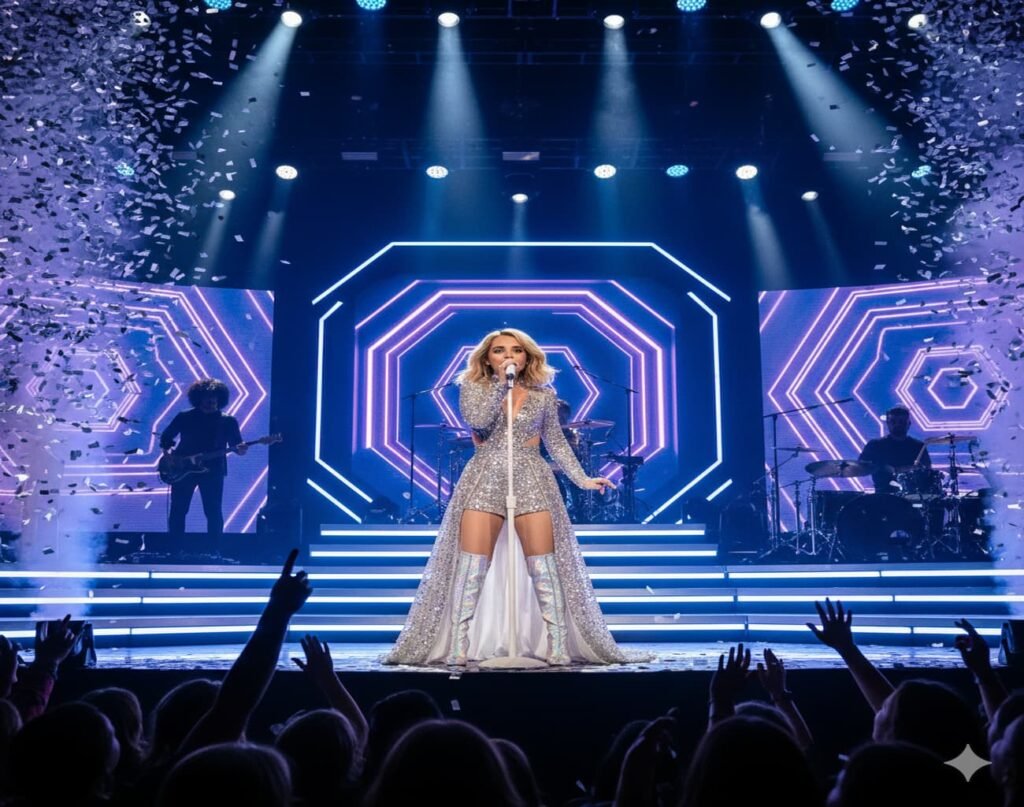
The video, posted to the White House’s official social media accounts, pairs clips of officers apprehending individuals with “Juno,” a song that Carpenter has incorporated into a playful and lighthearted segment of her live performances. During her current tour, the singer often stages tongue-in-cheek “arrests” during the song, gently handing pink, fluffy handcuffs to celebrities attending her concerts — a stark contrast to the tone of the White House video.
White House Responds With Lyrics and Sharp Language
Rather than backing down, the Trump administration doubled down on its position.
In a statement responding directly to Carpenter’s criticism, White House spokesperson Abigail Jackson referenced lyrics from the singer’s recent album Short n’ Sweet, framing the response as a rebuttal to what the administration characterized as opposition to strict immigration enforcement.
“Here’s a Short n’ Sweet message for Sabrina Carpenter: we won’t apologize for deporting dangerous criminal illegal murderers, rapists, and pedophiles from our country,” Jackson said. “Anyone who would defend these sick monsters must be stupid, or is it slow?”
As of late Tuesday afternoon, the video using Carpenter’s music remained live on both X and TikTok, despite the artist’s objections.
The unusually aggressive tone of the White House response has further fueled criticism online, with many observers questioning both the use of copyrighted music and the broader strategy of confronting artists publicly through official government accounts.
A Pattern of Musical Clashes
The incident is far from the first time artists have objected to the Trump White House’s use of popular music without consent. Over the years, the administration’s social media presence has leaned heavily into memes, pop culture references, and trending audio — often without securing approval from the artists involved.
Just last month, the Department of Homeland Security posted a video using audio associated with Olivia Rodrigo’s song “All-American Bitch.” While the media was later disabled on Instagram, the video remained visible on X. Rodrigo criticized the usage in a since-deleted response, calling it “racist, hateful propaganda,” a remark widely reported by music industry outlets.
In another high-profile moment, White House accounts posted a video pairing President Donald Trump with Usher’s “Hey Daddy (Daddy’s Home),” referencing a comment made by NATO Secretary General Mark Rutte during a summit in the Netherlands. That post was later muted after a copyright complaint was filed by the rights holder.
The administration also shared a video featuring Taylor Swift’s “The Fate of Ophelia,” over images of senior Trump officials. Swift, who has previously been targeted by Trump in public remarks, did not comment on the use of the song. Her representatives declined to respond to inquiries at the time.
Artists Push Back — Again
The clash with Carpenter places her in a long line of artists who have objected to Trump-era political uses of their music, including Celine Dion, the Foo Fighters, Bruce Springsteen, and Beyoncé. Many of those artists have argued that such uses create the false impression of endorsement, particularly when their creative work is paired with political messaging they oppose.
Legal experts note that while public-facing social media videos often operate in murky copyright territory, objections from artists can still lead platforms to remove or mute content following rights-holder complaints. That has already happened in several recent cases involving the administration’s posts.
For Carpenter, whose brand centers on playful pop, youth culture, and ironic humor, the use of “Juno” in a video depicting immigration enforcement appears to have crossed a personal and political line.
Culture, Politics, and the Digital White House
The dispute highlights the increasingly blurred lines between politics, pop culture, and platform-driven communication. The Trump White House has embraced a confrontational and meme-forward digital strategy, often prioritizing viral reach over traditional norms of restraint.
Critics argue that this approach risks escalating conflicts with artists while introducing unnecessary culture-war flashpoints. Supporters counter that the administration is unapologetically leveraging contemporary media to communicate its agenda.
For now, Carpenter has made her position clear, and the White House appears equally uninterested in retreating. Whether the video is ultimately removed — or sparks further legal or platform intervention — remains to be seen.