
By Harshit
COPENHAGEN, November 25 —
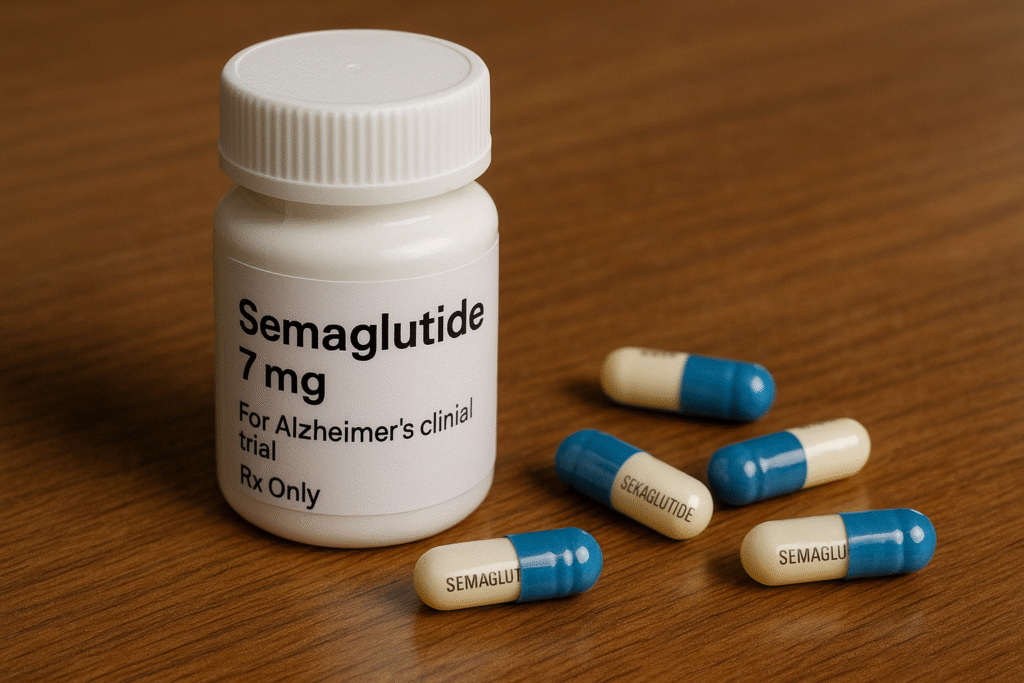
Novo Nordisk’s attempt to expand its blockbuster semaglutide drug family into Alzheimer’s treatment suffered a major setback on Monday, after the company confirmed that its oral version of semaglutide failed to slow cognitive decline in two highly anticipated late-stage trials. The results immediately sent shares down 10% and halted hopes that GLP-1 medicines could become a breakthrough therapy in the neurodegenerative disease space.
The trials — EVOKE and EVOKE+ — were the first large studies to test whether semaglutide could meaningfully alter the course of early-stage Alzheimer’s. More than 3,800 participants ages 55 to 85 were evaluated over two years, with researchers measuring changes in memory, reasoning, and the ability to perform daily tasks. Despite early biological signals that semaglutide might influence Alzheimer’s pathways, the clinical outcome was clear: the drug did not slow cognitive decline compared with placebo.
Novo’s Chief Scientific Officer said the company was disappointed but emphasized that semaglutide continues to provide strong benefits for its approved uses in type 2 diabetes, obesity, and related conditions. For Alzheimer’s, however, the results mark a decisive failure in what some inside the company had openly described as a “lottery ticket” — high-risk, high-reward science that could have unlocked an entirely new multibillion-dollar market.
A High-Stakes Bet Falls Short
The company’s interest in Alzheimer’s grew from early hints that GLP-1 drugs might reduce inflammation and improve metabolic pathways involved in neurological decline. With the global Alzheimer’s population topping 55 million and existing drugs offering only modest benefit, a successful trial could have reshaped the treatment landscape.
But the failure reinforces long-standing warnings from analysts: while GLP-1 drugs work across metabolic diseases, neurodegeneration is a fundamentally different frontier. Pharmaceutical companies have spent decades and billions of dollars testing compounds that ultimately fail when exposed to the complexity of the human brain.
Even so, expectations were high for Novo Nordisk. Its meteoric rise over the past five years — fueled by Ozempic and Wegovy — had transformed it into Europe’s most valuable company. Now, with slowing sales growth, intensifying competition from Eli Lilly, and investor pressure on its leadership transition, the Alzheimer’s program was seen as a potential next chapter.
The disappointing results shut that door for now.
Inside the Trials
Participants in EVOKE and EVOKE+ were given oral semaglutide — marketed as Rybelsus for diabetes — and compared with a matched placebo group. Researchers aimed to achieve a 20% slowing in cognitive decline, a threshold used in modern Alzheimer’s drug development.
Although semaglutide showed changes in certain biomarkers related to Alzheimer’s pathology, those shifts did not translate into actual clinical benefit. Memory, daily functioning, and overall cognitive performance declined at the same pace in both the treatment and placebo groups.
Novo confirmed it will discontinue the planned one-year extension study, signaling the company sees no path forward for this version of the drug in Alzheimer’s.
What This Means for Patients
For families affected by Alzheimer’s, the setback is another reminder of the field’s immense challenges. Only two drugs in recent years — both requiring infusions or injections and carrying notable side-effect risks — have demonstrated modest slowing of decline. Many had hoped that a widely used drug like semaglutide, available in pill form, might offer an easier and safer alternative.
Monday’s result means the search continues.
What This Means for Novo Nordisk
The failure lands at a delicate moment for the company. After years of explosive growth driven by GLP-1 drugs, Novo is now restructuring under a new CEO as it confronts supply constraints, competitive pressure from Lilly’s Zepbound and Mounjaro, and rising costs tied to manufacturing expansion.
Analysts had given the Alzheimer’s trial only a 10% chance of success, but investors still reacted sharply. With semaglutide’s patent timeline ticking, Novo must now focus even more tightly on defending its leadership in obesity and diabetes — its core revenue engines.
The Bigger Picture
The outcome underscores a truth repeatedly seen in Alzheimer’s drug development: even promising biological theories often collapse when tested in human trials. While GLP-1 medicines have reshaped metabolic health worldwide, their leap into neurology appears far more limited.
Still, researchers say the data will help refine future work. Full trial results will be presented at major scientific conferences early next year, offering a closer look at biomarker patterns and subgroup responses.
For now, Novo Nordisk’s bold effort to extend semaglutide into Alzheimer’s treatment has reached a clear and definitive end — a reminder that even blockbuster drugs have boundaries, and that breakthroughs in neurodegeneration remain among the hardest in modern medicine.