
WASHINGTON, MARCH 29, 2026 —
Eight to nine million people. More than 3,300 events. Every state. Every continent. And in Los Angeles, by Saturday night, tear gas.
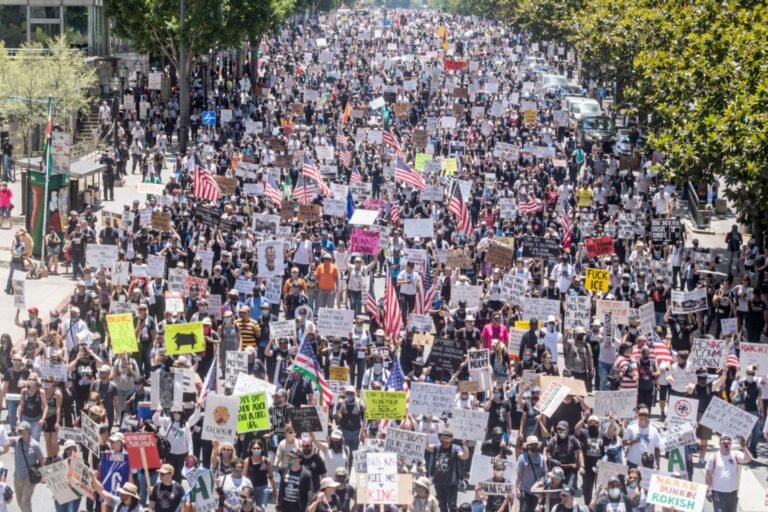
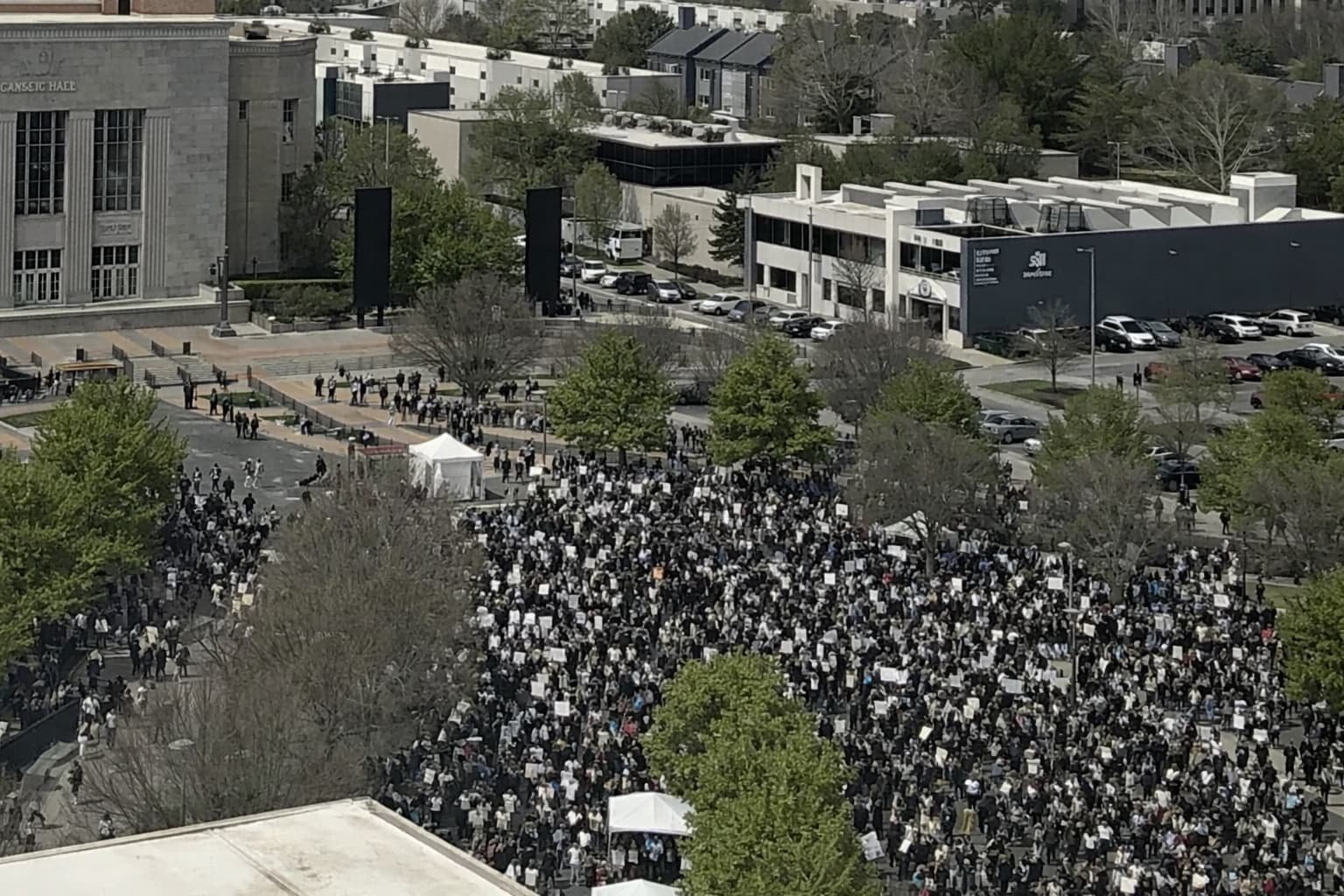
The third iteration of the No Kings protest movement delivered on every prediction organizers made — and then some. Saturday, March 28, 2026, is now confirmed as the largest single day of protest in American history, surpassing the Women’s March of January 2017, the June 2020 Black Lives Matter protests, and the two previous No Kings mobilizations in June and October 2025. The breadth of Saturday’s turnout was as remarkable as the scale — protests took place not just in blue cities but in red strongholds, rural towns, and communities that had never staged a public demonstration before.
What the Numbers Actually Show
The flagship event was in St. Paul, Minnesota — chosen because that is where federal immigration agents fatally shot two Americans monitoring Trump’s immigration crackdown in January. Organizers estimated more than 200,000 people attended the Minnesota Capitol rally, where Bruce Springsteen performed his new single “Streets of Minneapolis” — written specifically about the killings of Renee Good and Alex Pretti — to a crowd that stretched further than the stage could see.
In Chicago, approximately 200,000 people gathered at Grant Park. In Boston, 180,000 packed Boston Common. In New York City, more than 350,000 people demonstrated across five boroughs — with zero protest-related arrests, according to the NYPD. In San Francisco, more than 100,000 marched through the Embarcadero. In Philadelphia, thousands gathered across 40 events in the metropolitan area. In West Palm Beach, Florida — miles from Mar-a-Lago — protesters and counter-protesters briefly faced off before the demonstration turned peaceful.
Almost half of all events took place in Republican-leaning areas — a shift that organizers say is the clearest sign yet that the No Kings movement has expanded well beyond its progressive base. Texas had over 100 events. Florida had over 100 events. Ohio had over 100 events. Idaho, Wyoming, and Utah — three of the most reliably Republican states in the country — each had events in the double digits.
What People Were Protesting
The list of grievances that brought eight to nine million Americans into the streets on a Saturday afternoon was not narrow. Protesters cited the Iran war and its economic consequences — gas above $3.98, oil above $100, and a stock market in correction territory — as one driving force. The administration’s immigration enforcement operations, particularly the deployment of ICE agents to airports and the January killings in Minneapolis, were another. The partial government shutdown that left 46,000 TSA workers without paychecks. The Kennedy Center closure. The curtailing of transgender rights. And, more broadly, what demonstrators across every political geography described in strikingly similar language: a feeling that something fundamental about American democracy is being tested.
“Democracy is under threat,” one Minneapolis demonstrator told CNN. “So bad, even introverts are here,” read a sign in Portland. “I spent four years in the Army to fight exactly what’s happening,” said one Los Angeles participant.
Where It Turned Violent — And the Full Picture
The overwhelming majority of the 3,300-plus events were peaceful. The exception was in Los Angeles, where after a large and orderly daytime rally and march through downtown, a smaller group of several hundred agitators moved to the federal Metropolitan Detention Center and began throwing concrete blocks, bottles, and other objects at federal officers. Los Angeles police declared a tactical alert and issued a dispersal order. Federal authorities deployed tear gas. Nine juveniles were arrested and later released to their parents. Several officers sustained minor injuries. By 9:00 PM, the tactical alert was lifted and the area had calmed.
In Denver, police declared an unlawful assembly after a small group blocked a road. Nine people were arrested. In Portland, three arrests were made after protesters escalated outside the city’s ICE facility.
Internationally, solidarity No Kings protests — rebranded as No Tyrants in constitutional monarchies — took place in London, Paris, Rome, Berlin, Toronto, Sydney, and dozens of other cities. In Rome, thousands specifically protested the Israeli and U.S. attacks on Iran.
What Comes Next
Indivisible co-executive director Ezra Levin announced a national organizing call for March 31 to build on Saturday’s mobilization. Whether eight to nine million people in the streets translates into electoral consequences — the midterm elections are eight months away — is the question that the White House, congressional Republicans, and Democratic strategists are all trying to answer simultaneously.
What is certain is that the movement is not shrinking. June 2025: five million. October 2025: seven million. March 2026: eight to nine million. The trajectory has been in one direction since this began. And the next No Kings day is already being planned.
📌 Read Next:
- How the Iran War Is Reshaping the U.S. Economy — and What It Means for Your Wallet
- The Stock Market Just Entered Correction Territory — Here Is What to Do With Your Money